

Power Tower Swimming: How Elite Swimmers Build Real Power in the Water
/Every swimmer wants more power in the water – stronger pulls, faster acceleration, and more speed off the walls. But after more than two decades on deck, I've learned that many swimmers try to build power the wrong way. They add more laps, larger paddles, or more resistance, yet the quality of their stroke never really improves.
That's where power tower swimming training can make a real difference. Rather than simply making swimming harder, a power tower applies controlled resistance that challenges swimmers to generate force through efficient technique. It develops explosive pulling strength, improves the connection between the upper body and core, and teaches athletes how to create more effective propulsion.
Used correctly, a power tower becomes more than just another piece of training equipment. It provides immediate feedback on stroke mechanics and helps swimmers learn how to produce real power that transfers to faster swimming.
In this article, I'll explain what a swimming power tower is, how elite programs use it, and how you can incorporate power tower workouts safely and effectively into your training.
What Is a Power Tower for Swimming?
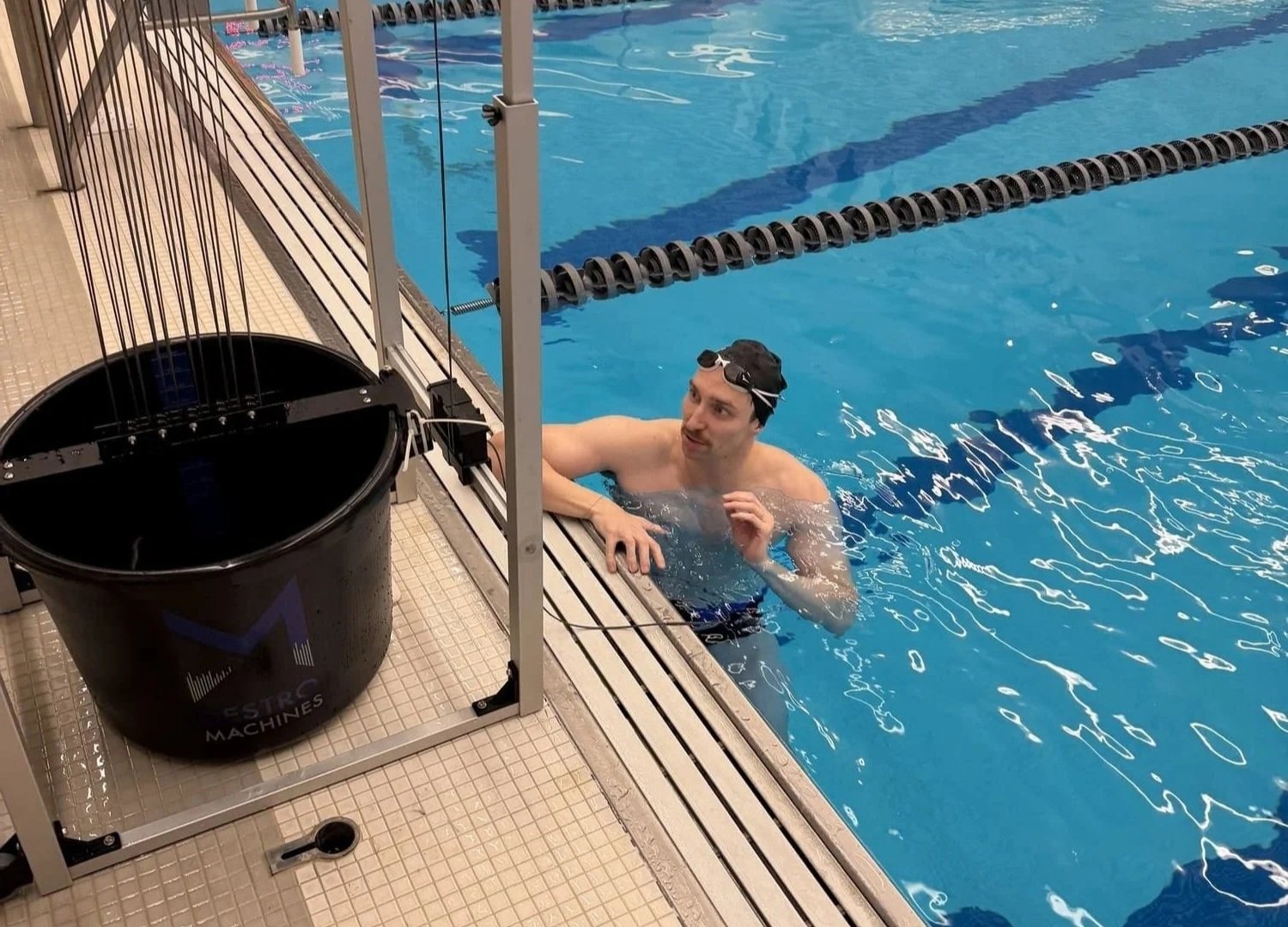
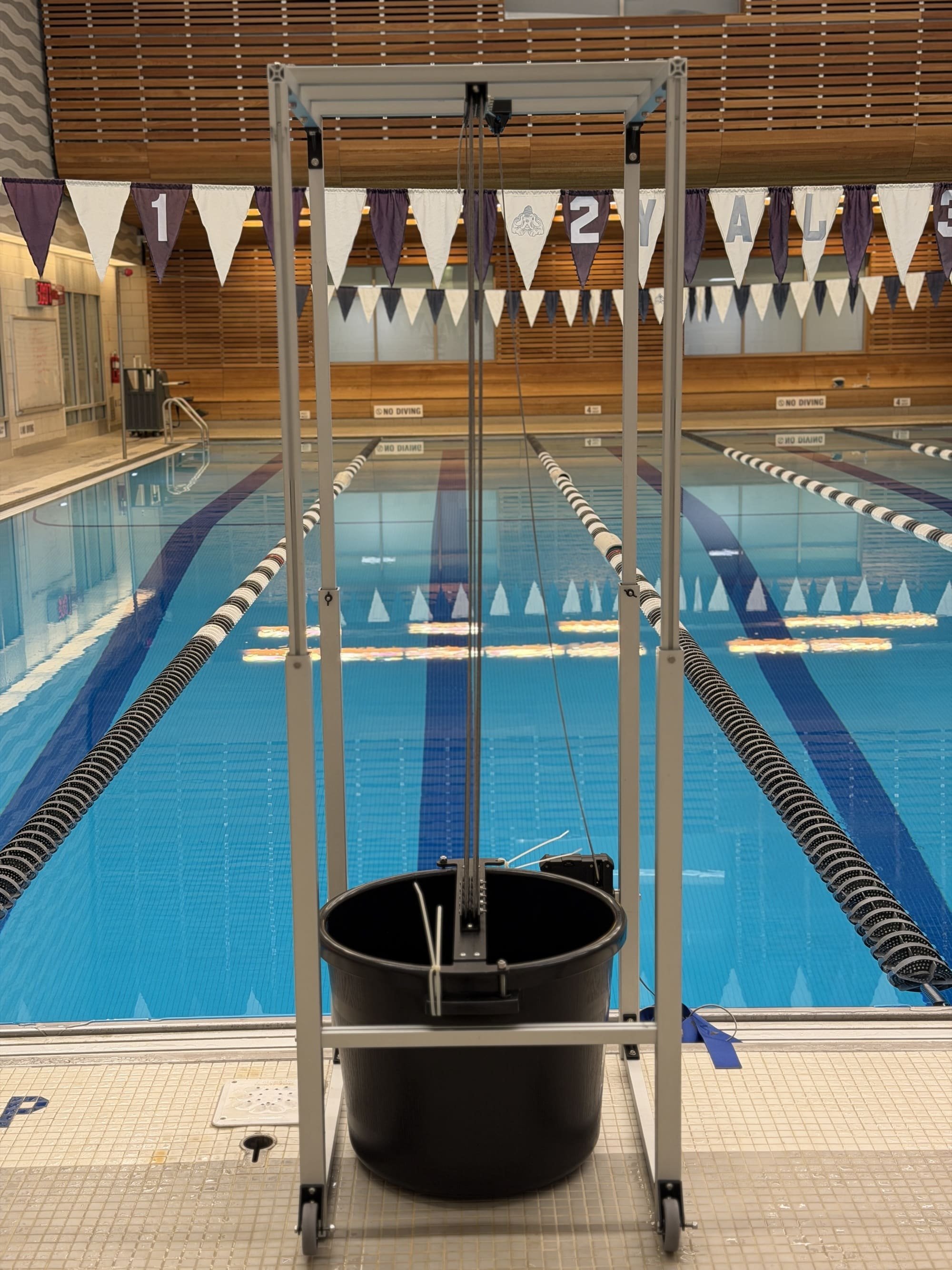
A power tower is a resistance training station installed at the end of a pool lane. Swimmers wear a belt connected to a resistance cable or pulley system while swimming in place or against a controlled load.
This setup allows athletes to:
train propulsion strength
improve stroke mechanics under load
build explosive pulling power
develop better core connection between arms and hips
Instead of swimming freely down the pool, the swimmer must generate enough force to overcome the resistance. If the catch slips or the stroke mechanics become inefficient, it's difficult to maintain position and produce consistent power.
That's why many elite coaches use power towers and swim racks as both strength-training tools and technical feedback systems. Rather than simply making swimmers work harder, they reinforce the movement patterns that lead to faster, more efficient swimming.
What Is the Destro Machine in Swimming?
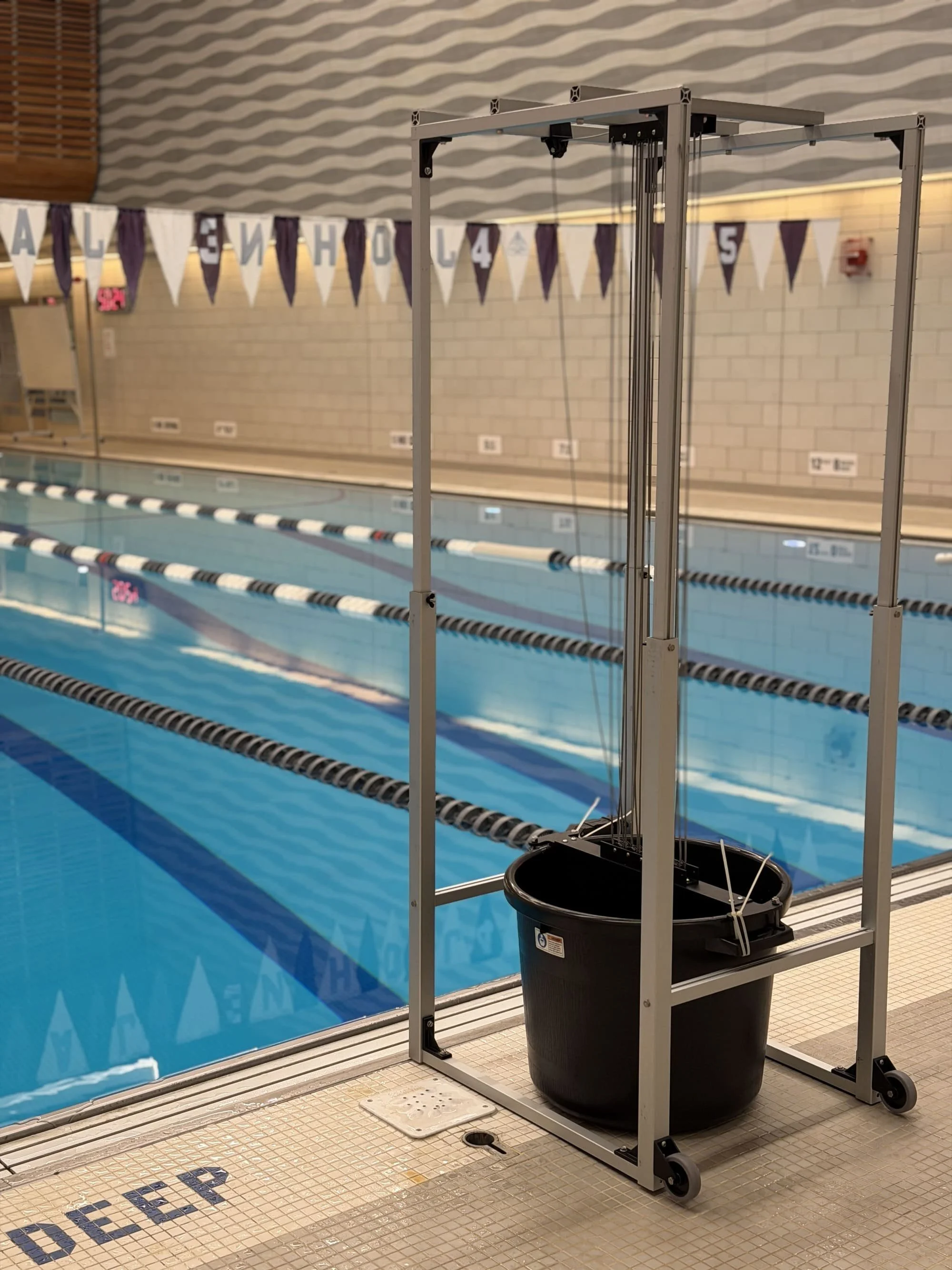
One of the most recognized power tower systems is the Destro Swim Tower.
The Destro machine is a specialized swimming resistance device developed by Destro Global and used in high-performance swim programs around the world.
The system includes:
adjustable resistance pulleys
a swimmer belt attachment
resistance measurement capabilities
modular double tower swimming setups
A Destro swim tower allows swimmers to train with precise resistance loads while maintaining realistic stroke patterns.
Many national team training centers use these systems because they allow coaches to:
measure power output
control resistance levels
track improvements over time
Compared with improvised resistance tools, a Destro machine swim tower provides much more consistent feedback.
Why Power Tower Swimming Training Works
The biggest advantage of power tower swimming workouts is that they force swimmers to produce real propulsion. In normal swimming, momentum and kicking can often hide technical flaws in the stroke.
A power tower removes those shortcuts. When resistance is added, poor catch mechanics quickly become obvious. If the elbows drop during the pull, power disappears instantly. When core rotation is weak, the swimmer struggles to maintain force against the resistance.
Because of this, the tower exposes inefficiencies right away. That’s why many coaches use power towers not only as a strength tool but also as a diagnostic tool to evaluate stroke mechanics.
Over time, swimmers begin to develop a stronger catch, better connection between the lats and core, improved stroke acceleration, and more powerful underwater pulls. These improvements translate directly into faster and more efficient swimming.
Key Benefits of Power Tower Swimming Training
1. Builds Real Stroke Power
Power towers train the exact muscles used during swimming. The primary muscles involved include:
• latissimus dorsi
• serratus anterior
• core stabilizers
• posterior shoulder
Because resistance is applied during the pull phase, swimmers develop force exactly where it matters most.
2. Improves Catch Mechanics
One thing I’ve noticed with swimmers on power towers is how quickly a weak catch gets exposed. If the hand slips during the catch phase, the swimmer loses resistance immediately. This forces athletes to maintain:
• early vertical forearm
• high elbow positioning
• continuous pressure on the water
In other words, the tower rewards good technique.
3. Strengthens Core Rotation
Swimming power doesn’t come from the arms alone. It comes from hip rotation transferring force into the pull. Power tower training encourages swimmers to connect:
hips → core → shoulders → hands.
Without that connection, the swimmer cannot maintain resistance.
4. Develops Sprint Acceleration
For sprint swimmers, power towers are especially valuable.
Short resistance efforts help train:
• explosive pull strength
• stroke rate under load
• acceleration mechanics
This is why many sprint programs incorporate resistance swimming sets weekly.
Power Tower Training: Prioritize Quality Over Fatigue
When using a Power Tower, the objective is to produce the highest possible force while maintaining excellent stroke mechanics. That means each repetition should be short enough to preserve power and long enough between efforts to allow meaningful recovery.
For most swimmers, resisted efforts of 6 to 15 seconds work best, with 20 seconds reserved for more experienced athletes or power-endurance sets. Recovery should generally be at least two to four times the length of the effort. This allows swimmers to maintain high force production and consistent stroke quality throughout the set.
A few examples include:
6 × 10 seconds resisted swimming with 30 to 40 seconds of recovery
8 × 8 seconds resisted swimming with 24 to 32 seconds of recovery
6 × 15 seconds resisted swimming with 45 to 60 seconds of recovery
The goal is not to create fatigue. The goal is to produce as much force as possible on every stroke. As power output begins to fall, the quality of the training stimulus decreases.
After each repetition, allow enough time to reset body position, regain control of breathing, and prepare to produce another maximal effort. Coaches should stop the set if stroke mechanics begin to deteriorate or velocity begins to decline. A slipping catch, dropped elbow, shortened stroke length, or loss of body alignment are all signs that fatigue is becoming the limiting factor rather than power production.
Longer efforts with shorter recovery periods, such as 20 to 30 seconds of work with only 10 to 20 seconds of rest, can still be valuable. However, these sessions are better classified as power-endurance training rather than pure power development because fatigue plays a much larger role in the athlete’s performance.
Example Power Tower Workout
Warm-Up
300 easy swim
4 × 50 drill focusing on body position and catch mechanics
4 × 25 build to approximately 90% effort
2 × 25 scull
Power Set
2–3 rounds of:
6 × 10 seconds resisted swimming
30 to 40 seconds recovery between repetitions
3 minutes easy swimming between rounds
Focus on generating force with every stroke while maintaining a stable body line, a high-elbow catch, and strong hip rotation. End the set while stroke quality remains high, not when fatigue forces it to stop.
Speed Transfer
After completing the resistance work, swimmers move straight into 4 × 25 sprint freestyle.
The goal is to feel how much lighter the water feels after swimming against resistance. When done correctly, the stroke should feel quicker, more connected, and more powerful.
This contrast helps reinforce the transfer of power from resistance training into real swimming speed. You can learn more about how short sprint efforts build explosive speed in this article on sprint swim workouts.
Double Tower Swimming Systems
Some elite programs use double tower swimming setups. These systems allow two swimmers to train simultaneously using mirrored resistance towers.
Double towers are common in:
• national training centers
• university swim programs
• high-performance clubs
The advantage is that coaches can run power training circuits where swimmers rotate through resistance stations.
Power Tower vs Other Resistance Swimming Equipment
Swimmers often ask how power towers compare to other resistance tools. Common alternatives include:
• drag parachutes
• resistance bands
• power racks
• tethered swimming
Each tool has value. But power tower swimming equipment provides two unique advantages:
Controlled resistance levels
Consistent stroke mechanics
Unlike parachutes or bands, towers maintain stable resistance throughout the stroke. This makes them ideal for technical power development.
The Destro Machines SwiMeter 2.0
One of the biggest limitations of resisted swim training has always been measuring performance objectively. The Destro Machines SwiMeter 2.0 addresses that challenge by turning every swim tower repetition into measurable data.
Mounted directly to a Destro Swim Tower, the SwiMeter automatically tracks splits, distance, start and breakout velocity, as well as average and instantaneous speed with high precision. The data is uploaded to the SwimView platform, allowing swimmers and coaches to review velocity graphs, compare sessions, monitor progress over time, and evaluate how technical changes affect performance. (Destro Machines)
Rather than relying solely on perceived effort or a stopwatch, swimmers receive immediate, objective feedback after every repetition. This makes it easier to identify improvements, detect declines in power output, and ensure training remains focused on quality instead of simply accumulating fatigue.
For coaches who regularly incorporate resisted swimming, tools like the SwiMeter provide valuable data that can help individualize training and track progress throughout the season. (Destro Machines)
Real-World Feedback From the Pool
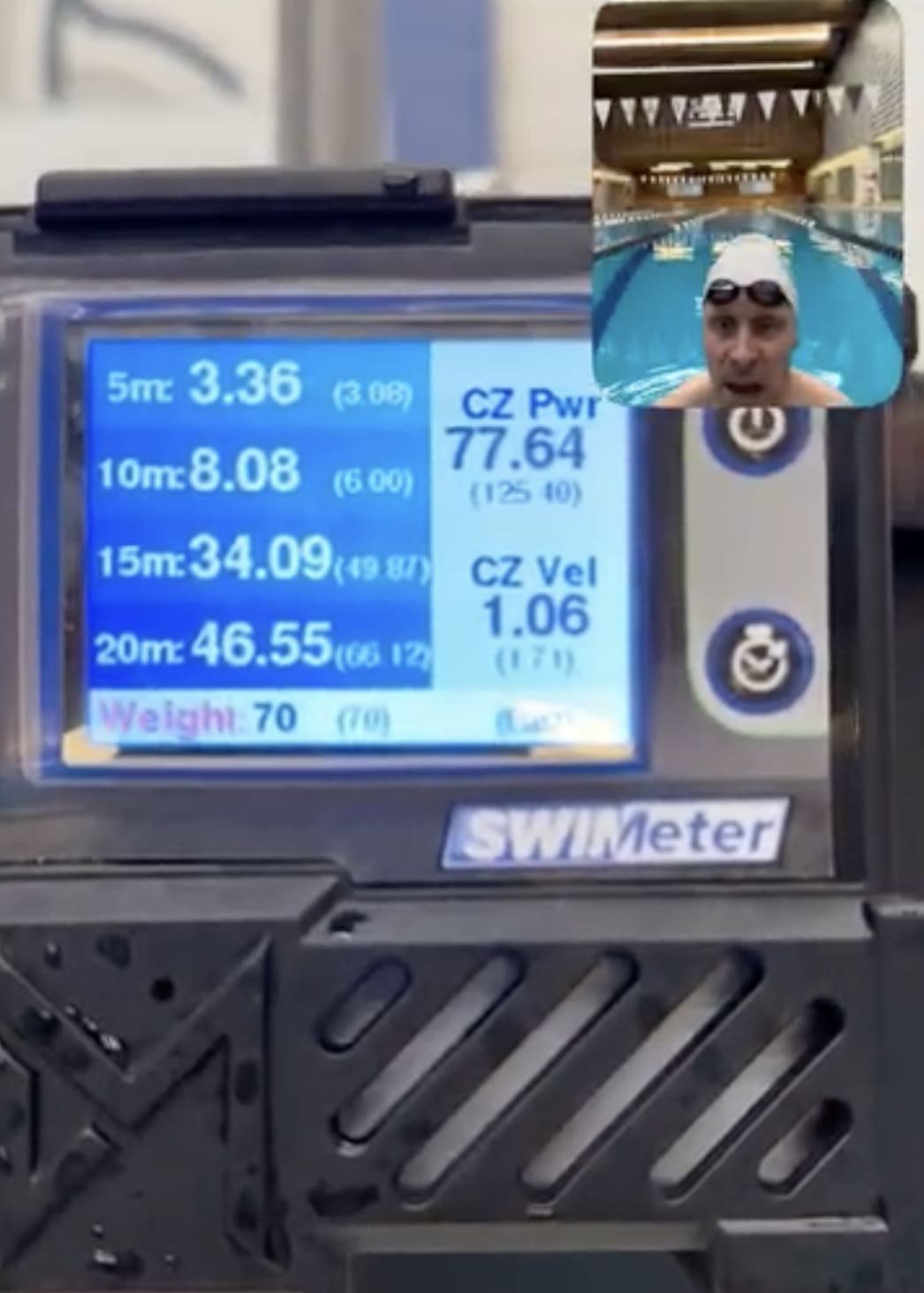
The Destro SwiMeter displays power output, velocity, split times, and resistance in real time, giving swimmers and coaches immediate performance feedback after every repetition.
Coach's Perspective
One of the features I appreciate most about the Destro Swim Tower and SwiMeter is how quickly it reveals where performance begins to break down. During one session, I compared my Freestyle and Breaststroke. My Freestyle produced 125 watts of power with a velocity of 1.70 m/s, while my Breaststroke generated 77 watts at 1.06 m/s. Those numbers weren't surprising, but they clearly quantified the difference in propulsion between the two strokes.
What I found even more valuable was the split data. My first 5 meters were nearly identical in both swims, but I lost about 0.3 seconds over the following segment. That immediately showed me where my speed was dropping off. Instead of guessing, I had a measurable performance marker to improve.
The next time I use the system, my goal won't simply be to swim harder. It'll be to maintain my speed longer and reduce that drop-off between splits. That's the kind of insight objective data provides. It turns every repetition into a learning opportunity and helps you make smarter adjustments from one session to the next.
How to Train Power in Swimming Safely
Power training is effective, but it must be applied carefully. Here are four guidelines I use with swimmers.
1. Prioritize Technique First
Power without good mechanics creates bad habits. Before using resistance training, swimmers should already have:
a stable bodyline
effective catch mechanics
controlled stroke rhythm
2. Use Short Efforts
Power sets should remain short and explosive. Typical resistance efforts last 20–30 seconds. Longer efforts shift the focus toward endurance instead of power, reducing the quality of force production.
3. Keep Volume Low
One or two power tower sets per practice are usually enough. More isn't always better, and overusing resisted swimming can overload the shoulders and reduce the quality of the rest of the workout.
4. Pair With Speed Swimming
Always follow resistance training with free swimming sprints. This helps transfer the strength gained during resisted swimming into real race speed, allowing swimmers to feel faster, more connected, and more efficient in the water.
When Should Swimmers Use Power Towers?
Power towers are most effective for swimmers who already have a solid technical foundation. They're commonly used by competitive swimmers looking to improve propulsion, stroke power, and overall swimming performance.
These systems are especially valuable for:
Sprint swimmers who need greater pulling power and faster acceleration.
Advanced age-group swimmers with consistent stroke mechanics who are ready to introduce resisted training.
Collegiate and elite swimmers who combine technical work with targeted power development throughout the season.
Younger swimmers should focus first on developing sound technique, body control, and efficient movement in the water. Once those fundamentals are in place, resistance tools like power towers become a much safer and more effective way to build swimming-specific power.
Final Thoughts: Power Comes From Technique
Tools like the Destro Swim Tower and other power tower systems can be valuable additions to a training program, but equipment alone doesn't make swimmers faster. What matters most is how the tool is used.
When power tower training reinforces good mechanics, swimmers develop stronger pulls, faster acceleration, and more efficient propulsion. The resistance exposes weaknesses in the stroke while encouraging better body position, a stronger catch, and connected rotation.
To me, that's what makes a power tower so valuable. It's more than a piece of equipment—it's a coaching tool that provides immediate feedback and reinforces the movement patterns that lead to faster swimming.
The lesson is simple: real swimming power always starts with clean technique.

Train Like an Elite Swimmer
Develop strength, mobility, and power with dryland training designed specifically for swimmers.
About Dan Daly
Dan Daly is a CSCS-certified swim coach with over 20 years of experience coaching competitive swimmers, triathletes, and Masters athletes. His technique-first approach helps swimmers build power, improve efficiency, and perform at their best.
Should you train with fins or drag socks? While both are valuable swimming tools, they develop different qualities. Drag socks build kick-specific strength and improve force production, while fins enhance rhythm, body position, and speed. In this guide, Coach Dan Daly explains how combining resistance and assisted training creates a more powerful, efficient kick that transfers directly into racing. Learn when to use each tool, common mistakes to avoid, and how to structure kick sets for maximum performance.