

Fins vs Drag Socks: How to Build Explosive Leg Power in the Water
/I've watched a lot of swimmers over the years treat kick sets like background work—something to get through between the "real" parts of practice. They'll work hard during the main set, then switch off mentally as soon as the coach calls for kicking. The problem is that races are often decided by the swimmers who can keep their kick working when everyone else begins to fade.
When you hit the final 25 of a race, your kick isn't just supporting the stroke. It's helping maintain body position, preserve momentum, and carry speed through the finish. If you haven't trained it with purpose, it's usually the first thing to disappear under fatigue.
That's where training tools like fins and drag socks can make a real difference. Although they're often thrown into workouts interchangeably, they serve very different purposes. Understanding what each one is designed to do—and when to use it—can help you build a kick that's not only stronger, but far more effective on race day.
Fins vs Drag Socks: Which Is Better?
If you're wondering whether fins or drag socks are better for developing a stronger swimming kick, the answer is that they train different qualities rather than competing with each other. Drag socks increase resistance, helping swimmers develop greater force production and improve their ability to hold body position under load. Fins reduce resistance and increase speed, allowing swimmers to experience better tempo, rhythm, and connection through the stroke.
After more than two decades of coaching swimmers from age-group athletes to national-level competitors, I've found that the greatest improvements rarely come from relying on one tool alone. The best results come from using resistance to develop strength, then immediately swimming with less resistance so the body learns to apply that new force at race speed. This contrast creates a kick that isn't just stronger—it becomes more efficient when it matters most.
Why Most Kick Training Doesn’t Translate
The problem with most kick training isn't a lack of effort. Swimmers are usually willing to work hard. What holds them back is doing the same type of work over and over again until the body simply adapts.
Kick sets often follow the same rhythm, the same resistance, and the same intensity week after week. Eventually, you're no longer creating a new training stimulus. You're maintaining what you already have instead of developing new strength, speed, or efficiency.
Racing demands much more than that. Your legs need to generate force when they're already fatigued, maintain body position as speed increases, and continue producing propulsion during the closing stages of a race. That's exactly why training with fins and drag socks can be so valuable. Each changes the stimulus in a different way, helping swimmers develop qualities that traditional kick sets often miss.
Fins vs Drag Socks: What Each One Actually Does
A lot of swimmers use both tools, but very few understand what they’re really training with each one.
Drag Socks – Strength and Pressure
When you put on drag socks, everything gets harder immediately. The water feels heavier. Your kick slows down. You can’t rely on momentum.
That’s the point.
Drag socks force you to create pressure against the water. They expose whether your kick is coming from your hips or just bending at the knees. They challenge your bodyline. If your core isn’t engaged, your position falls apart quickly.
This is where real strength is built—but only if you maintain clean mechanics. If you lose alignment, you’re not building power. You’re reinforcing inefficiency.
Fins – Speed and Connection
Fins do the opposite.
They reduce resistance and allow you to move faster through the water. But what matters isn’t just the speed—it’s what that speed teaches you.
With fins, swimmers often feel proper tempo and flow for the first time. The kick becomes continuous instead of segmented. The connection between the hips and the water becomes clearer.
Used correctly, fins aren’t about going fast—they’re about learning what efficient speed feels like.
Why Contrast Training Works
The combination of drag socks and fins is based on a principle widely used in strength and conditioning called contrast training. Athletes first perform movements against greater resistance before switching to faster, less restricted movements. The goal isn't simply to make the second effort feel easier—it's to teach the nervous system how to produce force more efficiently at higher speeds.
While much of the research on contrast training comes from sprinting, jumping, and Olympic lifting, the same concept applies well in swimming. Resistance challenges force production and body control, while assisted swimming reinforces rhythm, timing, and efficient movement patterns.
One thing I've consistently noticed on deck is that swimmers often describe their kick as feeling "lighter" after removing the drag socks. They're usually not kicking harder. Instead, they're applying pressure against the water more effectively because they've just experienced what good force production actually feels like.
| Feature | Fins | Drag Socks |
|---|---|---|
| Primary goal | Improve speed, rhythm, and body position | Increase kick strength and force production |
| Resistance | Low | High |
| Best for | Technique, tempo, and race rhythm | Power development and kick mechanics |
| Difficulty | Beginner to advanced | Intermediate to advanced |
| Stroke feel | Faster and smoother | Slower with greater pressure |
| Best used | Technique sessions and speed work | Short resistance sets before normal swimming |
Why Fins and Drag Socks Work Better Together
Many swimmers think of fins and drag socks as interchangeable tools. In reality, each serves a different purpose, and the greatest benefits come from using them together.
Drag socks increase resistance, forcing you to generate more pressure against the water while maintaining body position and kick mechanics. Fins then reduce that resistance, allowing you to move faster and reinforce efficient rhythm and tempo.
This contrast helps bridge the gap between strength and speed. Instead of simply building a more powerful kick, you're teaching your body to apply that power more
How to Structure a Fins vs Drag Socks Set
You don't need a complicated workout to benefit from contrast training. The goal is to use resistance first, then immediately reinforce faster, more efficient movement.
Start with 25–50-yard kick repetitions using drag socks, keeping the tempo controlled while maintaining a strong bodyline and steady pressure against the water. Focus on quality rather than speed.
Next, switch to the same distance with fins. Let your kick become quicker and more fluid while preserving the mechanics you established during the resistance work.
Finish with full-stroke swimming without equipment. This is where the training transfers into normal swimming, allowing your body to apply greater force while maintaining efficient rhythm and body position.
A simple progression is:
4 × 25 kick with drag socks
4 × 25 kick with fins
4 × 25 swim without equipment
The exact distances and repetitions can vary, but the sequence remains the same: resistance, assistance, then transfer to normal swimming. If the improvements don't carry into your stroke without equipment, the set isn't complete.
What You Should Notice in the Water
When these tools are used with a clear purpose, the difference becomes surprisingly easy to feel. The changes aren't just reflected on the pace clock—they're noticeable in how your kick interacts with the water and supports the rest of your stroke.
During drag sock work, the kick feels more deliberate. You'll notice greater pressure against the water, stronger engagement through the hips and core, and a greater awareness of maintaining body position. It's challenging, but every repetition should still feel controlled rather than forced.
With fins, the sensation changes. The kick becomes smoother, the tempo naturally increases, and the connection between your upper and lower body feels more fluid. Instead of simply moving your legs faster, you should feel the entire stroke working together more efficiently.
The biggest test comes when the equipment comes off. If your kick continues to support your body position, maintains rhythm, and helps carry your stroke forward, then the training has done exactly what it was meant to do.
Common Mistakes I See All the Time
One of the biggest mistakes I see is swimmers using fins as a shortcut instead of a teaching tool. They chase speed but stop paying attention to body position, kick rhythm, and overall control. When that happens, the fins are doing the work instead of helping the swimmer develop better mechanics.
The opposite problem happens with drag socks. Swimmers become so focused on pushing against the extra resistance that their hips begin to sink and the kick turns into a knee-driven motion. Once body position breaks down, the value of the set quickly disappears because you're reinforcing poor movement patterns instead of building strength.
The final mistake is treating these sets like easy yardage. Whether you're wearing fins or drag socks, every repetition should have a purpose. Quality always matters more than simply completing the distance.
Who Should Use Fins and Who Should Use Drag Socks?
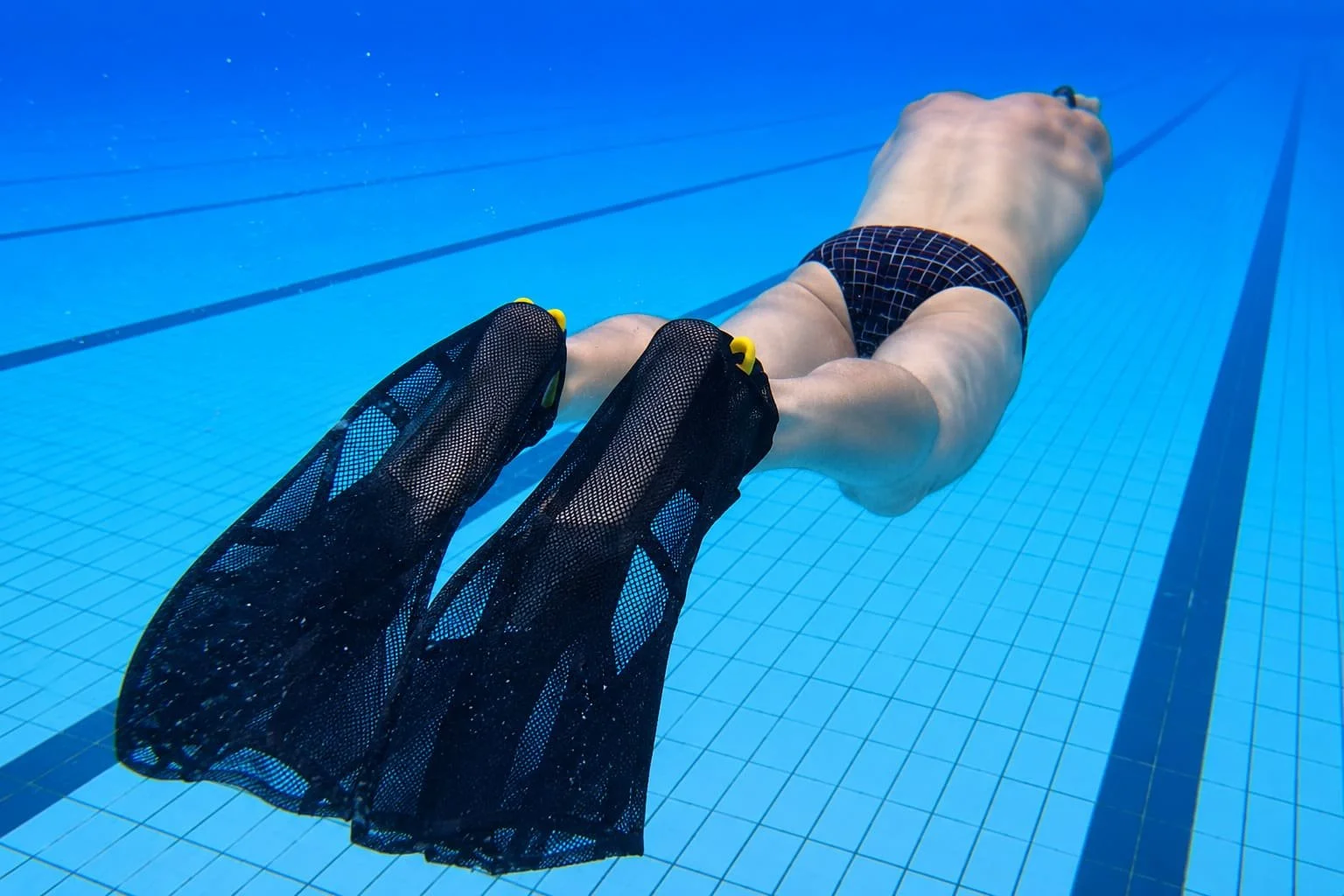
Although both tools have a place in swim training, they're most effective when matched to the swimmer's experience and training goals.
Fins are an excellent choice for:
Beginner swimmers learning body position
Freestyle and butterfly kick drills
Sprint tempo work
Underwater dolphin kick practice
Technique-focused training sessions
Drag socks are best suited for:
Competitive swimmers with established technique
Short resistance-based kick sets
Building lower-body power
Preparing for race-specific training
Developing stronger pressure against the water
For newer swimmers, I almost always recommend mastering bodyline and kick timing with fins before adding additional resistance. Building strength on top of poor mechanics rarely produces faster swimming.
How This Shows Up in Racing
The real value of kick training isn't measured during practice—it's measured on race day.
Swimmers who train their kick with purpose don't just build stronger legs. They develop a kick they can rely on under fatigue to maintain body position, support the stroke, and preserve momentum through the finish. Underwater dolphin kicks stay more controlled, breakouts carry more speed, and the kick continues contributing to propulsion even as fatigue sets in.
One of the biggest differences I notice in competition isn't who kicks the hardest—it's who maintains an effective kick the longest. Swimmers who regularly combine resistance work with drag socks and high-tempo training with fins tend to hold better alignment, preserve stroke rhythm, and maintain speed over the final meters. That's the goal of purposeful kick training—not simply stronger legs, but a kick that continues producing propulsion when technique begins to break down.
How to Add This Into Your Training
You don't need to completely change your training program to benefit from these tools. The important thing is using them with a clear objective rather than simply adding equipment for the sake of variety.
Choose fins when the goal is improving rhythm, body position, or race tempo. Reach for drag socks when you want to build strength, increase pressure against the water, or challenge your kick mechanics. Whatever you choose, finish by returning to normal swimming so your body learns to transfer those improvements into your stroke.
Final Thoughts
I've always believed that excellence lives in the fundamentals, and the kick remains one of the most overlooked fundamentals in swimming. It's easy to focus on the catch, the pull, or stroke rate, but none of those reach their full potential without a kick that supports the entire stroke.
Fins and drag socks aren't competing pieces of equipment. They're training tools that help swimmers develop different qualities. When you understand the purpose behind each one and use them intentionally, you build more than strength or speed—you develop a kick you can trust when the race is on the line.
Take the Next Step
If you want a dryland program that's built around your stroke, goals, and weaknesses—not a one-size-fits-all workout—our Custom Swim Dryland Program is designed specifically for competitive swimmers. Every plan is tailored to complement your pool training, helping you build strength, power, and mobility that translates directly into faster swimming.
Learn more about Custom Swim Dryland and start training with purpose.

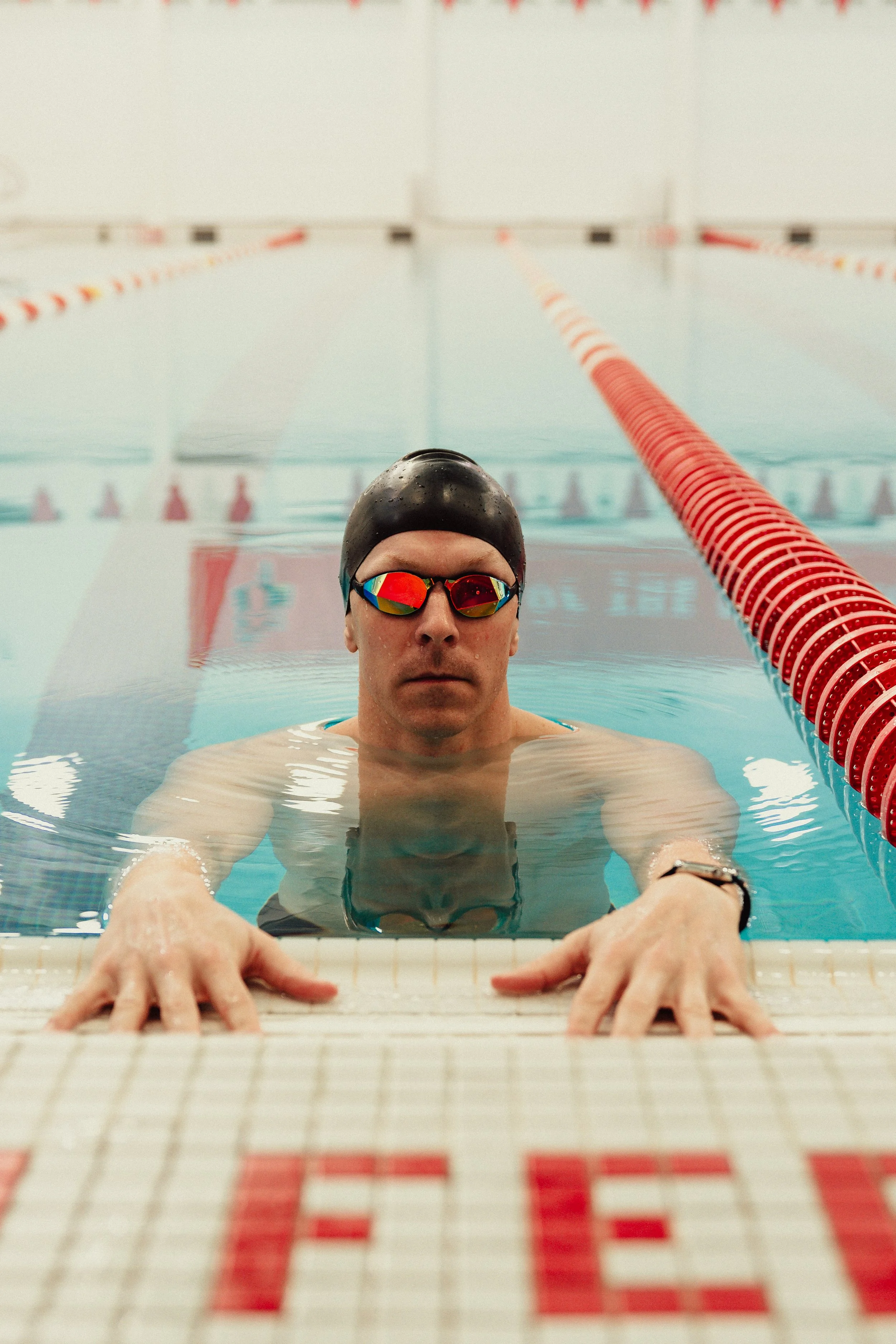
Should you train with fins or drag socks? While both are valuable swimming tools, they develop different qualities. Drag socks build kick-specific strength and improve force production, while fins enhance rhythm, body position, and speed. In this guide, Coach Dan Daly explains how combining resistance and assisted training creates a more powerful, efficient kick that transfers directly into racing. Learn when to use each tool, common mistakes to avoid, and how to structure kick sets for maximum performance.