

Best Hair Care for Swimmers: Simple Ways to Protect Your Hair From Chlorine
/Swimmers spend hours every week in chlorinated water. Over time, that constant exposure can leave hair dry, brittle, tangled, faded, or difficult to manage. I’ve seen this become especially common during heavy training blocks when swimmers are in the pool six or even ten times per week.
The good news is that most swimmer hair problems are preventable.
You do not need a complicated beauty routine or expensive salon treatments. In my experience, the best hair care for swimmers comes down to a few simple habits done consistently before and after practice.
Whether you swim competitively, train for triathlon, or spend long summer days in the pool, these practical swimmer hair care strategies can help protect your hair from chlorine damage and keep it healthier throughout the season.
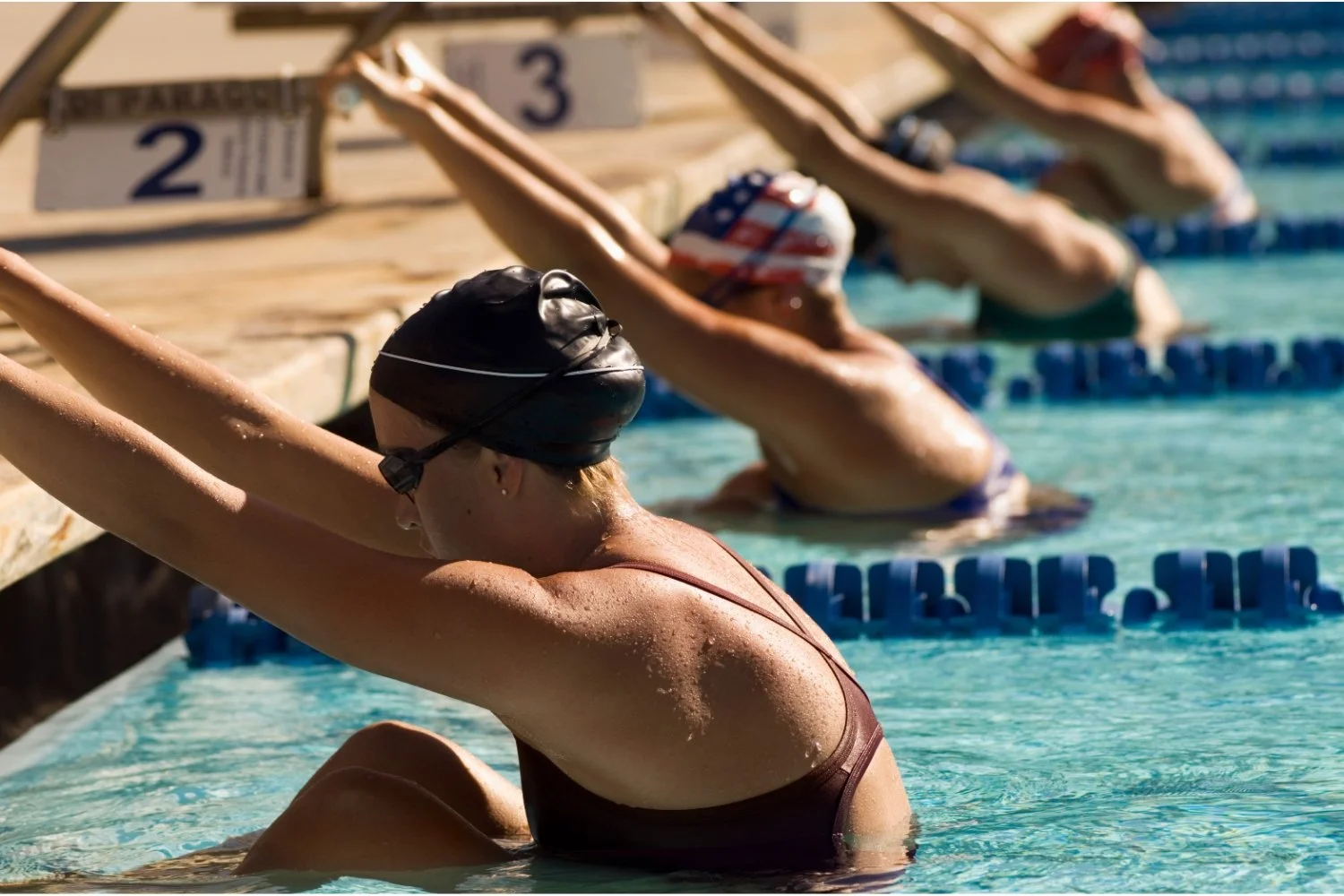
Why Swimming Is Hard on Your Hair
Chlorine is designed to kill bacteria and keep pools safe. Unfortunately, it also strips natural oils from your hair and scalp.
When swimmers are exposed to chlorine daily, hair gradually loses moisture and flexibility. That is why many swimmers notice:
Dry or rough texture
Tangled hair after practice
Increased breakage
Frizzy ends
Scalp irritation
Faded or dull-looking hair
Outdoor swimming adds another layer of stress. Sun exposure, wind, and saltwater can make swimmer hair even drier during the summer season.
Training volume matters too. A swimmer practicing twice daily simply exposes their hair to more chlorine than someone swimming recreationally once or twice per week.
That’s why consistent hair care for swimmers becomes more important as training increases.
Pre-Swim Hair Care Habits That Actually Help
One of the biggest mistakes swimmers make is only thinking about hair care after practice.
In reality, prevention matters just as much.
Wet Your Hair Before Entering the Pool
Hair works like a sponge. If your hair is already saturated with clean water before practice, it absorbs less chlorinated pool water.
This is one of the simplest and most effective pre swimming hair care habits.
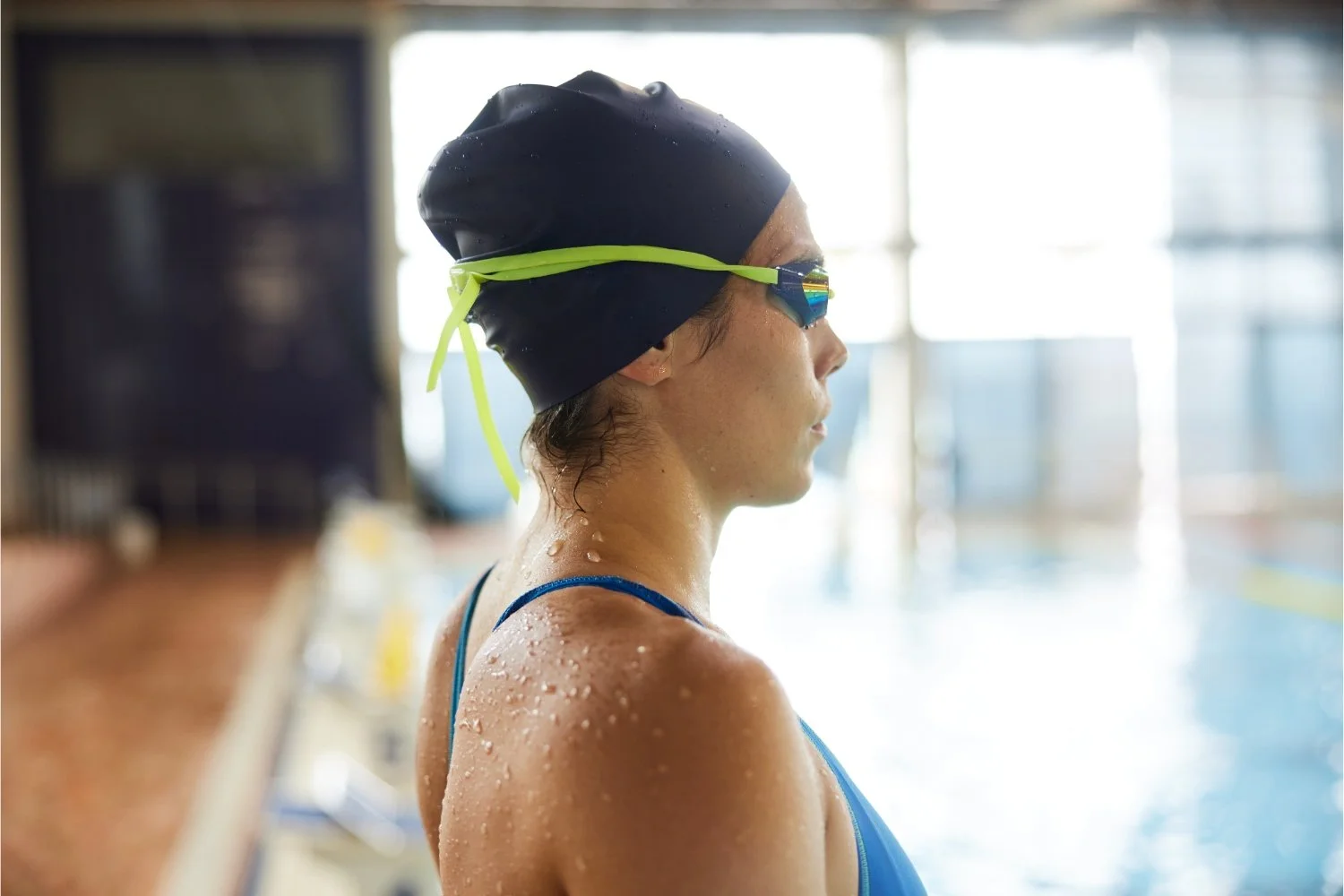
Before getting in:
Rinse your hair thoroughly in the shower
Make sure the hair is fully wet
Then put on your swim cap
It takes less than a minute but can help reduce chlorine exposure significantly.
Use a Pre Swim Conditioner
Many competitive swimmers use a light leave-in or pre swim conditioner before training.
This creates a small protective barrier that helps reduce dryness and tangling during practice.
You do not need heavy products. In fact, lighter conditioners often work better under swim caps.
The goal is simple:
reduce moisture loss
protect the hair cuticle
improve manageability after swimming
Wear a Properly Fitted Swim Cap
A swim cap will not keep hair completely dry, but it does reduce direct exposure to chlorine and friction.
Caps also help prevent tangles, especially during longer sessions.
For swimmers training regularly, silicone caps are usually more comfortable and durable than latex options.
If you have long hair:
tie it loosely first
avoid overly tight hair ties
secure the cap carefully to reduce pulling and breakage
Rinse Immediately After Practice
One of the best hair habits swimmers can build is rinsing immediately after getting out of the pool.
Do not leave chlorine sitting in your hair for hours after practice.
Even a quick rinse right away is far better than waiting until later in the day.
Excellence lives in the fundamentals — and swimmer hair care is no different.
Best Shampoo for Swimmers After Practice
Regular shampoo is not always enough for swimmers training multiple times per week.
Over time, chlorine minerals and pool chemicals build up in the hair. That buildup can leave hair feeling stiff, dry, or heavy even after washing.
That’s where a clarifying shampoo for swimmers can help.
What Clarifying Shampoo Does
Clarifying shampoos are designed to remove:
chlorine residue
mineral buildup
pool chemicals
excess oils and product buildup
Many after swim shampoo products also include moisturizing ingredients to help reduce dryness after cleaning the hair thoroughly.
For competitive swimmers, this can make a noticeable difference in how hair feels after practice.
How Often Should Swimmers Use Clarifying Shampoo?
This is important: more is not always better.
Using a strong clarifying shampoo every day can overdry the hair and scalp.
For most swimmers:
1–3 times per week is enough
lighter shampoos can be used between sessions
heavy training periods may require slightly more frequent use
Pay attention to how your hair responds rather than following a rigid schedule.
Ingredients That Help Swimmers
Good hair products for swimmers often include ingredients that support moisture and recovery, such as:
aloe vera
coconut oil
argan oil
vitamin E
gentle cleansing agents
Avoid overly harsh shampoos that leave the hair feeling extremely stripped or brittle after washing.
Best Clarifying Shampoo for Swimmers
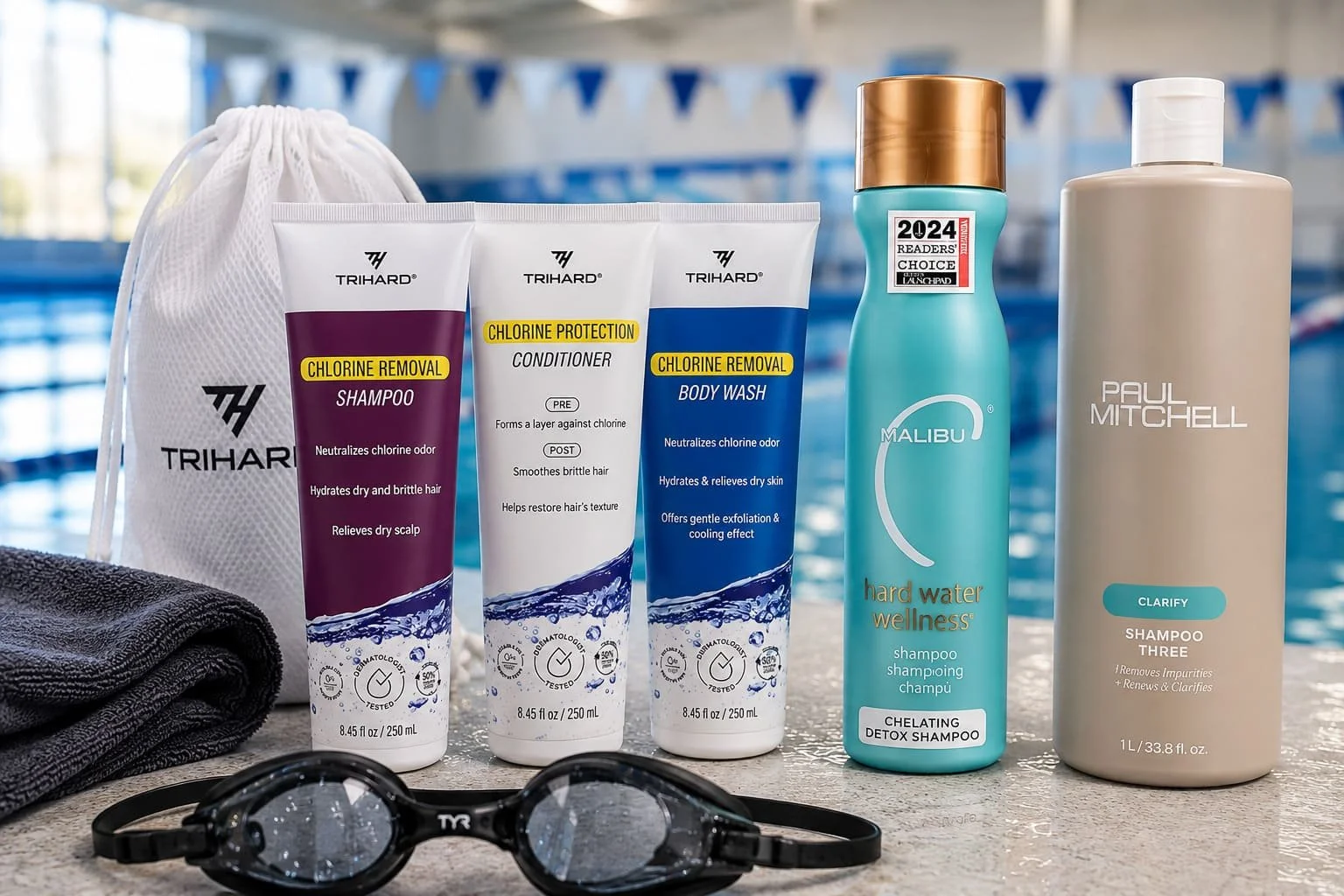
Many competitive swimmers use chlorine-removal shampoos to help remove pool chemicals and mineral buildup after heavy training weeks.
Recommended options:
Malibu C Swimmers Wellness – Gentle chlorine removal with good moisture balance for regular swimmers.
Trihard Swimmer's Shampoo Extra Boost – Popular among competitive swimmers and triathletes for heavier training schedules.
Ultra Swim and Paul Mitchell Shampoo Three are also longtime swimmer favorites frequently recommended in swim communities.
Why Swimmers Need a Good Conditioner
Conditioner is one of the most important hair care products for swimmers.
Swimming repeatedly removes natural oils from the hair. Conditioner helps restore moisture, reduce tangling, and improve flexibility.
For swimmers with longer hair, this becomes even more important during heavy training seasons.
Benefits of Swimming Conditioner
A good swimming conditioner can help:
soften dry hair
reduce breakage
improve detangling
smooth rough texture
restore moisture after chlorine exposure
Many swimmers focus heavily on shampoo but skip conditioner consistently. Over time, that usually leads to more dryness and frizz.
Leave-In vs Rinse-Out Conditioner
Both can be useful.
Rinse-out conditioners work well after practice to restore moisture.
Leave-in conditioners can help:
reduce tangles
protect hair during the day
improve manageability between sessions
Some swimmers use both depending on training volume and hair condition.
Common Conditioner Mistakes
A few mistakes I see swimmers make often:
using too little conditioner
rinsing it out immediately
applying only to the surface
skipping conditioning during double-practice weeks
Consistency matters more than using expensive products.
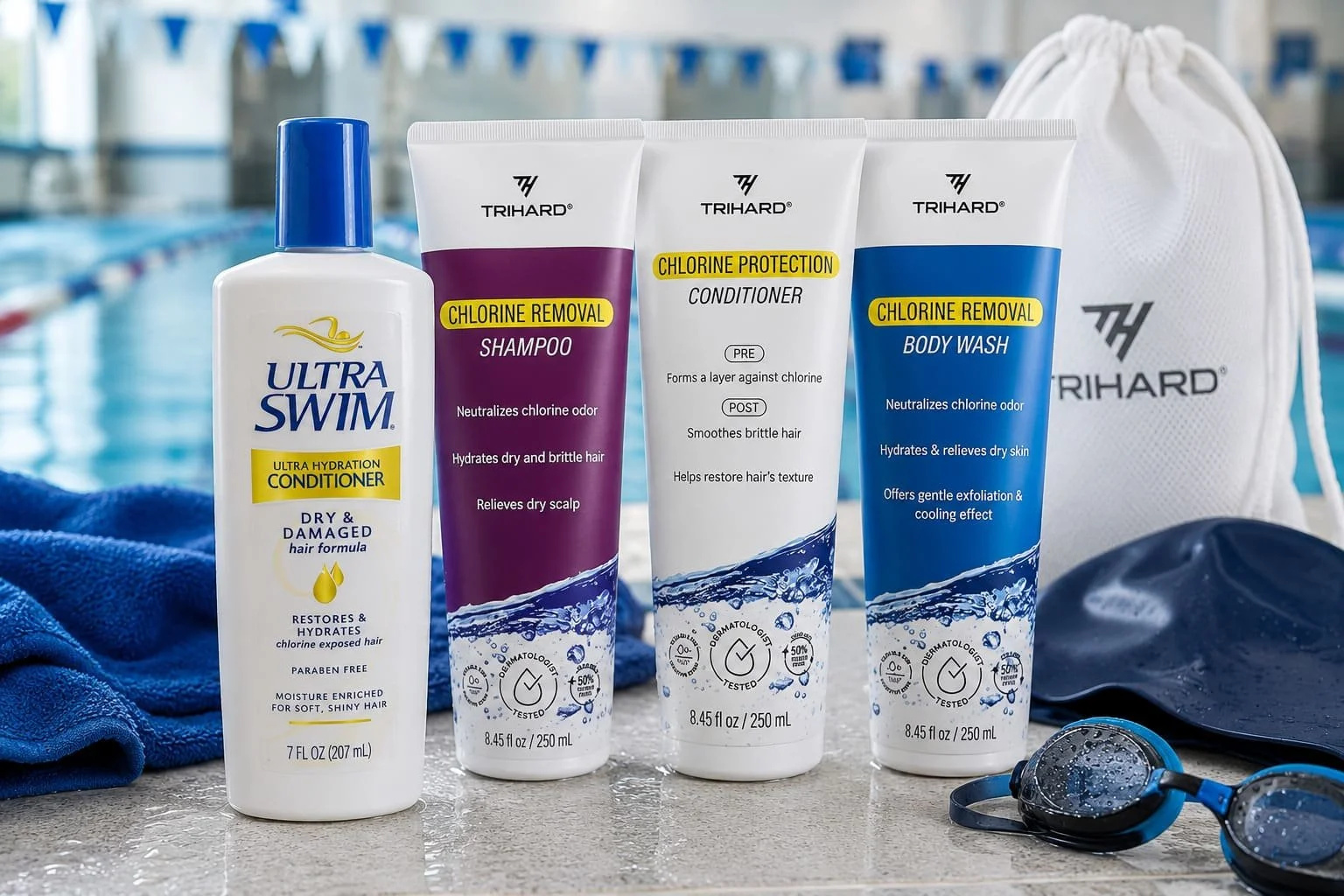
Best Conditioner for Swimmers
Conditioner becomes especially important during periods of frequent pool exposure when hair starts feeling dry or difficult to manage.
Recommended options:
TRISWIM After Swim Care Conditioner – Designed specifically for swimmers dealing with chlorine exposure.
Ultra Swim Ultra Repair Conditioner – Good budget-friendly recovery conditioner for daily swim training.
Best Hair Mask for Swimmers
During periods of heavy training, swimmers may benefit from using a hair mask once per week.
This is especially useful for hair that feels:
extremely dry
brittle
difficult to brush
damaged from chlorine exposure
A quality hair treatment after swimming helps restore moisture and improve overall hair texture.
Weekly Hair Recovery Routine
A simple swimmer hair recovery routine might look like this:
Daily: rinse after swimming and use conditioner
1–3x weekly: clarifying shampoo
Weekly: deep conditioning hair mask
Always: rinse hair before entering pool
Simple routines are usually easier to maintain consistently during a busy swim season.
Common Hair Care Mistakes Swimmers Make
Over the years, I’ve noticed that swimmer hair problems are often caused more by daily habits than by the pool itself. One of the biggest mistakes is leaving chlorine in the hair for hours after practice. Even a quick rinse immediately after swimming can help reduce dryness and buildup significantly.
Another common issue is using harsh shampoo too often. Many swimmers think stronger shampoo means cleaner hair, but overwashing can strip away the little natural moisture the hair still has after long pool sessions. That usually leads to even more dryness, tangling, and breakage over time.
I also see swimmers skip conditioner regularly, especially during busy training weeks. But frequent pool exposure makes moisture recovery extremely important. A good swimming conditioner helps reduce friction, improves manageability, and keeps the hair from becoming overly brittle during heavy swim blocks.
Older loose swim caps can also create problems. They allow more chlorinated water exposure and increase friction during practice, especially for swimmers with longer hair. Sometimes replacing an old cap makes a bigger difference than changing products.
Finally, many swimmers ignore small warning signs early in the season. Mild dryness and tangling are usually easy to manage at first, but if ignored for weeks, they can turn into much larger hair recovery problems later in the season.
Simple After Swim Hair Care Routine
If you want a practical after swim hair care routine that is easy to follow, start here:
Rinse hair immediately after practice
Wash with swimmer-friendly shampoo when needed
Apply conditioner thoroughly
Dry gently with a towel instead of aggressive rubbing
Use a hair mask once weekly during heavy training periods
That simple routine is enough for most swimmers to keep their hair healthier throughout the season.
Final Thoughts
In my experience coaching swimmers, consistency matters far more than complicated routines or expensive products.
The swimmers who protect their hair best usually focus on simple fundamentals:
rinsing before and after practice
using the right shampoo and conditioner
staying consistent during heavy training periods
Recovery outside the pool matters too. Sleep, hydration, nutrition, and micronutrient intake all influence how well swimmers recover during intense training cycles. If you want to improve overall swimmer recovery, energy, and performance, explore our guide to best vitamins for swimmers.