

Kickboard Swimming Drills for Stronger Technique and Power
/If you've spent any time on a pool deck, you’ve seen swimmers of all levels reaching for a kickboard. Some rely on it for warm-ups, others for long aerobic kick sets, and beginners often use it for support as they learn body alignment. Over my years coaching, I’ve watched this simple piece of equipment either transform technique – or reinforce bad habits.
A kickboard is a tool, not a crutch. Used properly, it can sharpen your kick timing, strengthen your legs, and improve your feel for the water. Used poorly, it can turn your body into a snowplow, creating drag instead of building efficiency.
That’s why kickboard swimming drills matter. When the drills are intentional and technique-minded, they help swimmers build power, rhythm, and better body position.
So let’s break down how to use a kickboard in swimming the right way – with drills, progressions, and coaching cues you can apply immediately.
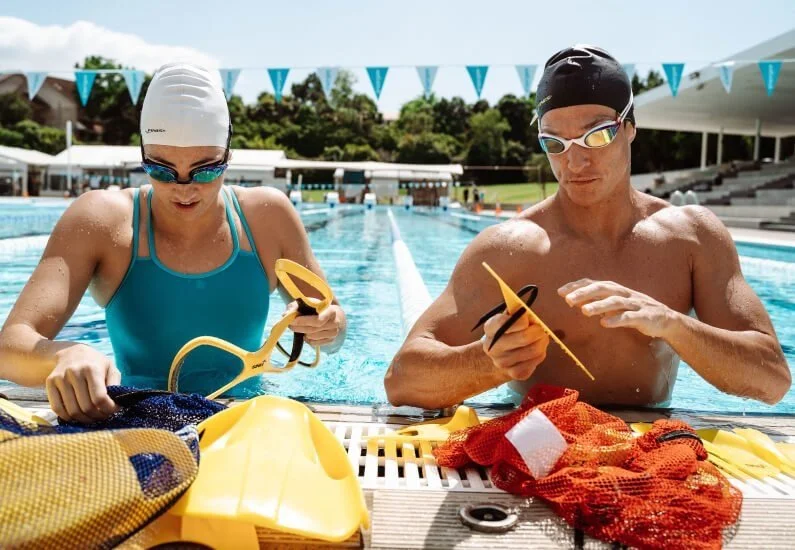
Save on Swimming Gear
Dial in your fundamentals with FINISSWIM gear I rely on in weekly training sessions. Use DALY25 at checkout to take 25% off select swim and dryland equipment.
Why Kickboards Still Matter in Modern Swim Training
There’s been debate in recent years about whether swimmers should rely less on boards to avoid dropping hips or losing streamline. I get the logic – in my coaching philosophy, excellence lives in the fundamentals, and streamline should always come first. But that doesn’t mean we abandon the kickboard altogether.
A professional swimming kickboard allows you to isolate your legs, reinforce propulsive pathways, and build conditioning without overloading your shoulders. With thoughtful technique, it becomes a powerful tool for:
Improving body awareness and posture
Strengthening hip-driven kicking patterns
Building lower-body speed
Developing race-appropriate kick timing
Supporting beginners learning balance in the water
The key is choosing the right kickboard and pairing it with intentional kickboard swimming drills – not simply pushing water blindly for laps.
How to Choose the Right Kickboard (Including Weight & Body Type)
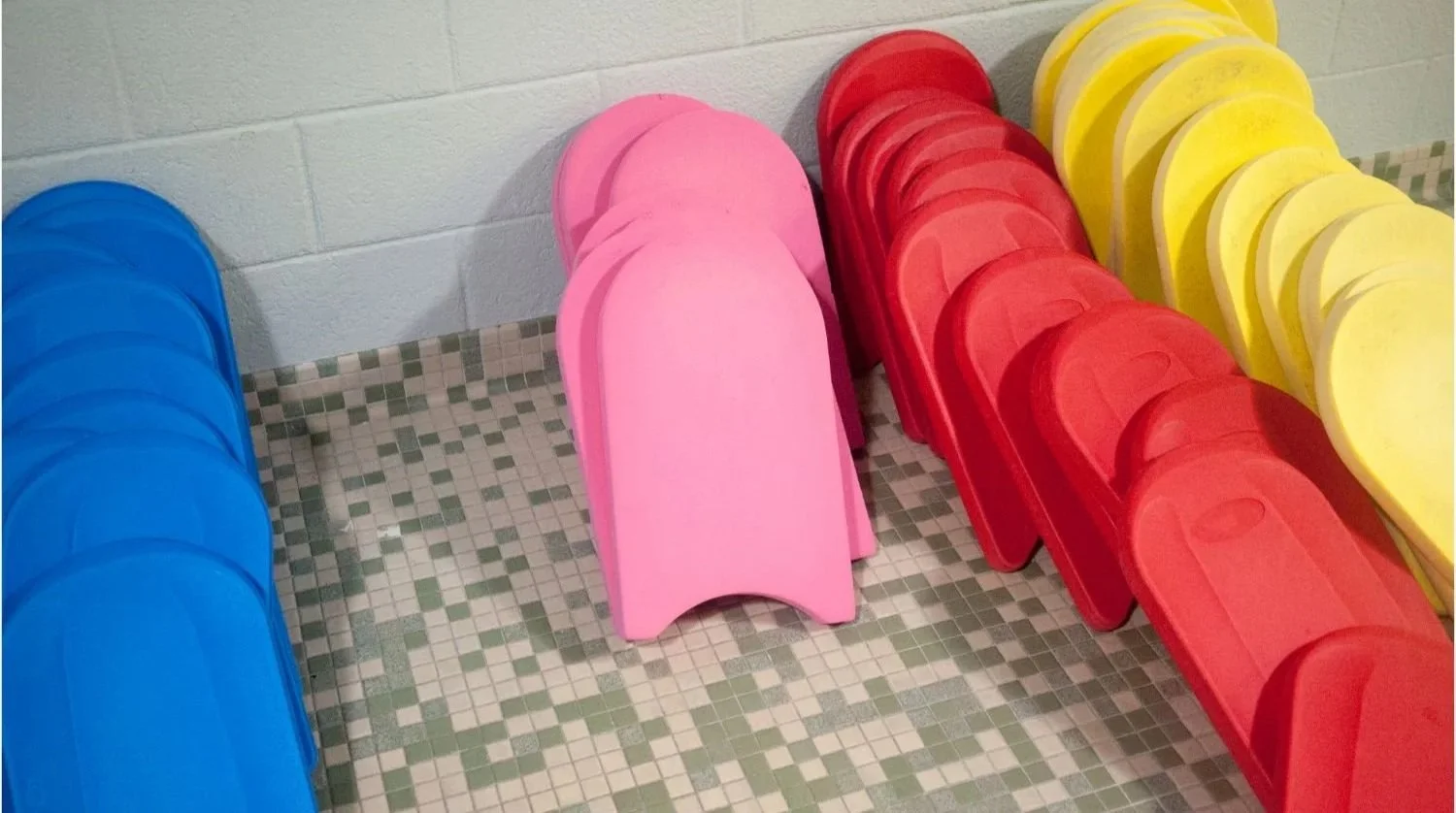
After coaching hundreds of swimmers, I’ve noticed something simple: the wrong kickboard creates poor habits before the first length is even swum.
Here’s what I look for.
1. Board Size
Smaller, hydrodynamic kickboards work well for competitive swimmers who want less lift and more natural body position.
Classic full-size rectangular boards are great for beginners who need more stability and buoyancy.
2. Buoyancy Relative to Swimmer Weight
Light swimmers (kids, masters with low body fat, smaller-built athletes):
A higher-buoyancy kickboard prevents sinking hips and keeps confidence high.Heavier or more muscular swimmers:
A low-profile board reduces excessive lift and stops the swimmer from “snowplowing” water.
If the kickboard is too buoyant, the chest pops up and the hips drop.
If it’s not buoyant enough, the swimmer strains their upper body just to stay stable.
We want neutral balance, not overcorrection.
3. Material & Durability
High-quality EVA foam, like what you see in Finis Kickboard, lasts longer and keeps shape under repetitive load.
4. Grip & Edge Design
Beginner swimmers benefit from broad boards, sometimes with hand grooves.
Competitive swimmers often prefer smooth edges for a cleaner line.
How to Use a Kickboard in Swimming (Technique First)
Technique always sets the foundation. Anytime you’re swimming with a kickboard, think:
Long spine
Pull your ribs in
Hips and heels close to the surface
Kick from the hips, not the knees
Steady exhale into the water
If your upper body rises higher than your hips, ditch the board for a moment and switch to streamline kick or vertical kick. Then come back to the board once balance is restored.
Kickboard Swimming Sets Every Swimmer Should Master
Below are the coach-approved kickboard swimming exercises I use from beginners all the way to national-level athletes. Each drill connects technique, awareness, and body alignment – the Train Daly way.
1. Flutter Kick with Neutral Head Position
Purpose: Develop long-axis alignment and hip-driven power
Most swimmers lift the head too high during kickboard work, dropping the hips and creating drag. Instead, place the board just above the forearms, keep the chin near the water, and let the spine lengthen.
For a deeper breakdown of proper mechanics, see my guide to flutter kick technique. Key Cues:
Eyes down
Toes pointed but relaxed
Small, fast kicks
Hips drive the movement
This sets the foundation for every other swim kickboard workout
2. Breaststroke Kick with Kickboard
Purpose: Improve timing, widen the power phase, and reduce knee-dominant kicking
Among the most effective kickboard swimming drills, breaststroke kick work stands out because it allows swimmers to isolate the movement and feel true propulsion. Kickboards – whether you bring your own or use one from the pool – are everywhere, and when used intentionally, they become excellent tools rather than disruptors of streamline. No matter the board shape or hand position, the priorities stay the same: long, taut arms and clean bodylines.
Stay low to the water, keeping the mouth near or even in the water. One of the bonuses of swimming with kickboards is more breathing opportunity, but that doesn’t mean constant inhaling. When you maintain a lower profile and control your breath, you’ll feel how buoyancy shifts between a full inhale and a long exhale – a key awareness point for breaststroke efficiency.
For swimmers who want a balance between streamline kicking and board support, I often recommend the Finis Alignment Kickboard. Its low-profile, minimal buoyancy design gives just enough support for surface and underwater work. The hand strap also enables single-arm drills and clean streamline positions off the wall.
How to Execute the Drill
Hold the board lightly at the top edge – don’t grip it too tightly. The focus is on technical precision rather than muscling through the water.
Key Cues:
Bring the heels toward the glutes
Turn the feet outward to prepare the catch
Drive the power phase from the hips instead of the knees
Recover with a narrow, hydrodynamic line
3. Vertical-to-Horizontal Kick Transfer
Purpose: Build core engagement and stabilize kicking pattern
Start with vertical kick for 10 seconds – flutter or dolphin – then transition immediately to kickboard kicking for 25 meters. You’ll see instant improvement because the athlete must engage the core before grabbing the board.
4. Dolphin Kick with Swimming Kickboard
Purpose: Teach undulation from the chest instead of the knees, while maintaining natural bodyline
Most swimmers struggle with dolphin kick on a traditional kickboard because the board forces the chest too high, breaking the wave pattern. That’s why I like using small more streamlined boards – just like the one in my video below. It gives enough support without disrupting body position, so swimmers can feel a smoother, more natural undulation.
Coaching Cues:
Initiate the movement from the chest – not the knees
Keep the board low and stable, letting the hips follow the wave
Aim for small, controlled amplitude rather than big kicks
Maintain continuous exhale into the water
This progression teaches swimmers to sync their kick with their bodyline rather than relying on excessive knee bend. It’s one of the most effective kickboard swimming exercises for connecting dolphin kick rhythm to butterfly timing.
5. Single-Arm Kickboard Balance
Purpose: Improve body alignment and rotation awareness
Hold the board with one hand centered at the top. This drill exposes imbalance quickly – the shoulders rotate, the hips respond, and swimmers get a clearer sense of how their body moves through the water. It’s also a great way to reinforce lateral stability, something I talk about often in my breakdown of side stroke body control.
Alternate arms every 25 to challenge both sides of the body equally.
6. Kickboard Push-Offs for Beginners
Purpose: Build comfort and teach forward propulsion
For swimmers new to the water, the kickboard becomes essential beginner training equipment. Kickboard push-offs are one of the safest ways to introduce forward movement without overwhelming the athlete. Push off gently, keep the arms long, and maintain light, controlled kicking.
This drill also introduces the basic concept of propulsion, which I break down further in my article on
swimming propulsion. By building confidence early, swimmers learn balance and momentum while swimming with a kickboard.
7. Descending Kickboard Sets
Purpose: Build speed endurance and pacing control
One of my favorites from season plans:
4×50 flutter kick with kickboard (descend 1–4)
Focus on faster leg turnover and steady breathing.
Kickboard Swimming Workouts (Beginner to Advanced)
Beginner Swim Kickboard Workout
4×25 flutter kick with fins and board
4x :20 stationary kicking into the wall
2×:10 vertical kicking arms down
Goal: comfort, balance, relaxed breathing.
Intermediate Workout
6×25 12.5yds underwater, 12.5 kick on your back
4×25 single-arm balance drill
3×50 descend with tight intervals
Goal: build endurance and refine technique under light fatigue.
Advanced Kickboard Training Session
8×15m underwater kick - event specific
8x25 streamline surface kick with snorkel
8×25 underwater dolphin kick with fins no breath
200 dolphin kick on back with fins
Goal: develop race-ready leg strength and efficiency.
When NOT to Use a Kickboard
A kickboard is a tool, not a fix for every situation. I avoid using it when a swimmer’s hips sink, when there’s shoulder discomfort, or when we’re working on streamline and breakouts. If a swimmer starts over-kicking and losing coordination, the board isn’t helping. In these cases, even the best kickboard swimming drills won’t transfer well. Streamline kicking or snorkel work provides better connection to full-stroke mechanics.
My Coaching Takeaway
Kickboards for swimming aren’t going anywhere – nor should they. When used with intention, a kickboard improves posture, leg power, and body awareness. The key is balancing board work with streamline-based kicking so swimmers never lose what matters most: connection from the hips through the core.
A classic kickboard for swim training gives beginners confidence. A professional swimming kickboard keeps advanced athletes accountable to technique. Ultimately, you choose the tool that supports your training goal – not the other way around.