

Freestyle Swimming Mobility and Rotation: How Better Mobility Creates a Stronger Stroke
/There’s a moment I see all the time on deck. A swimmer finishes a set frustrated. They’re working hard, trying to fix their stroke, but it still feels tight. Then they push off again, and within a few strokes, the issue becomes clear.
They’re swimming flat.
There's no real freestyle body rotation. The shoulders are doing all the work while the hips stay almost completely flat. Most swimmers assume this is simply a technique problem. In reality, it's often a mobility problem.
Because if your body can’t rotate, your stroke has nowhere to go.
You can feel this even on deck. Try to move your arm in a full circle without turning your torso. It feels restricted. Now add a small amount of rotation through your spine, and suddenly the movement opens up. That’s what should be happening in freestyle.
But instead of fixing that, most swimmers try to force the stroke — more drills, more effort, more control. And nothing really changes.
If your shoulders, hips, and thoracic spine don’t move well together, you’ll always be working around that limitation. That’s why some swimmers look smooth… and others always look like they’re fighting the water.
Why Rotation Changes Everything
Freestyle is not just about pulling water. It’s about how your body rotates through the stroke.
When you develop proper freestyle body rotation, the stroke starts to open up. The shoulder has room to recover cleanly. The arm can move forward without fighting resistance. And suddenly, the stroke feels smoother instead of forced.
I’ve seen swimmers try to fix their recovery for weeks, focusing on hand entry or elbow position. But once we improved their rotation, those issues disappeared almost immediately.
Rotation isn’t an extra detail. It’s the foundation.
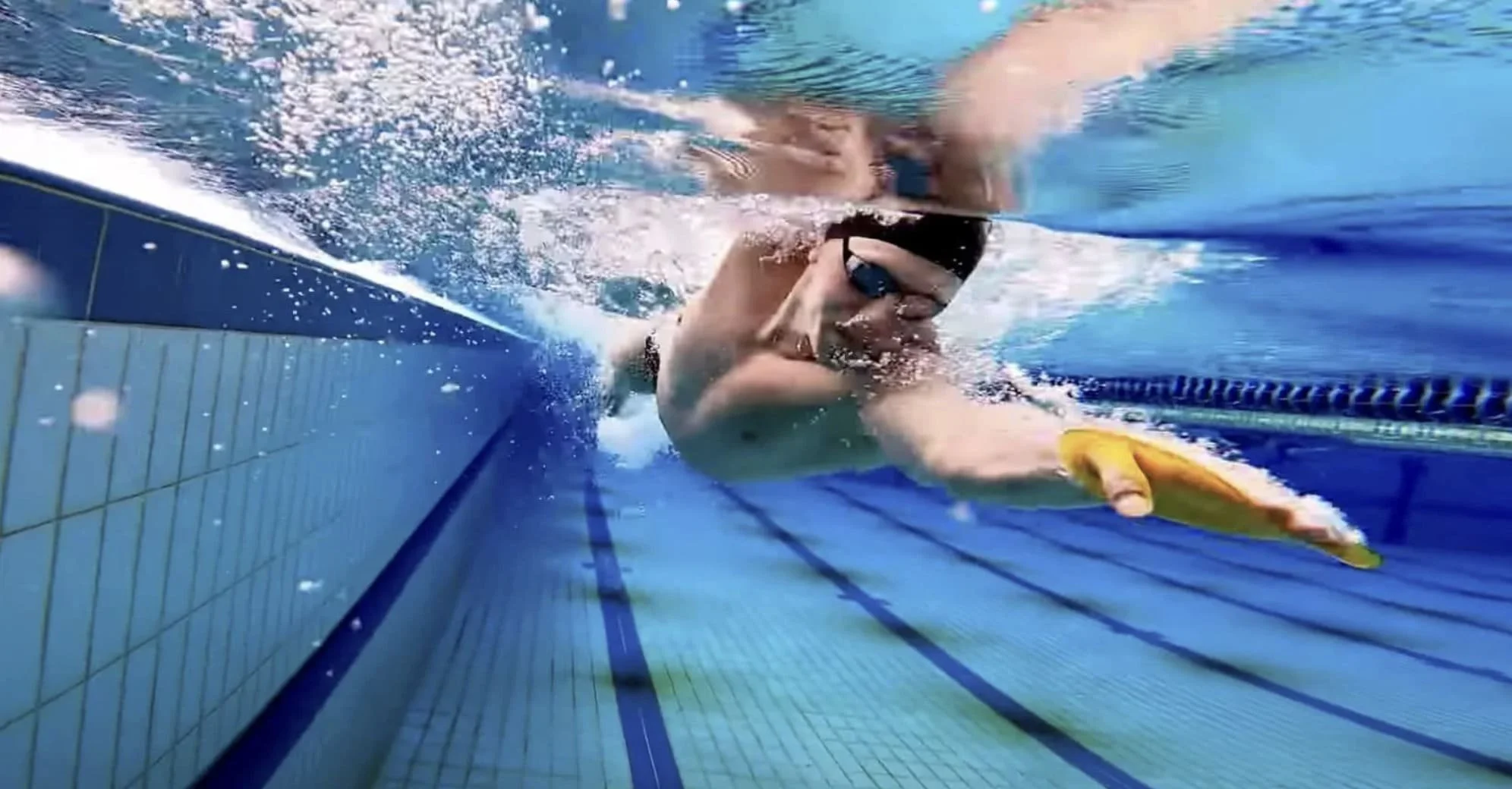
What Happens When You Don’t Rotate
When the body stays flat, the shoulder runs out of space.
You can feel this even standing on deck. Try to swing your arm in a full circle without turning your torso. It feels restricted, almost blocked. Now rotate your upper body slightly and try again. The movement becomes smooth and natural.
That’s exactly what’s happening in the water.
Without rotation through the thoracic spine, the shoulder can’t complete a clean recovery. The arm starts to swing wide, the elbow drops, and the stroke becomes inefficient. Over time, this also puts more stress on the shoulder joint.
In many cases, what looks like a “technique problem” is actually a mobility limitation.
The Link Between Mobility and Freestyle Rotation
This is where most swimmers misunderstand the problem.
They try to force better rotation in the water, but the body simply doesn’t have the range to do it.
In my experience, two areas matter most.
The first is the thoracic spine. If the upper back is stiff, rotation becomes limited and forced. The swimmer ends up staying square, even if they’re trying to rotate.
The second is shoulder mobility. If the shoulder can’t move freely through a full range, it compensates. That’s when you see wide recoveries or awkward entries.
When these two areas improve, rotation in freestyle starts to happen naturally. You don’t have to force it. The body allows it.
How to Rotate in Freestyle Swimming
Learning how to rotate in freestyle swimming isn't about exaggerating the movement. Good freestyle rotation is all about timing and connection.
I tell swimmers to think of rotation as a natural body roll rather than a dramatic twist. The hips and shoulders should move together, guided by the core, so the entire body works as one unit. As the hand enters the water, your body should already be rotating into position, creating a stable platform for an efficient catch.
Too much rotation causes you to lose rhythm and balance. Too little rotation leaves the stroke feeling tight and restricted, forcing the shoulders to do more work than they should.
The goal is to find the middle ground where every stroke feels smooth, balanced, and repeatable. When your mobility and timing work together, rotation becomes effortless instead of something you have to force.
How to Use Your Hips Instead of Your Shoulders
One of the biggest breakthroughs I see in swimmers happens when they realize that rotation shouldn't begin with the shoulders. It should start with the hips and transfer through the core, allowing the entire body to rotate as one connected unit.
When the hips lead the movement, the shoulders no longer have to force the stroke. Instead, they simply follow the body's rotation. This creates a more efficient pull, makes it easier to achieve an early vertical forearm (EVF), and reduces unnecessary stress on the shoulder joint.
A good way to feel this is to stop thinking about your arms for a moment. Instead, focus on your hips rolling smoothly from one side to the other as you swim. Your shoulders should naturally follow that movement, not create it. Once the timing comes together, the stroke feels lighter, more balanced, and far less forced.
Improving Mobility Outside the Pool
If your body doesn't have the mobility to rotate freely, no amount of technique work will completely fix your freestyle. That's why I include swimming mobility exercises in nearly every dryland program I design. You don't need a long routine. Five to ten minutes before practice can noticeably improve how your stroke feels.
Before you get in the water, check three key areas:
Thoracic spine rotation: Can you rotate comfortably to both sides, or does one direction feel noticeably tighter?
Shoulder mobility: Can you lift your arm overhead and move it through a full range of motion without discomfort or compensation?
Hip mobility: Can your hips rotate smoothly while keeping your core stable, or do they feel stiff and restricted?
Limitations in any of these areas often show up in the pool as poor freestyle body rotation, an inefficient recovery, or extra stress on the shoulders.
The goal isn't simply to become more flexible. It's to develop the mobility that allows you to rotate naturally, maintain good body position, and swim with a smoother, more efficient stroke.
Putting It All Together in the Water
As your mobility improves, applying proper freestyle rotation in the pool becomes much more natural. Instead of thinking about every movement, your body begins to find the correct positions on its own.
Your stroke feels more fluid, your recovery becomes cleaner, and the catch develops from a stronger, more connected body position. Rather than forcing technique, you're allowing good movement to support good technique.
This is where many swimmers experience their biggest breakthrough. They haven't become stronger overnight or trained harder than everyone else. They've simply removed the movement restrictions that were limiting their stroke.
When your body can rotate freely through the hips, core, and shoulders, freestyle becomes smoother, more efficient, and far less tiring.
Build Better Mobility for a Better Freestyle
If your freestyle still feels tight after working on technique, the problem may not be your stroke. It may be how your body moves.
The Mobility Mastery Program helps swimmers identify the mobility restrictions that limit rotation, shoulder recovery, and body position. Instead of relying on random stretches, you'll learn how to improve mobility in the shoulders, hips, and thoracic spine with targeted routines you can use before practice, after training, or on recovery days.
If you want your freestyle to feel smoother, more connected, and less stressful on your shoulders, this is the system I use to help swimmers move better before asking them to swim faster.
About the Author
Dan Daly is a CSCS-certified strength coach and swim coach with over 20 years of experience working with competitive swimmers from high school to national level. He focuses on technique-first development, combining mobility, strength, and stroke mechanics to help swimmers move better and perform at a higher level.