

Swim Current Generator Training: Why I Use It to Build Faster and Stronger Swimmers
/Last fall I swam 45 kilometers around Manhattan in just over seven and a half hours.
A few months later I raced the 50-yard freestyle in 22.15 seconds.
Most swimmers look at those two performances and assume they require completely different athletes. One demands endurance while the other demands speed. In reality, they were built on the same training philosophy.
Different seasons require different priorities.
After spending several months focused on strength, power development, and high-intensity swimming, I've gradually shifted my attention back toward aerobic freestyle training for a summer of open water races ranging from 3K to 10K. That transition doesn't simply mean swimming more yards. It also means changing how I train.
Alongside traditional pool sessions, I use several specialized tools throughout the year, including a swim current generator, the VASA Trainer, and the Destro Power Machine. Each one allows me to develop qualities that are difficult to target during normal lap swimming.
One question I hear from swimmers is whether a swim current generator is worth using. My answer is that it depends entirely on how you use it. Like any piece of equipment, it's not a shortcut. It's simply another tool that can solve specific training problems when used with a clear purpose.
What Is a Swim Current Generator?
A swim current generator creates an adjustable flow of water that allows you to swim continuously while remaining in one location.
Instead of swimming from wall to wall, you're swimming against a steady current. The resistance can usually be adjusted to match everything from easy aerobic swimming to race-pace efforts.
Many swimmers associate this type of setup with an endless pool current generator or a Fastlane swimming machine, but the concept is the same regardless of the manufacturer. The goal isn't to replace traditional pool swimming. It's to create training opportunities that simply don't exist in a standard lap pool.
I've found it especially useful when preparing for open water races or when I want uninterrupted freestyle swimming without constantly breaking rhythm every 25 or 50 yards.
The Swim Current Generator I Use
I've been training with the iGarden Swim Jet X, and it's become a valuable tool for continuous swimming, technique work, and open water-specific preparation. The adjustable current provides immediate feedback on your catch and body position, helping reinforce efficient freestyle mechanics.
If you're thinking about adding a swim current generator to your pool, it's worth taking a look. You can save 5% with code DANDALY5.
Technique Is Harder to Fake
One of the biggest coaching advantages of swimming against a current is how quickly technical mistakes reveal themselves.
During traditional lap swimming, swimmers receive frequent opportunities to reset their body position after every wall. A strong push-off can temporarily hide problems with balance, body alignment, or propulsion.
Swimming against a current removes those resets.
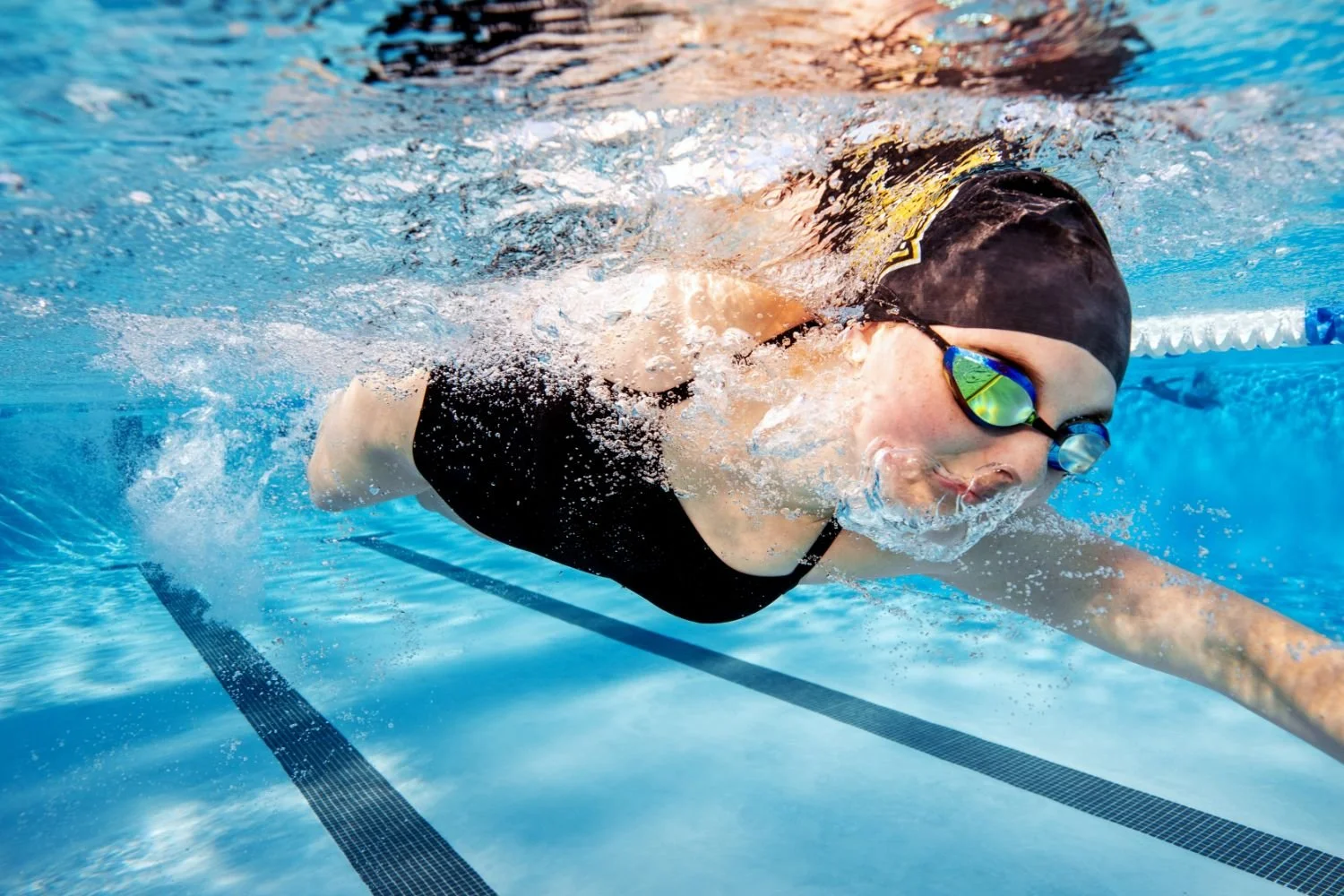
If your hips begin to sink, you'll feel it almost immediately. If your catch slips or you lose pressure on the water, maintaining position becomes noticeably harder. Lifting your head too much during breathing or shortening your stroke often leads to immediate changes in how efficiently you move through the current.
As a coach, I appreciate this constant feedback because swimmers don't have to wait until the next video review or race to recognize when something changes. The water tells them right away.
I've always believed that excellence lives in the fundamentals. The current doesn't reward shortcuts. It rewards efficient body position, a connected catch, and consistent rhythm.
A Better Environment for Open Water Preparation
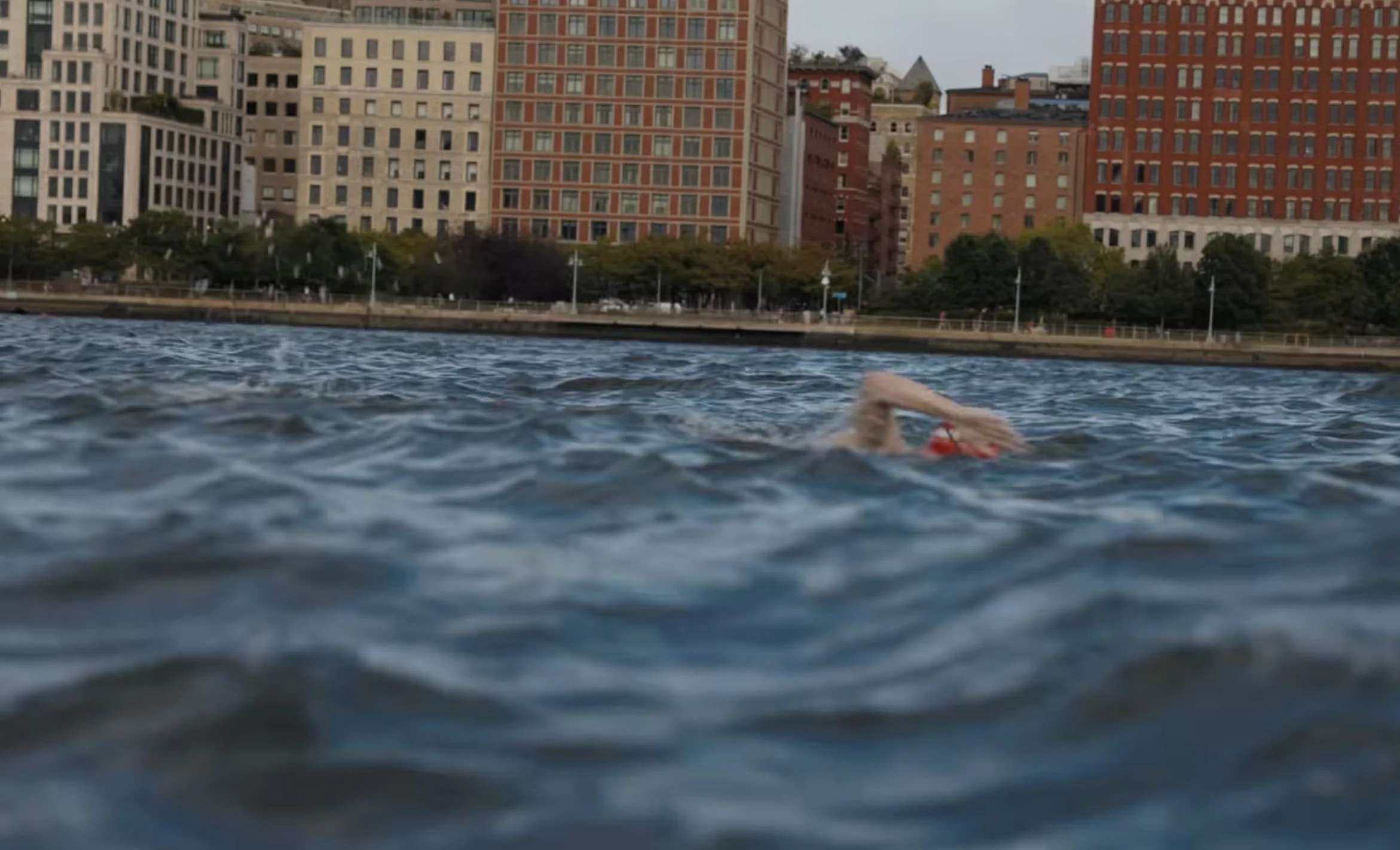
One of the biggest differences between pool racing and open water swimming is continuity. In the pool, every turn provides a brief recovery and a powerful push away from the wall. Open water offers none of those opportunities.
Whether you're racing a 3K or swimming around Manhattan, you're maintaining rhythm for extended periods without interruption. A swimming pool with a current generator allows me to recreate that continuous effort more effectively than traditional lap swimming.
Instead of thinking about walls, split times, or counting lengths, I can focus entirely on maintaining stroke mechanics, breathing rhythm, and sustainable pacing. Those are the same skills that become increasingly important as race distances grow.
Of course, no current system perfectly recreates open water. It can't simulate navigation, drafting, changing conditions, or waves. Those skills still require time outside the pool. However, when the goal is developing uninterrupted freestyle endurance, it's one of the closest training environments available.
Continuous Swimming Changes Your Focus
Many workouts naturally become interval-based because pools are built around lengths. There's absolutely nothing wrong with interval training. It's one of the foundations of competitive swimming.
At the same time, I've found that continuous swimming serves a different purpose. When I spend forty-five to sixty minutes swimming against a steady current, my attention shifts away from making the next send-off and toward maintaining efficient movement over time.
I'm paying attention to stroke length, body position, breathing rhythm, and relaxation rather than simply chasing the pace clock. That change in focus becomes valuable for both competitive swimmers and triathletes because efficiency often determines how well you can sustain speed over longer distances.
Coaching Becomes More Effective
One advantage that often gets overlooked is what the coach sees.
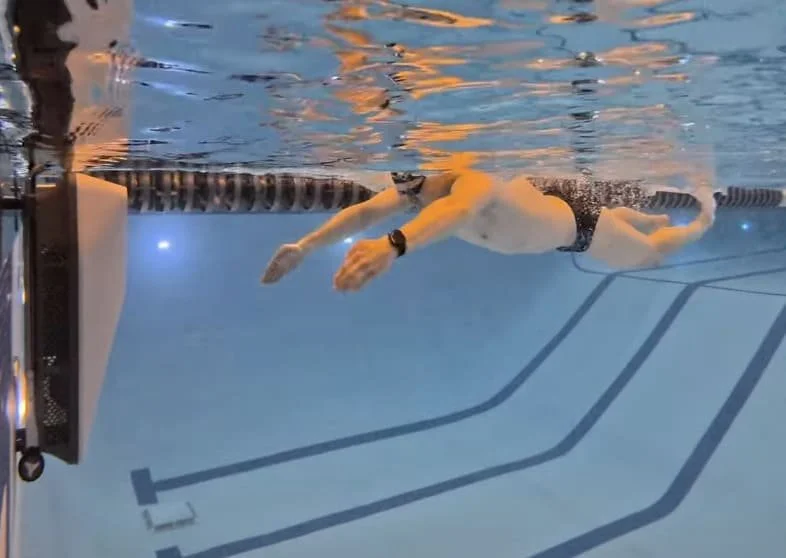
In a traditional pool, swimmers are constantly moving away from you. You may only get a few seconds to observe one part of the stroke before they're halfway down the lane. With a swim current generator, the swimmer remains in front of you for the entire session. That allows me to study details that are much harder to evaluate during lap swimming. I can watch how the hand enters the water, how the catch develops, whether body rotation stays connected, and whether fatigue begins to change mechanics.
It also makes video analysis much more productive because the swimmer remains in the camera's field of view throughout the stroke cycle. Rather than waiting several laps to make an adjustment, I can provide immediate feedback and the swimmer can apply it on the very next stroke.
It's One Tool Among Many
One mistake I see is assuming there's a single piece of equipment that produces faster swimmers.
There isn't.
Throughout the year I rotate different training tools depending on what we're trying to develop. The swim current generator is excellent for uninterrupted freestyle swimming, aerobic development, and technical refinement.
The VASA Trainer allows swimmers to strengthen the catch while reducing pool volume and shoulder stress. It has become one of my favorite tools for developing pulling mechanics that transfer directly into the water.
The DESTRO Power Machine helps develop explosive force production through controlled resistance. That's particularly valuable when the focus shifts toward sprint performance, starts, turns, and power development.
None of these replace swimming. They're simply ways to isolate qualities that are difficult to train effectively during traditional pool sessions. The foundation is still time in the water.
Where a Swim Current Generator Falls Short
As useful as current swimming can be, it's important to recognize its limitations.
Swimming against a current doesn't teach starts, turns, underwater dolphin kicks, or relay exchanges. It also can't fully replicate the constantly changing conditions you'll experience in open water. Every current system creates its own flow characteristics, so the feel of the water is never identical to swimming across a lake or through the ocean.
Some swimmers also enjoy the motivation and energy that comes from training alongside teammates. Continuous swimming alone requires a different mindset and isn't always the best choice for every workout. That's why I see it as a complement to traditional swimming rather than a replacement.
The best training plans combine multiple environments, multiple training methods, and multiple tools throughout the season.
Final Thoughts
One lesson coaching has reinforced over the years is that successful swimmers don't choose between speed and endurance. They develop both. The key is understanding when each quality deserves the greatest attention.
After spending months building speed, strength, and power, I'm now increasing my aerobic freestyle volume again as I prepare for another summer of open water racing. The training looks different than it did a few months ago because the goal has changed.
A swim current generator fits naturally into that transition. It allows me to swim continuously, refine technique under sustained effort, and prepare for the demands of long-distance racing without replacing the value of traditional pool training.
Like every training tool I use, it serves one purpose: helping swimmers perform better when it matters most.