

The Best Dryland Circuit Training for Swimmers Using a Vasa Trainer
/One of the biggest mistakes I see swimmers make with dryland training is treating it like bodybuilding. They spend time on exercises that build general strength but don't always transfer back to the water.
Over the years, I've found that the most effective dryland workouts combine mobility, swim-specific strength. power, and core stability into a single session. That's exactly what this swimming dryland circuit is designed to do.
Whether you're a competitive swimmer, triathlete, open water swimmer, or even a surfer looking to improve paddling strength, this workout targets the movement patterns that matter most. Using a Vasa Trainer along with a few simple dryland exercises, you'll challenge your shoulders, core, hips, and pulling muscles while developing the endurance needed for sustained performance.
What I like most about this circuit is its efficiency. In less than an hour, you can train many of the qualities that contribute to faster swimming without spending additional time in the pool.
Watch the Full Swimming Dryland Circuit Workout
In this workout, I guide you through a five-exercise swimming circuit training session designed to improve strength, endurance, posture, and swim-specific mechanics. The circuit consists of five exercises performed continuously for four rounds, with ten repetitions per exercise and two minutes of rest between rounds.
The workout includes:
Sphinx Reach
Pop-Ups
Head-Up Freestyle
Double-Arm Pull
Half-Kneeling Chop
Together, these movements develop mobility, power, pulling strength, and core control that directly support better swimming performance.
What Is Swimming Circuit Training?
Swimming circuit training combines multiple exercises into a continuous sequence with minimal rest between movements. Instead of focusing on a single muscle group, circuit workouts challenge the entire body while maintaining an elevated heart rate.
For swimmers, this approach offers several advantages.
First, it improves muscular endurance. Swimming events often require repeated force production over long periods, whether you're racing a 200-yard Freestyle or completing a long open water swim.
Second, circuit training helps reinforce movement quality under fatigue. Maintaining good body position, posture, and stroke mechanics becomes more difficult as you tire. By performing exercises back-to-back, swimmers learn to control their movements even when their heart rate is elevated.
Finally, swimming dryland circuits provide an excellent bridge between traditional strength training and pool performance. Rather than isolating muscles, they train the body to work as an integrated system.
Benefits of Swim Circuit Workouts
Improved Muscular Endurance
Swimming requires repeated contractions of the shoulders, back, core, and hips. Circuit training challenges these muscle groups in a way that more closely resembles the demands of swimming than traditional weightlifting alone.
Better Swimming Posture
Body position is everything in the water. Many swimmers struggle with rounded shoulders, poor thoracic mobility, and weak postural muscles. This circuit includes movements that help restore proper alignment and improve efficiency.
Greater Shoulder Stability
Healthy shoulders are essential for consistent training. Exercises such as the Sphinx Reach and Head-Up Freestyle help strengthen the stabilizing muscles that support powerful stroke mechanics.
More Effective Pulling Mechanics
The Vasa Trainer allows swimmers to practice critical skills such as Early Vertical Forearm positioning and a complete underwater pull. These movement patterns directly influence propulsion in Freestyle and Butterfly.
Stronger Core Control
Every stroke begins with a stable platform. The Half-Kneeling Chop teaches swimmers how to connect the hips and shoulders while resisting unwanted movement through the trunk.
Efficient Training
Not every swimmer has unlimited time. A well-designed swim circuit workout can improve multiple physical qualities within a single training session, making it ideal for busy athletes.
The 5-Exercise Swimming Dryland Circuit
This workout consists of five movements that complement each other and address many of the physical qualities swimmers need for success. Each exercise serves a specific purpose while contributing to overall athletic development.
Exercise #1: Sphinx Reach
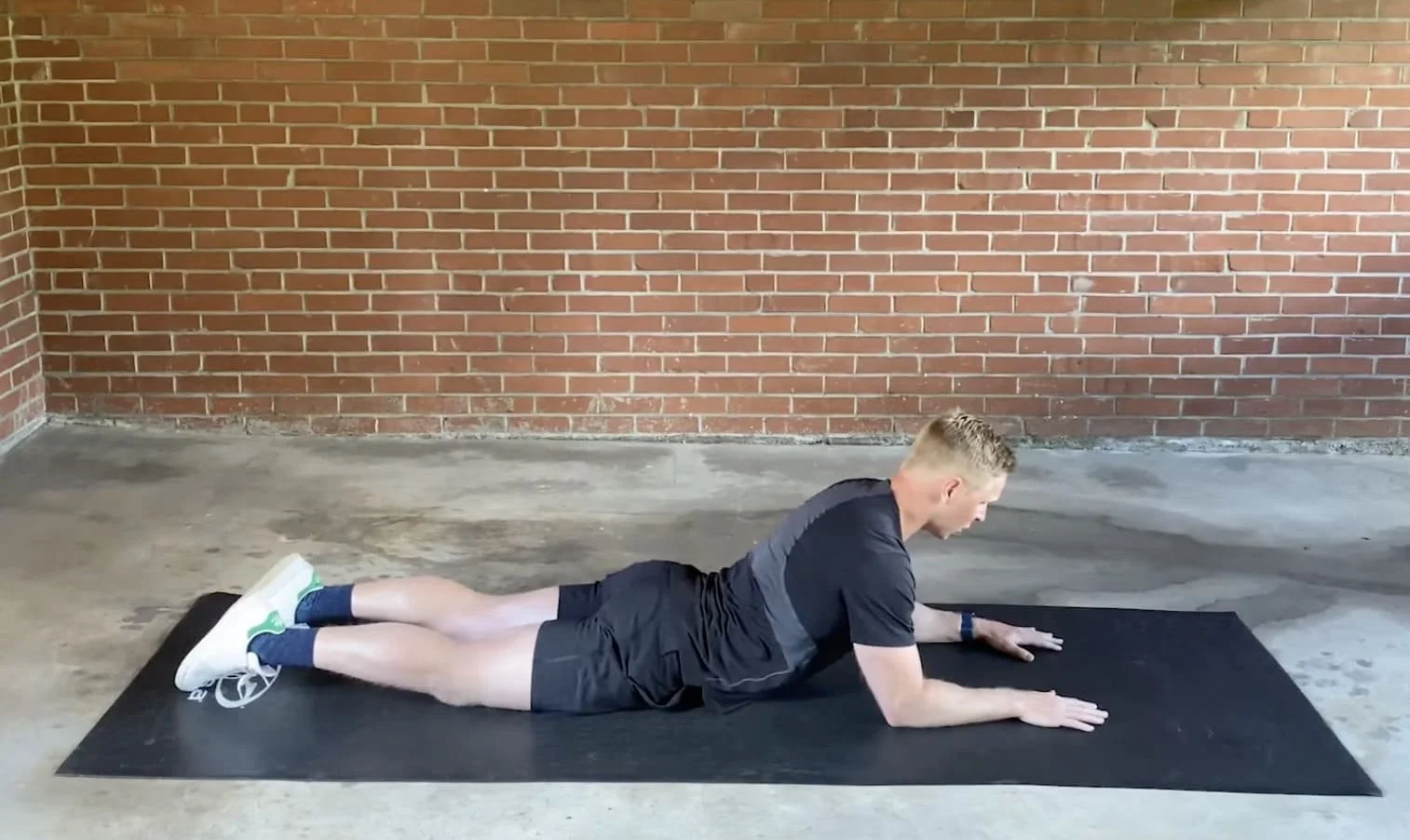
Sphinx Reach – Start Position
Lie face down with your elbows under your shoulders, chest lifted, and legs extended.
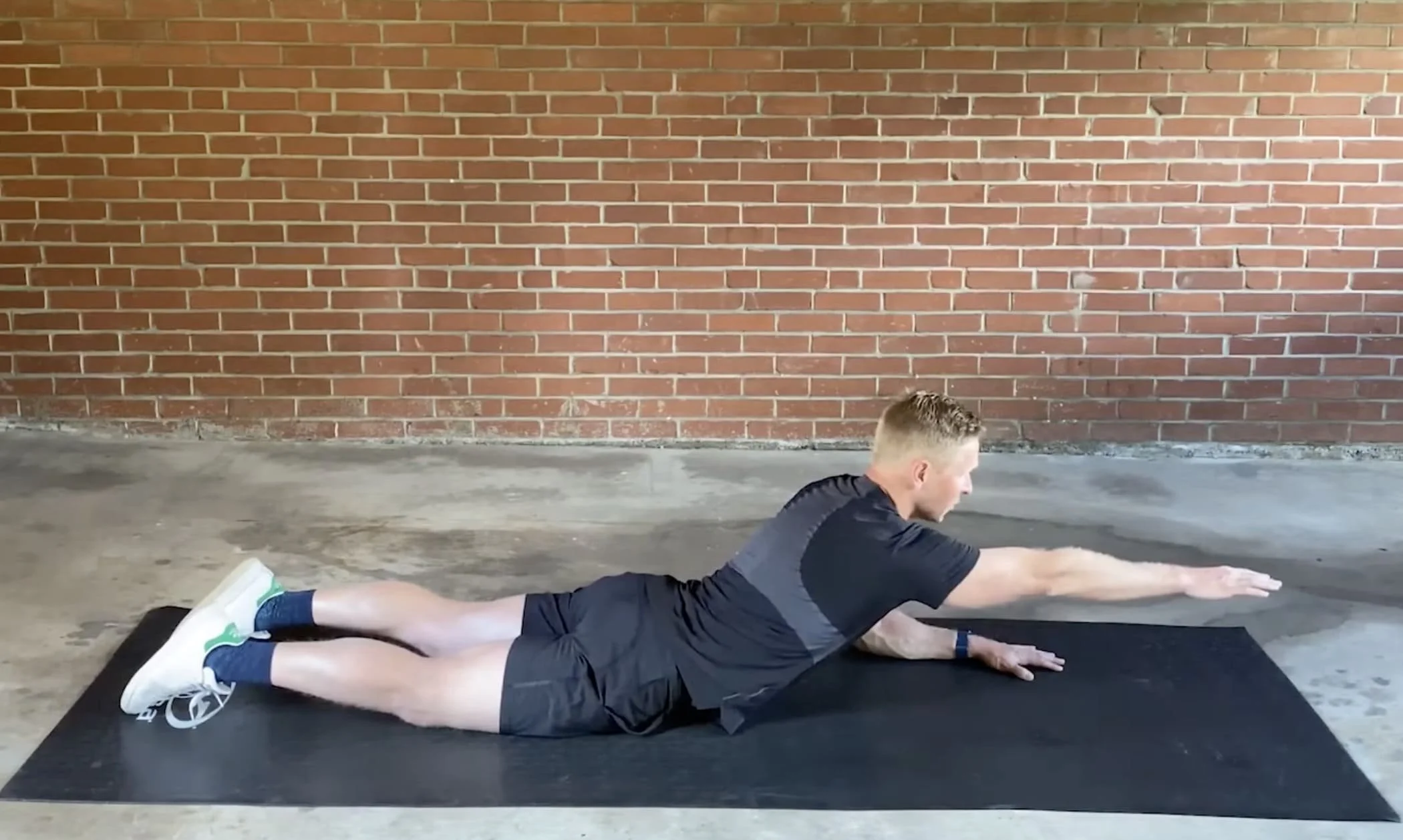
Sphinx Reach – Finish Position
Reach one arm forward without rotating your torso, then return and repeat on the opposite side.
Purpose: Mobility and Shoulder Stability
The Sphinx Reach serves as the functional warm-up for this circuit.
Starting from a prone position with the elbows directly beneath the shoulders, swimmers alternate reaching one arm forward while maintaining a stable torso. Although simple, this exercise develops important shoulder stability and thoracic mobility.
I often use movements like this with swimmers who spend long hours training in a forward-rounded posture. By encouraging extension through the upper back and improving shoulder control, the Sphinx Reach helps prepare the body for more demanding pulling exercises later in the workout.
For open water swimmers and surfers, the exercise also reinforces the postural endurance needed when lifting the chest and maintaining visual awareness in the water.
Exercise #2: Pop-Ups
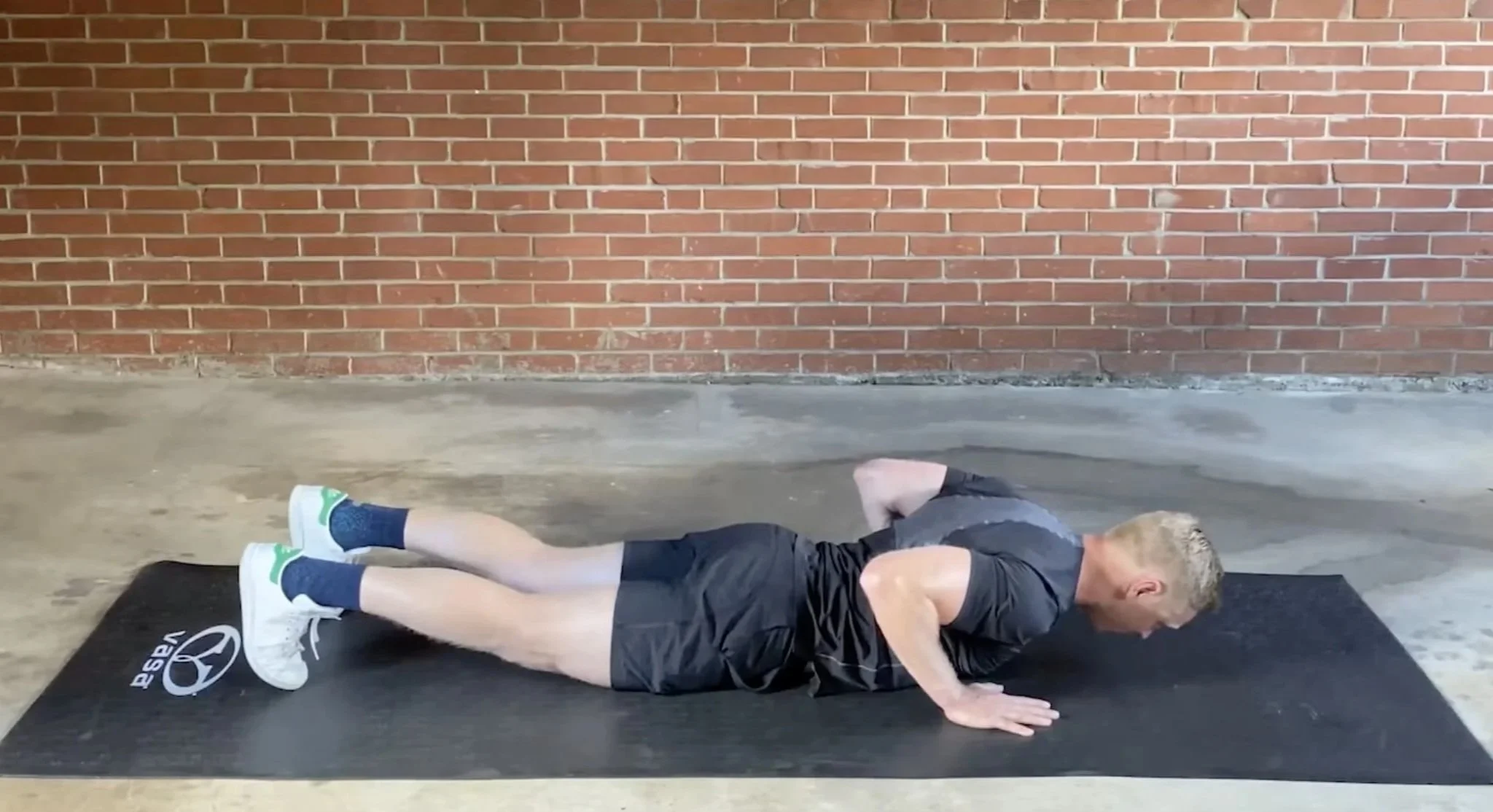
Pop-Ups – Start Position
Lie face down with your hands beside your chest and legs extended.
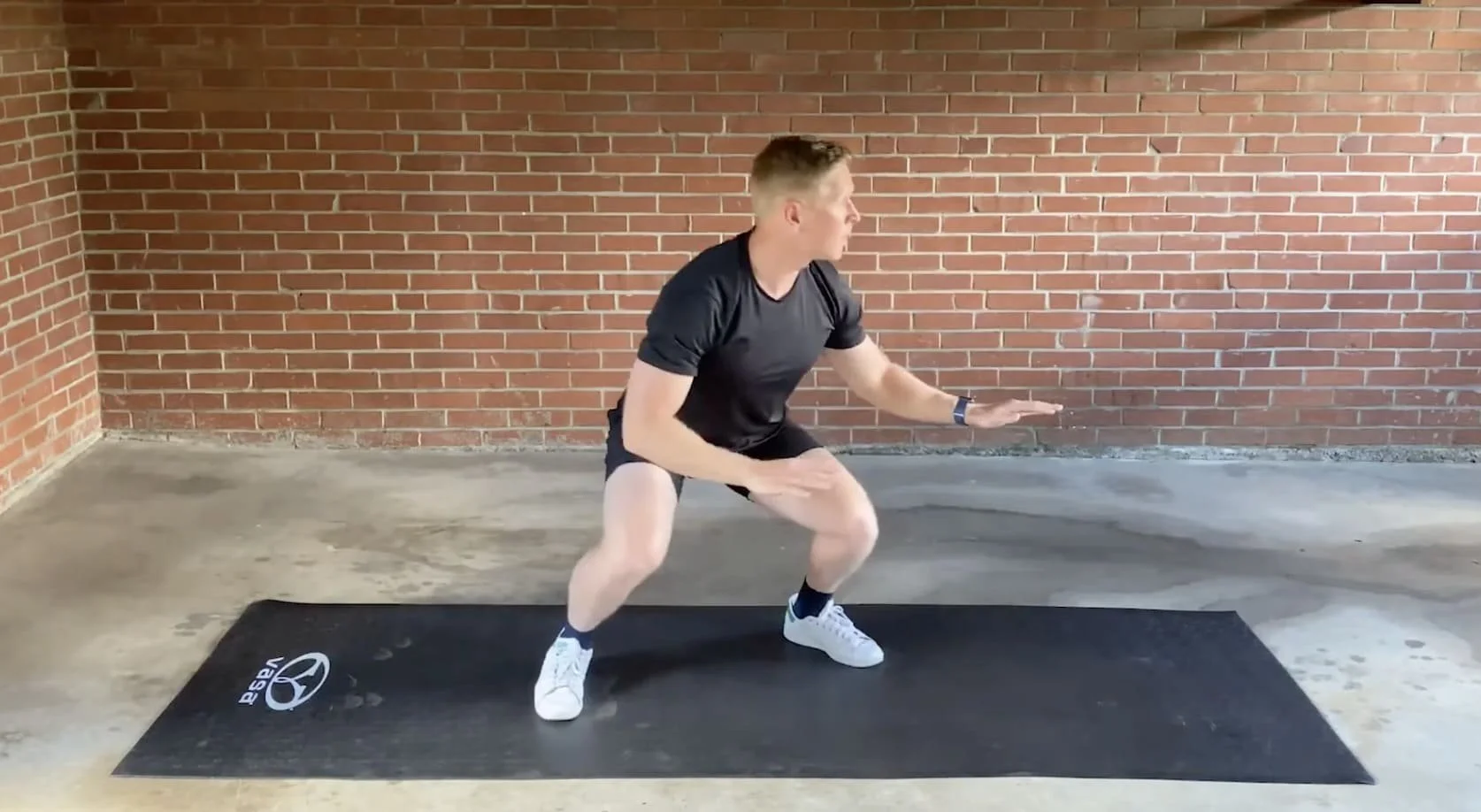
Pop-Ups – Finish Position
Press up until your arms are straight, lifting your chest while keeping your hips close to the floor, then return under control.
Purpose: Lower-Body Power and Athleticism
The Pop-Up is borrowed from surfing but has tremendous value for swimmers as well.
From a prone position, the athlete explosively pushes away from the floor and lands in a deep squat before returning to the starting position.
This movement develops lower-body power, coordination, and athleticism. While swimming is primarily upper-body dominant, powerful starts and turns rely heavily on force production through the legs.
Pop-Ups also teach athletes to move quickly from the ground while maintaining control and balance. The combination of power and stability makes them an excellent addition to any dryland circuit training for swimmers.
Exercise #3: Head-Up Freestyle
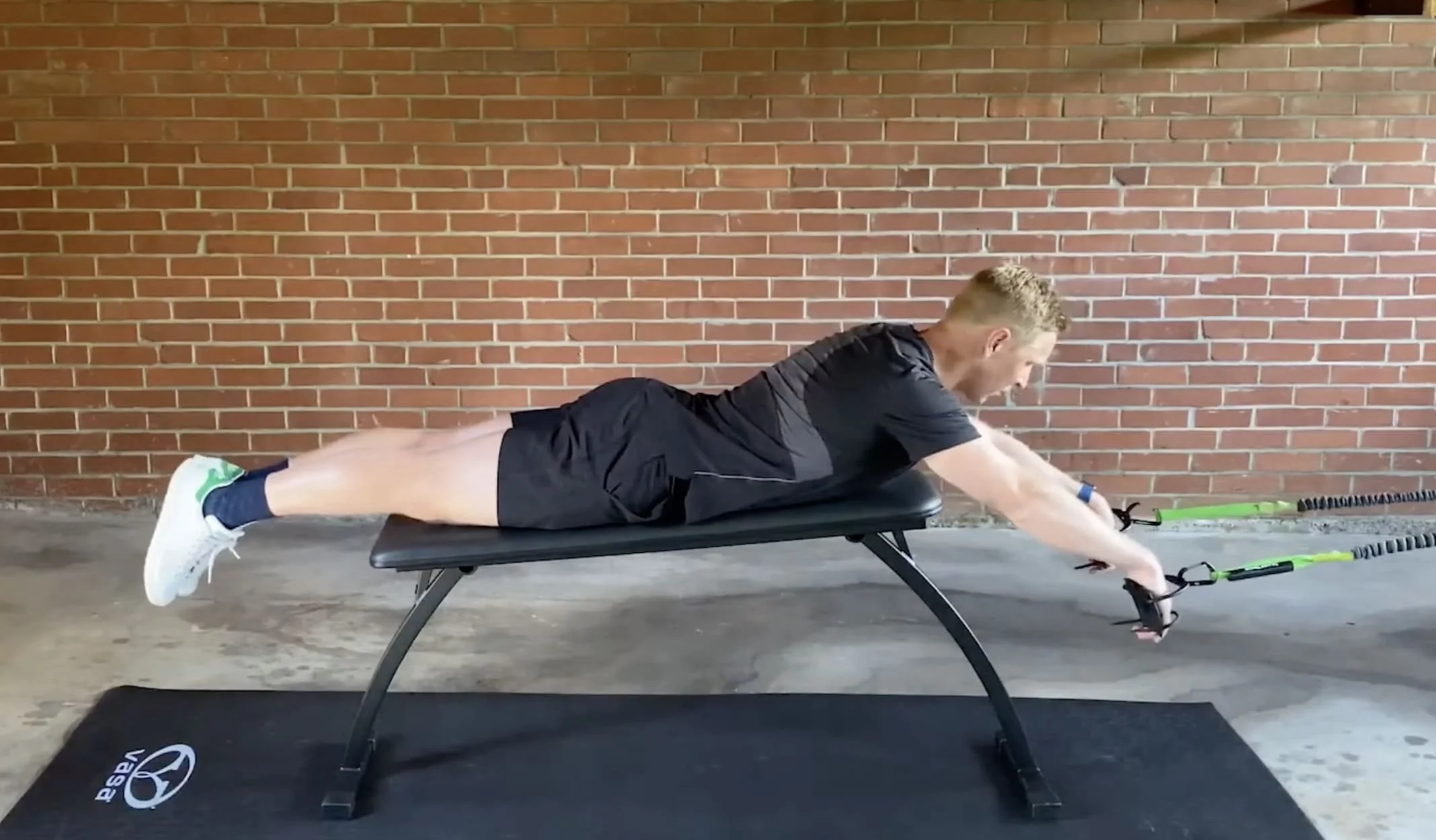
Head-Up Freestyle – Start Position
Stand or lie prone with both arms extended in front, keeping your head lifted and eyes forward.
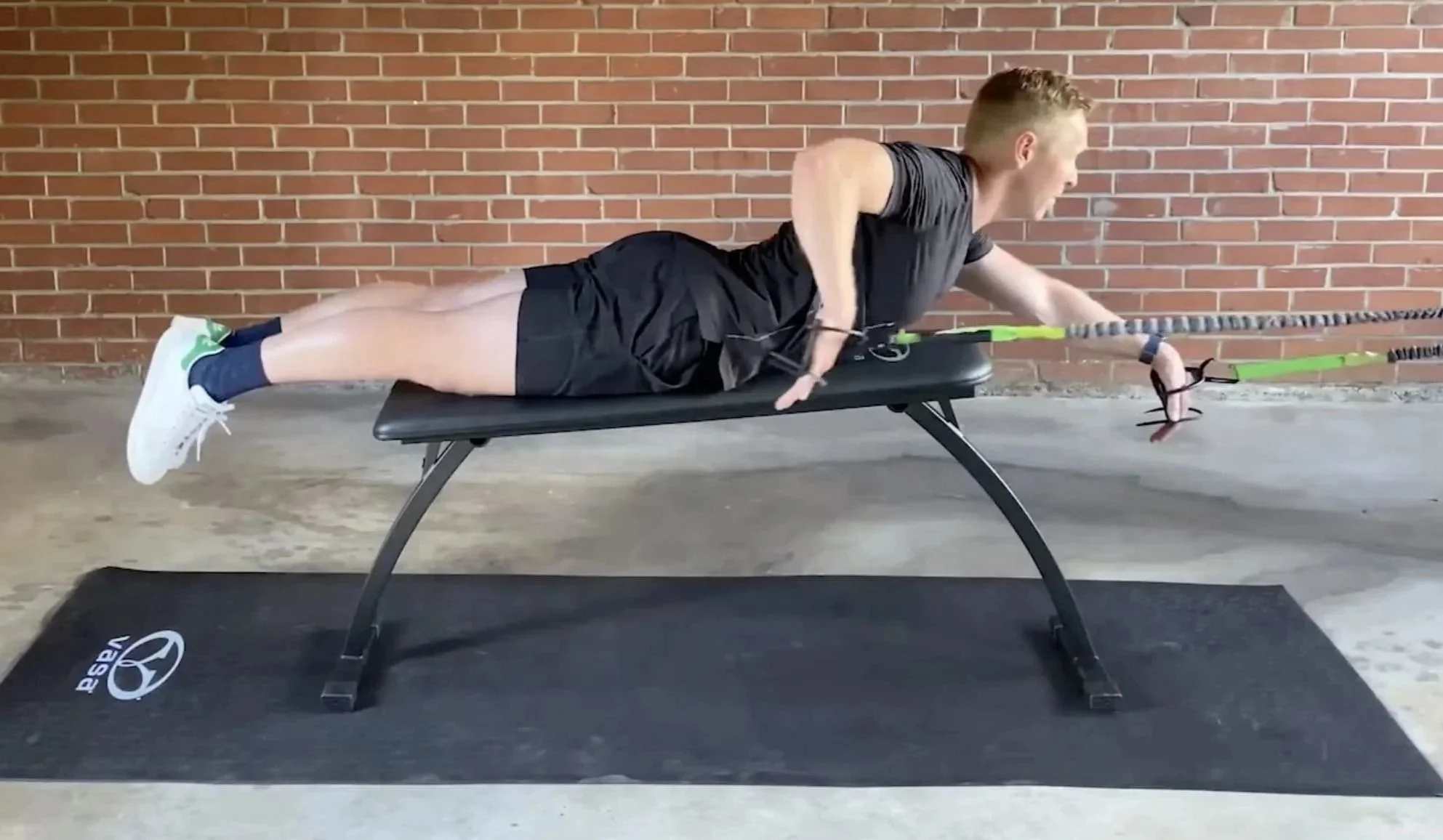
Head-Up Freestyle – Finish Position
Pull one arm through a freestyle stroke while keeping your head up, then return to the starting position and repeat with the opposite arm.
Purpose: Swim-Specific Strength and Posture
The Head-Up Freestyle is where this swimming circuit training workout begins to closely mimic what happens in the water.
Using the Vasa Trainer, swimmers perform alternating freestyle strokes while maintaining a slightly elevated head position. The goal isn't to lift the head excessively. Instead, the objective is to develop the postural strength needed for sighting during open water swimming while maintaining efficient body alignment.
I often see swimmers waste significant energy during open water races because they lift their heads too high when sighting. This exercise teaches you how to stay long through the spine, maintain a strong body position, and raise your eyes only enough to see what you need to see.
The movement also reinforces one of the most important technical concepts in freestyle swimming: the Early Vertical Forearm. As you initiate the pull, focus on setting the forearm vertically and applying pressure backward through the entire stroke.
For athletes looking for dryland exercises for freestyle swimming, this may be one of the most specific movements available outside the pool.
Exercise #4: Double-Arm Pull
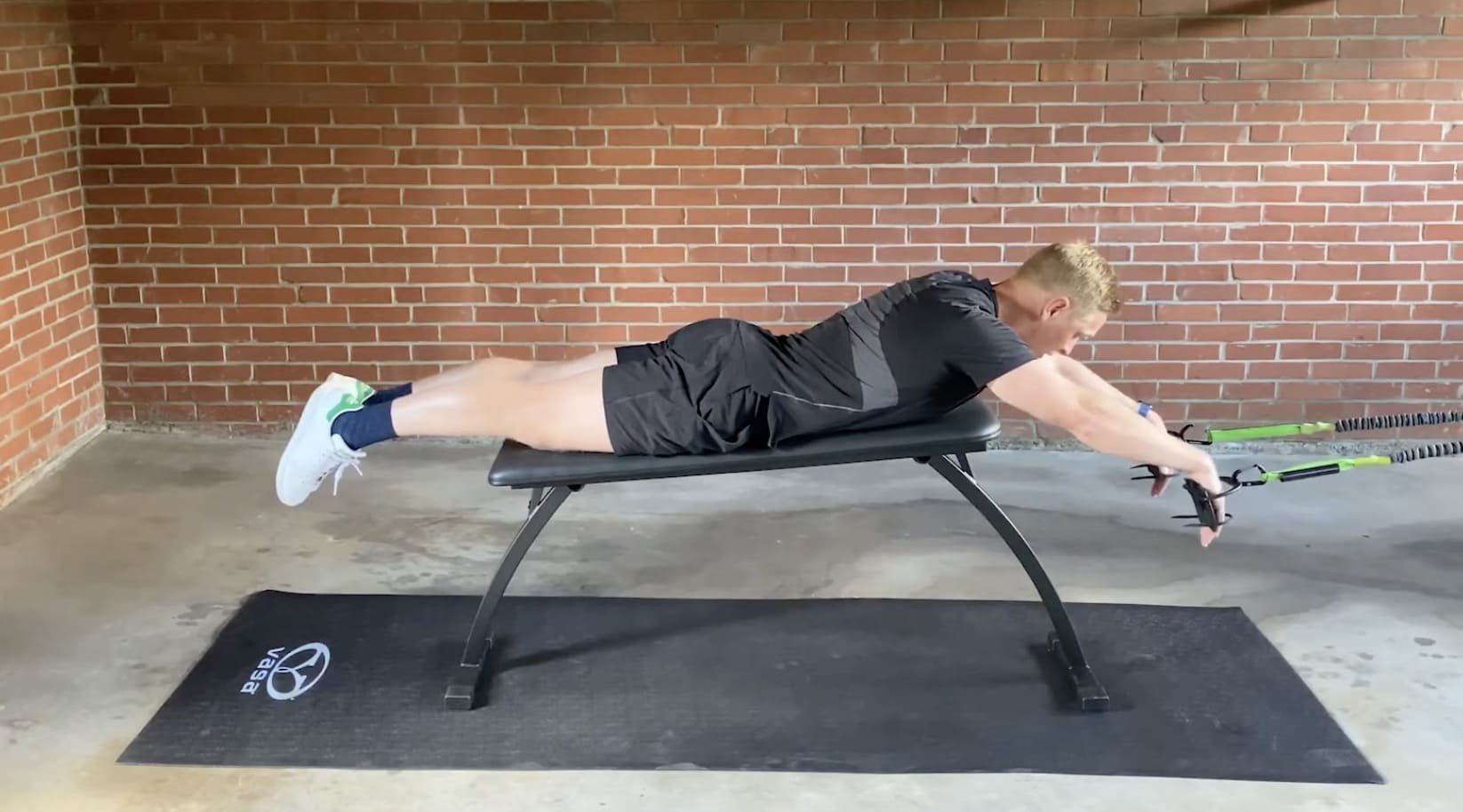
Double-Arm Pull – Start Position
Stand or lie prone with both arms fully extended overhead.
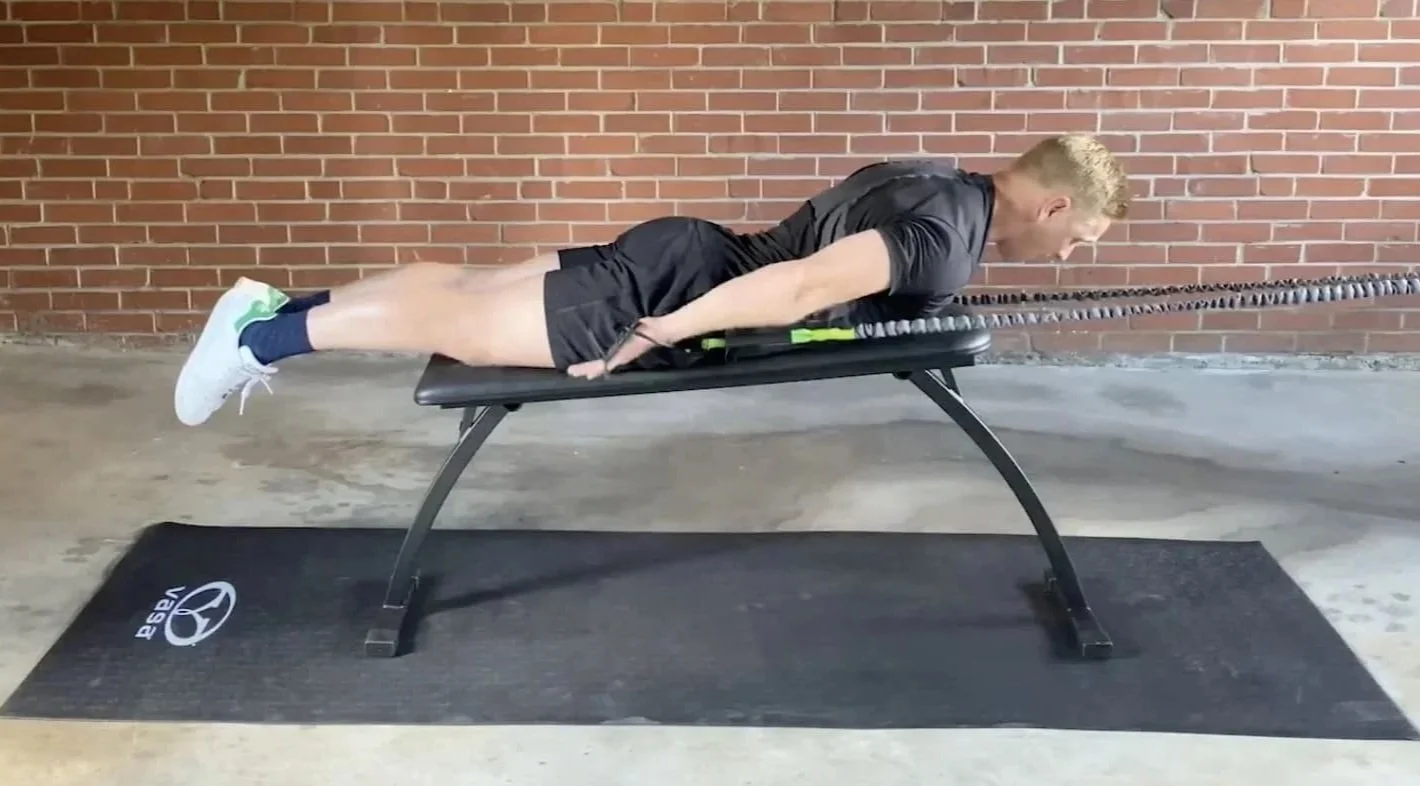
Double-Arm Pull – Finish Position
Pull both arms back together to your hips, squeezing your shoulder blades, then return to the starting position under control.
Purpose: Pulling Strength and Propulsion
The Double-Arm Pull builds on the same movement pattern while increasing the demand on the upper body.
Starting in a long body position on the Vasa Trainer, both arms initiate the pull simultaneously. The focus remains on establishing an Early Vertical Forearm position, engaging the lats, and finishing the stroke completely past the hips.
One of the biggest mistakes swimmers make is shortening the end of their pull. Every inch of the underwater stroke contributes to propulsion. By emphasizing a complete range of motion, the Double-Arm Pull helps reinforce stronger mechanics that can transfer directly to freestyle and butterfly.
I like this exercise because it develops both strength and awareness. Swimmers learn how to connect the catch, pull, and finish into one smooth movement rather than treating them as separate pieces of the stroke.
If you're looking for the best dryland circuit training for swimmers, exercises that closely replicate actual swimming mechanics should always be a priority.
Exercise #5: Half-Kneeling Chop
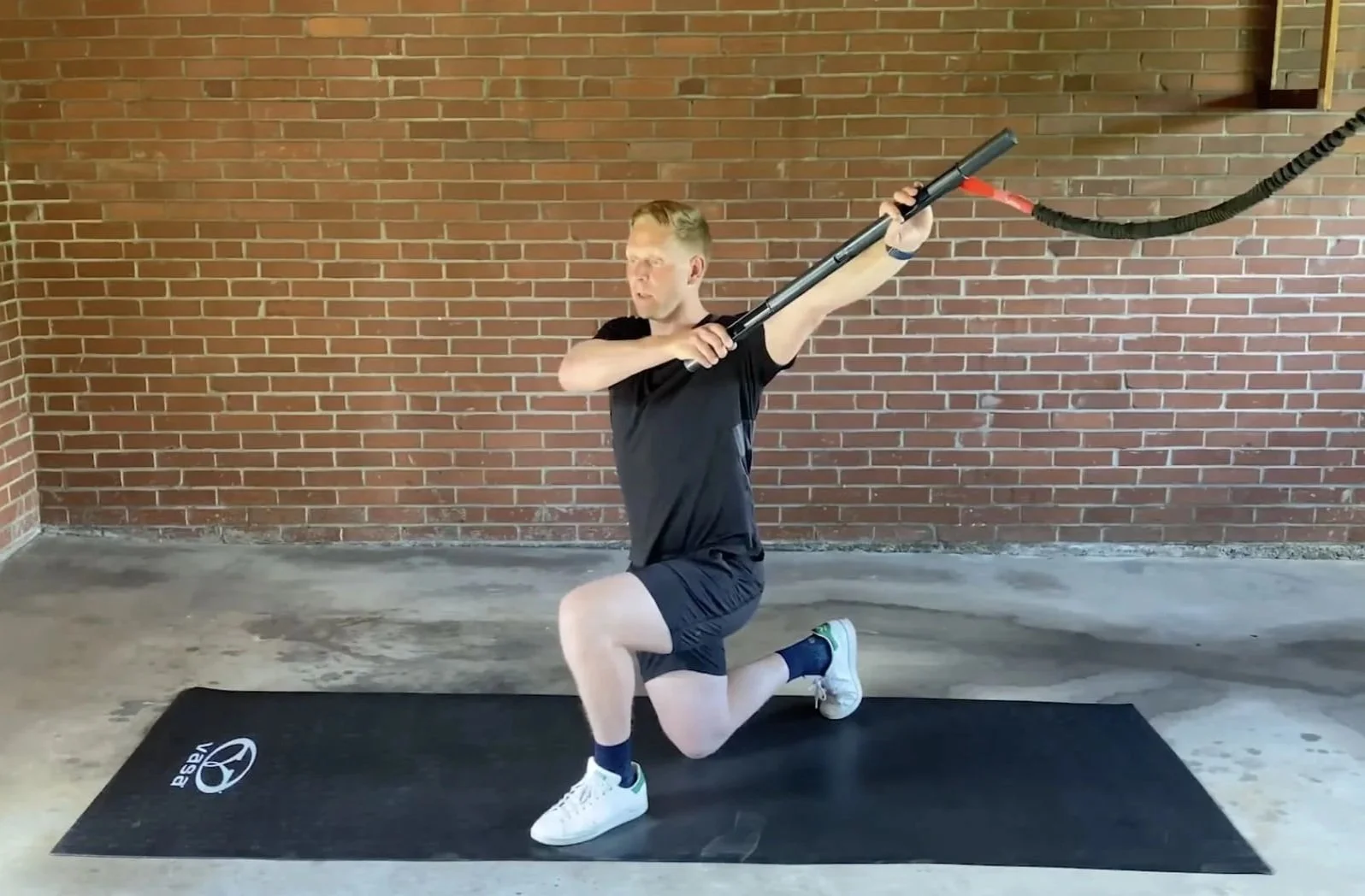
Half-Kneeling Chop – Start Position
Begin in a half-kneeling stance with one knee on the floor, holding a resistance band or cable above one shoulder.
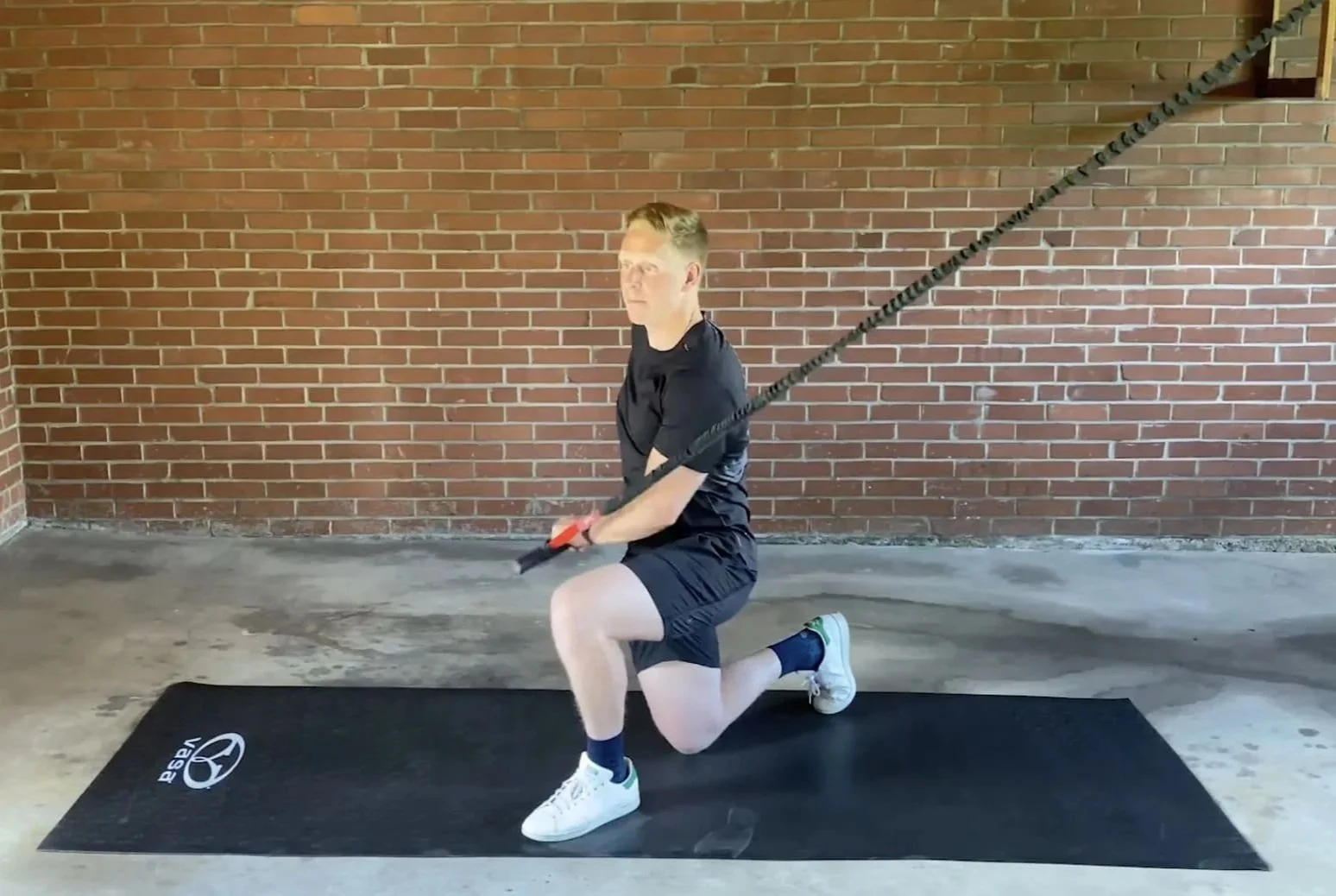
Half-Kneeling Chop – Finish Position
Pull the resistance diagonally across your body toward the opposite hip while keeping your torso stable, then return under control.
Purpose: Rotational Core Strength
The final exercise in this swim circuit workout targets the connection between the upper and lower body.
Swimming may appear to be primarily an upper-body sport, but efficient swimmers generate force through the entire kinetic chain. The hips, core, and shoulders must work together to transfer power through the water.
The Half-Kneeling Chop teaches exactly that.
Starting in a stable half-kneeling position, the athlete pulls the resistance diagonally across the body before pressing it away. The movement develops rotational control while strengthening the connection between the opposite hip and shoulder.
This pattern is particularly valuable for freestyle and backstroke swimmers, where controlled rotation plays a major role in efficient stroke mechanics.
Strong rotational control can also reduce unnecessary movement in the water, helping swimmers maintain a streamlined position and conserve energy over longer distances.
How to Perform This Swimming Dryland Circuit
One of the advantages of circuit training is its simplicity. Once you understand the exercises, the workout is easy to follow and can be completed in less than an hour.
| Exercise | Repetitions |
|---|---|
| Sphinx Reach | 10 each side |
| Pop-Ups | 10 |
| Head-Up Freestyle | 10 each arm |
| Double-Arm Pull | 10 |
| Half-Kneeling Chop | 10 each side |
Perform all five exercises consecutively.
After completing the circuit, rest for two minutes before beginning the next round.
Complete four total rounds.
The combination of mobility, power, swim-specific pulling, and core training creates a highly effective swimming dryland circuit that challenges the entire body while maintaining a strong connection to swimming performance.
Dryland Circuit Training for Aquatic Athletes at Home
Not every swimmer has access to a Vasa Trainer, a swim bench, or even a pool every day.
Fortunately, many of the principles behind this workout can be applied through dryland circuit training for swimmers at home.
While the Vasa Trainer provides one of the best ways to replicate swimming mechanics on land, bodyweight exercises and resistance bands can still help swimmers build strength, mobility, and endurance between swim sessions.
A simple home-based circuit could include:
Sphinx Reaches
Resistance Band Freestyle Pulls
Half-Kneeling Chops
Planks
Perform three to four rounds while focusing on movement quality and proper posture.
For swimmers who travel frequently, train at home, or have limited pool access, a consistent dryland routine can help maintain fitness and reinforce good movement patterns until they return to the water.
Who Should Use This Swim Circuit Workout?
Competitive Swimmers
Age-group, high school, collegiate, and Masters swimmers can use this workout to build strength that complements their pool training.
Open Water Swimmers
The Head-Up Freestyle exercise is particularly valuable for athletes who need to maintain efficient posture while sighting during long swims.
Triathletes
Triathletes often have limited training time. This swimming circuit training session develops several key physical qualities simultaneously, making it an efficient addition to a busy schedule.
Surfers and Other Water Athletes
Because the workout includes paddling-specific movements and explosive pop-ups, it also transfers well to surfing and other paddle-based sports.
Final Thoughts
Excellence lives in the fundamentals.
That's one of the core principles I teach, and it's exactly why I like workouts such as this one. Rather than chasing complicated exercises or trendy training methods, this swimming dryland circuit focuses on the qualities that matter most: mobility, power, posture, pulling strength, and core control.
Whether you're preparing for your next swim meet, triathlon, open water race, or simply looking to become a stronger swimmer, this workout provides an efficient way to build strength that carries directly into the water.
Give the circuit a try, stay consistent, and focus on quality movement every repetition. Over time, those small improvements on land can translate into meaningful gains when it matters most — in the pool.
Frequently Asked Questions
-
Swimming circuit training combines multiple exercises into a continuous workout designed to improve strength, endurance, mobility, and swim-specific fitness.
-
Most swimmers benefit from one to three dryland sessions per week depending on their age, training volume, and competitive goals.
-
Yes. Beginners can reduce the number of rounds, decrease resistance, and focus on proper technique before increasing intensity.
-
Absolutely. Resistance bands and bodyweight exercises can provide effective alternatives when specialized equipment is unavailable.
-
While this workout is performed on land, the movement patterns are designed to improve skills that transfer directly to swimming performance. It pairs well with a pool circuit workout as part of a complete training plan.
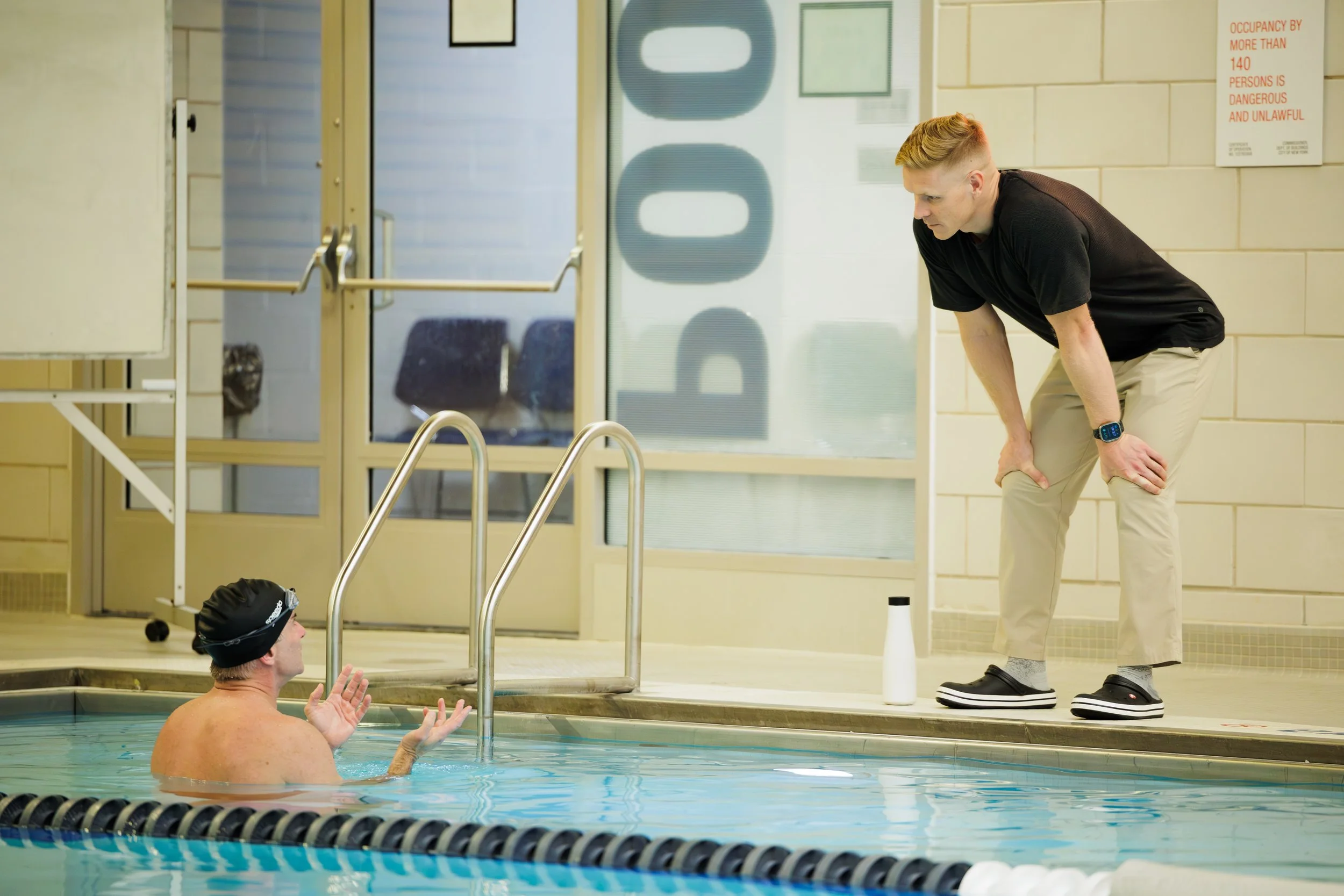
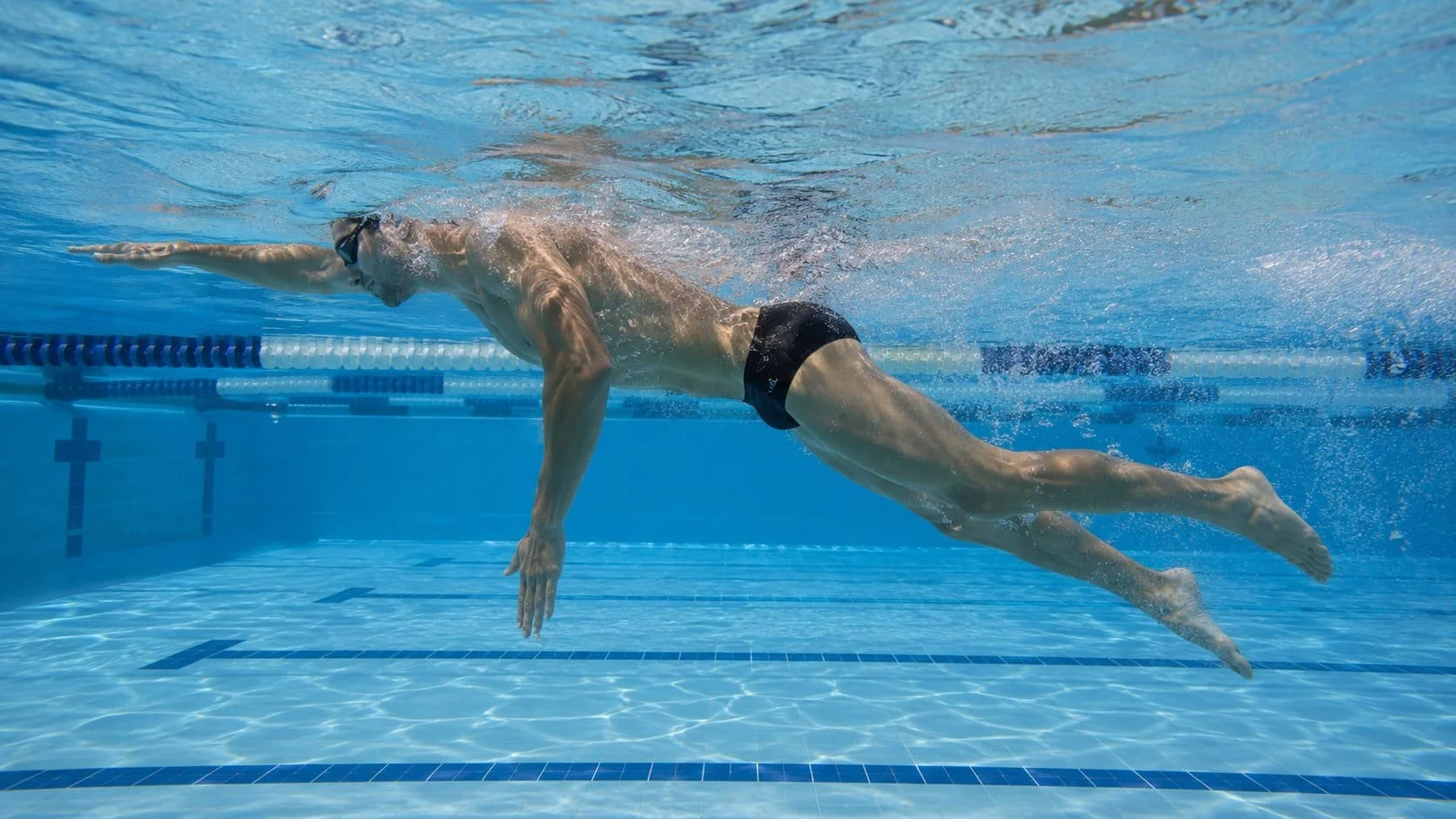
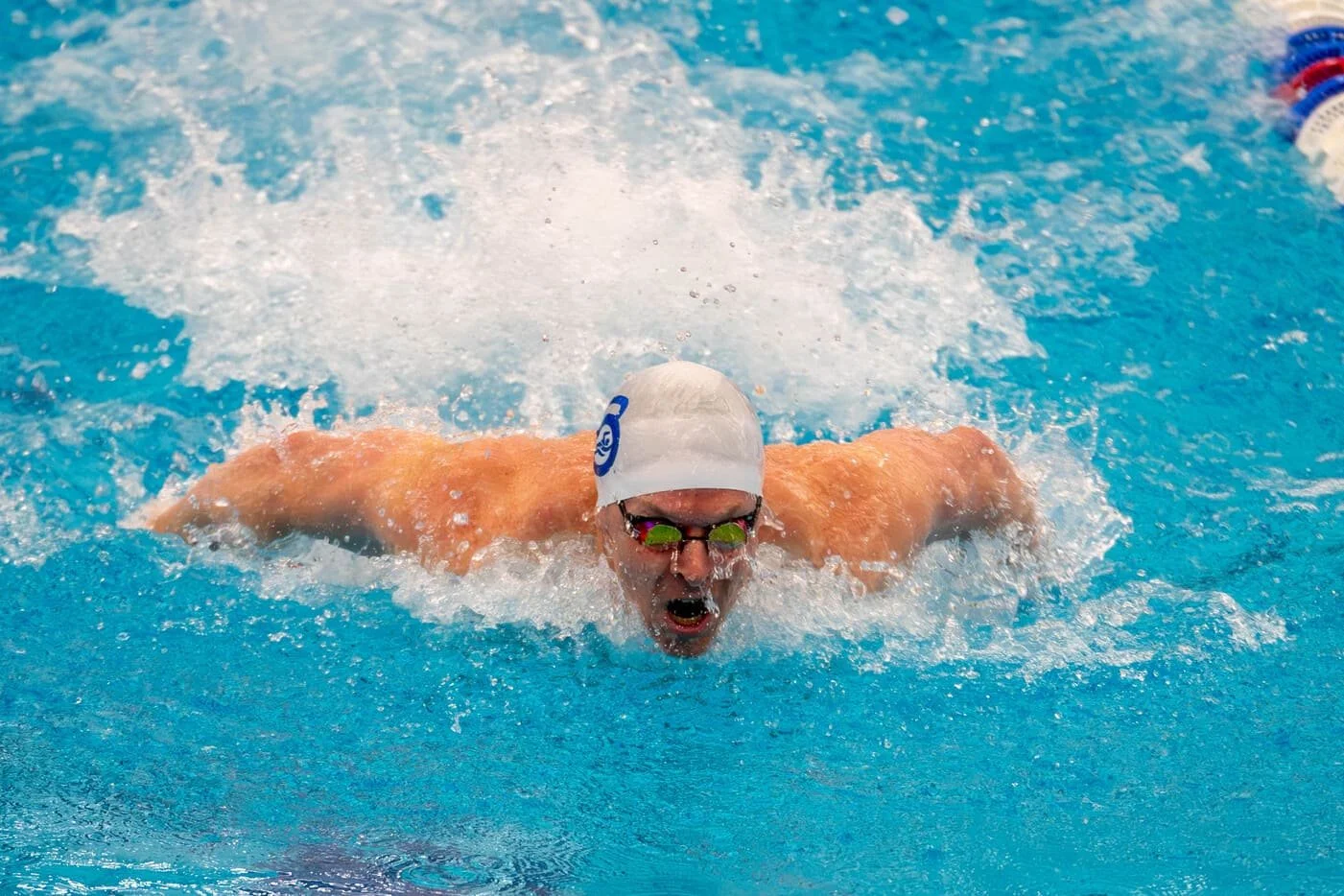
Swimming and strength training work best when they are planned together. Learn how to build a swimming and weight training schedule around your goals, choose between same-day and alternate-day sessions, and manage fatigue so gym work supports your performance in the pool.