

Garmin Acquires TrainingPeaks and TrainHeroic: How I Use Both for Swim and Strength Coaching
/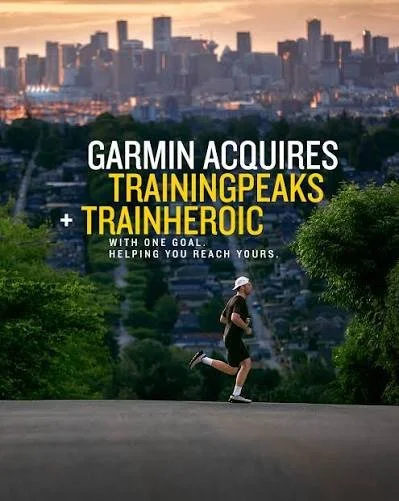
Garmin has acquired TrainingPeaks and TrainHeroic, bringing endurance and strength training platforms into its growing performance ecosystem. Image: Garmin
It’s an interesting combination.
Garmin is already one of the biggest names in sports watches and wearable technology. TrainingPeaks has long been a leading platform for endurance training and coaching, while TrainHeroic is built around strength and resistance training.
I intentionally use both because they solve different problems.
I use TrainingPeaks for custom swim training plans, where wearable integration and endurance analytics give me a better picture of how an athlete is actually responding to training.
For custom dryland and strength programming, I use TrainHeroic because I prefer its gym interface, exercise tracking, and ability to integrate my own video demonstrations and tutorials directly into an athlete’s workouts.
Now Garmin owns both, and at the same time is expanding further into 24/7 health and recovery tracking with its new CIRQA Smart Band.
That creates some interesting possibilities for how training, strength, wearable data, sleep, recovery, and coaching could become increasingly connected.
Why I Use TrainingPeaks for Custom Swim Training Plans
I use TrainingPeaks primarily to deliver my Custom Swim Training Plans
One of its biggest advantages is the ability to combine the training I prescribe with the training an athlete actually completes.
Instead of emailing someone a spreadsheet or PDF with a list of workouts, I can build training directly into a calendar and organize it around the athlete’s schedule, goals, competitions, and progression.
The athlete always knows what they’re doing next.
More importantly, completed workout data can sync back into the platform.
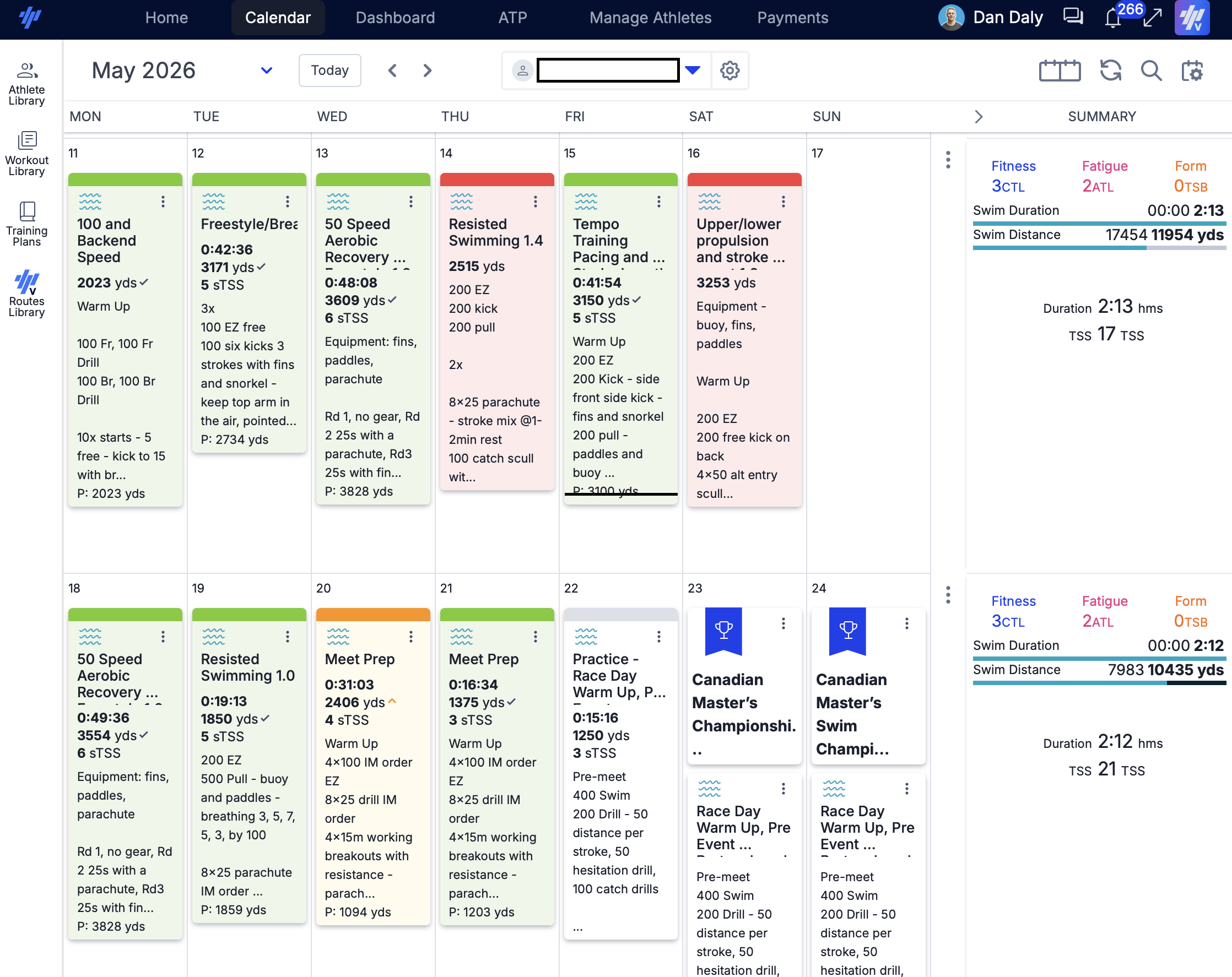
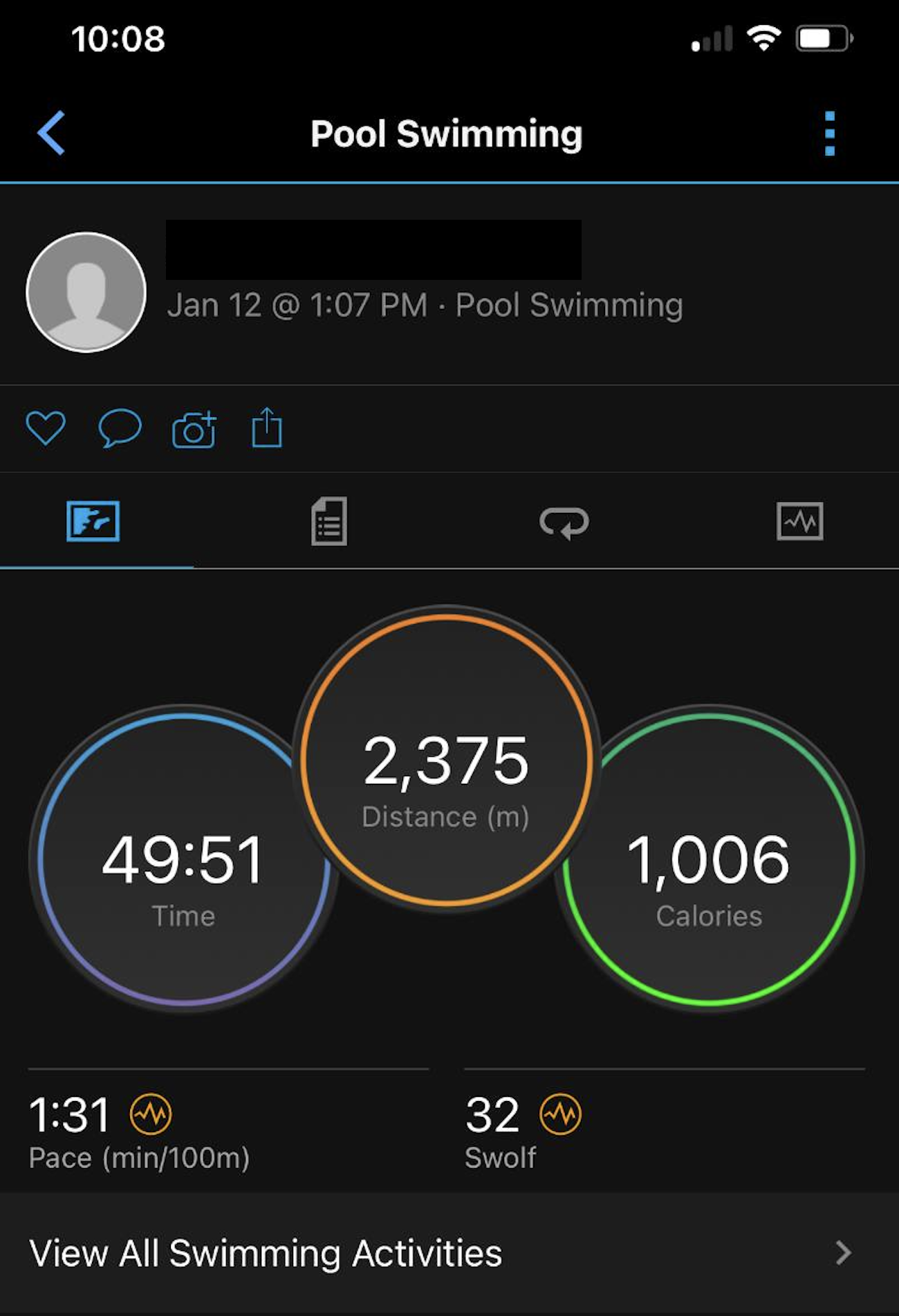
A custom swim training plan in TrainingPeaks, with workouts organized around the athlete’s schedule, goals, and progression.
This gives us a running record of both planned and completed training.
Depending on the athlete’s device and the data available, we can look at metrics such as:
Distance and duration
Pace and splits
Heart rate
Training volume
Training load and intensity
Workout completion
Consistency and trends over time
This becomes especially valuable as weeks and months of training accumulate.
Rather than looking at one isolated workout, we can start looking for patterns.
Is pace improving at a similar effort?
Is the athlete consistently completing the planned volume?
Are we progressing training appropriately?
Is fatigue accumulating?
Does the program need to change based on how the athlete is actually responding?
The purpose isn’t to collect as much data as possible.
It’s to identify the information that helps us make better training decisions.
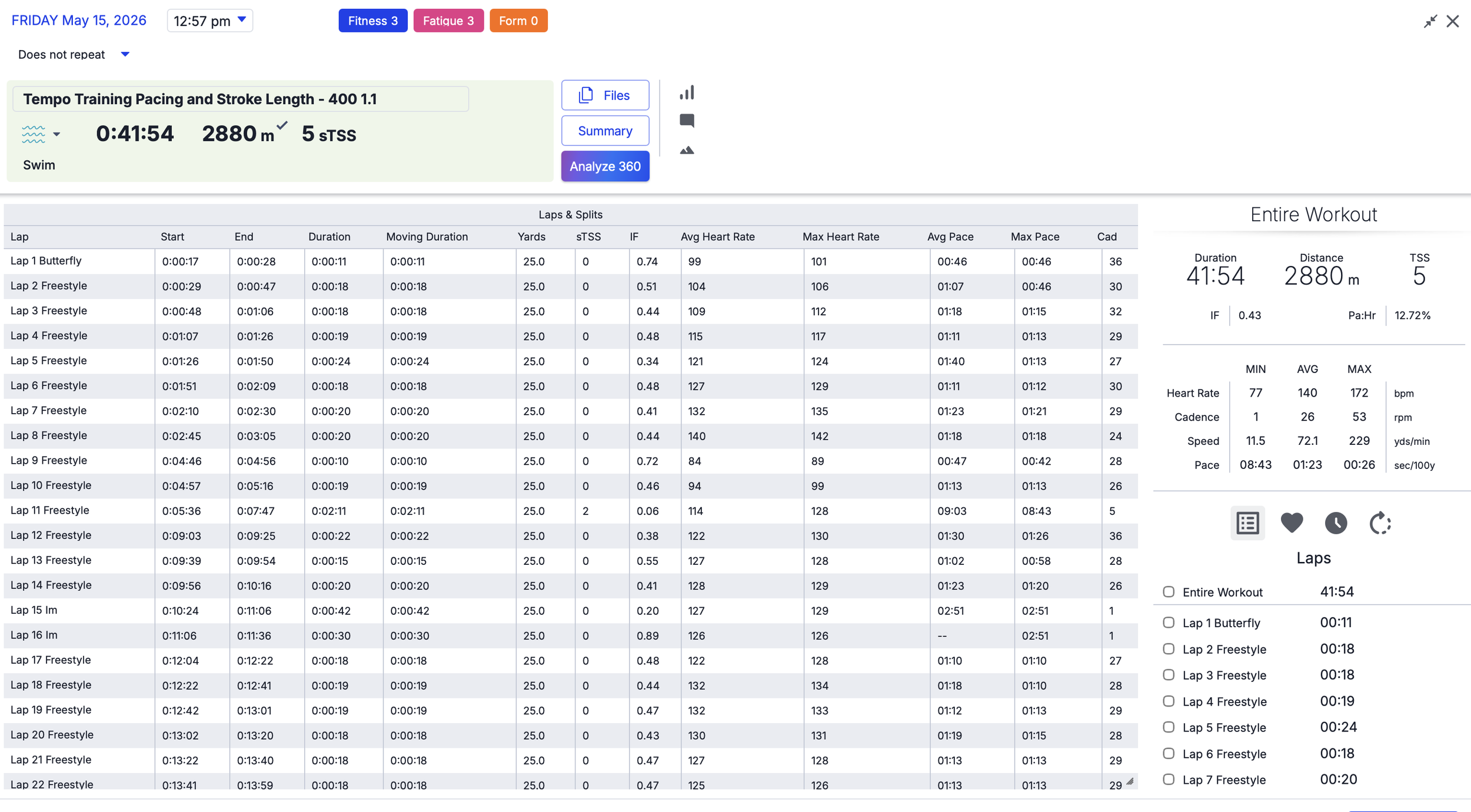
Completed workouts and wearable data allow me to compare what was prescribed with what actually happened in training.
Connecting TrainingPeaks With Garmin, Apple Watch, COROS and Other Wearables
One reason I like TrainingPeaks is that athletes aren’t locked into one watch or wearable ecosystem.
TrainingPeaks integrates with many of the major devices and platforms athletes already use, including:
Garmin, Apple Watch, COROS, Polar, Suunto, WHOOP, Oura, Wahoo, Fitbit, Amazfit, FORM Smart Swim Goggles, EO SwimBETTER, Concept2, Zwift, and others.
That matters because different athletes have different needs.
One swimmer may already own a Garmin.
Another prefers an Apple Watch.
A triathlete may use COROS or Polar.
Someone else may use WHOOP or Oura primarily to monitor recovery and sleep.
I also work with swim-specific technology such as EO SwimBETTER, which can provide detailed information about what is happening within the stroke itself.
The technology is a tool—not the coaching.
My job is to determine which information is actually useful and put it into the context of the athlete’s overall training.
Do You Need a Garmin—or Any Wearable—to Follow a Custom Swim Plan?
No.
A wearable can add another useful layer of information, but it isn’t required to train effectively.
Athletes can still follow their workouts through TrainingPeaks, record completed training, and provide subjective feedback.
In many cases, some of the most important information still comes directly from the athlete:
How did you feel?
How difficult was the workout?
How are you sleeping?
Are you sore?
Are you recovering between sessions?
How does your swimming actually look and feel?
Wearable data can add context to those conversations.
It doesn’t replace them.
Why I Use TrainHeroic for Dryland and Strength Training
Swimming and endurance training are only part of the picture.
For resistance training, I prefer TrainHeroic.
I use it to deliver my Custom Dryland Training Plans, Monthly Dryland Training Subscription, and Prewritten Training Programs
TrainHeroic is designed around the gym experience.
An athlete can open the free app, see exactly what they’re doing that day, and move through the workout exercise by exercise.
They can record weights and reps, see previous performances, track progress, and access exercise instructions without having to move between a spreadsheet, YouTube, notes, and multiple apps.
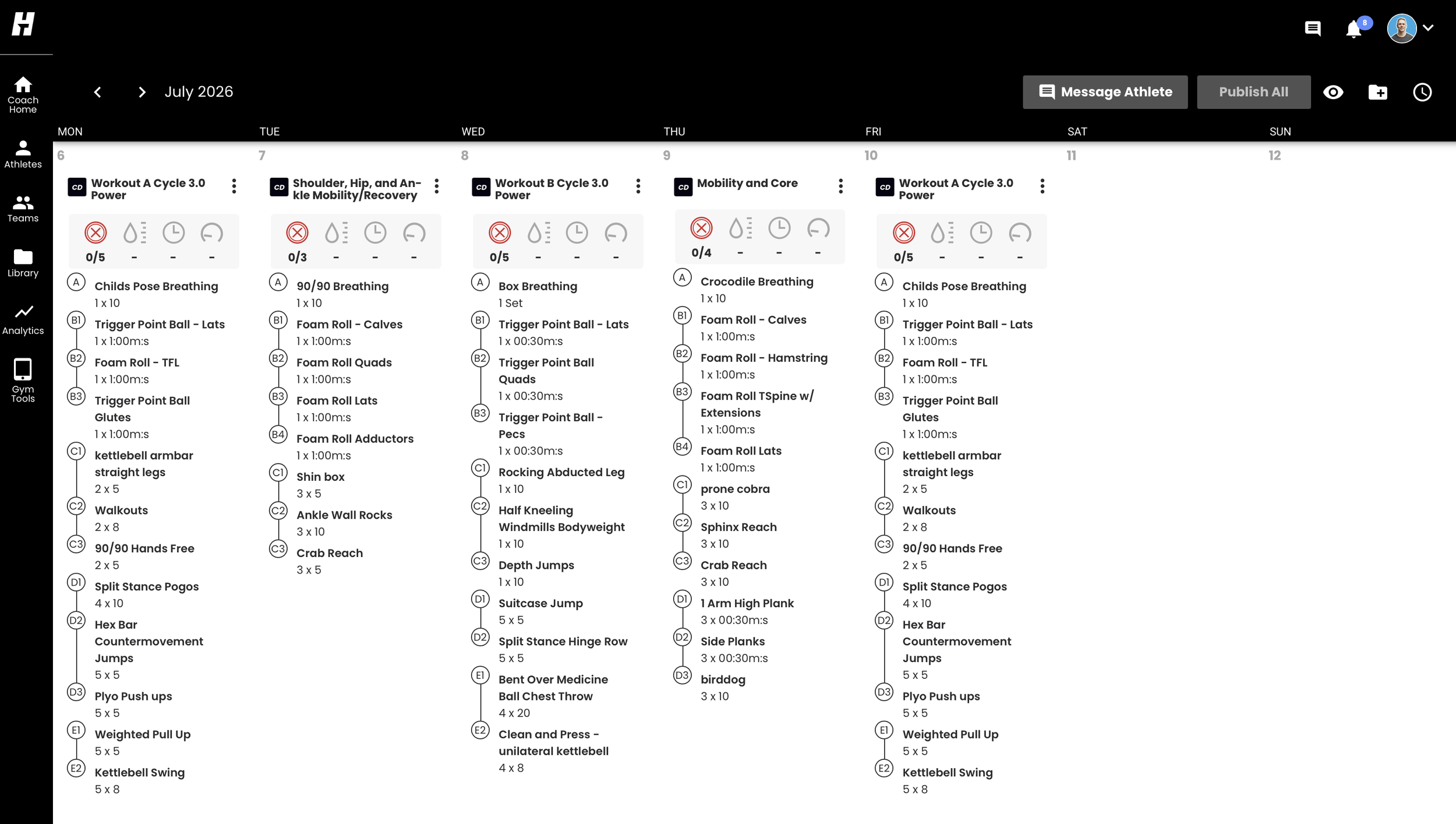
I use TrainHeroic to deliver custom dryland and strength programs with exercise instructions, performance tracking, and my own video library built directly into the workout.
One of the most important features for my coaching is the ability to integrate my own exercise video library.
If I prescribe an exercise, I don’t want an athlete searching YouTube and finding five different versions of it.
I want them to see how I want the exercise performed and why we’re doing it.
Exercise Demonstrations and Coaching Tutorials Built Into the Program
For many exercises, athletes have access to a quick demonstration directly from their workout.
For exercises or concepts that require more explanation, I can also connect athletes with longer tutorials from my video library.
This allows me to create layers of instruction.
A quick demonstration may be all an experienced athlete needs.
Someone learning the movement for the first time may need a more detailed tutorial explaining setup, execution, common mistakes, and progression.
That becomes particularly valuable for remote coaching.
The goal is to make the program as self-explanatory as possible while still giving athletes access to me when they need feedback or adjustments.
Tracking Strength Progress, Training Volume and Readiness
Strength training also generates useful data.
TrainHeroic allows us to track things such as:
Weights, sets, and reps
Exercise history
Personal records
Estimated 1RM
Training volume and tonnage
Workout completion
Athlete readiness and feedback
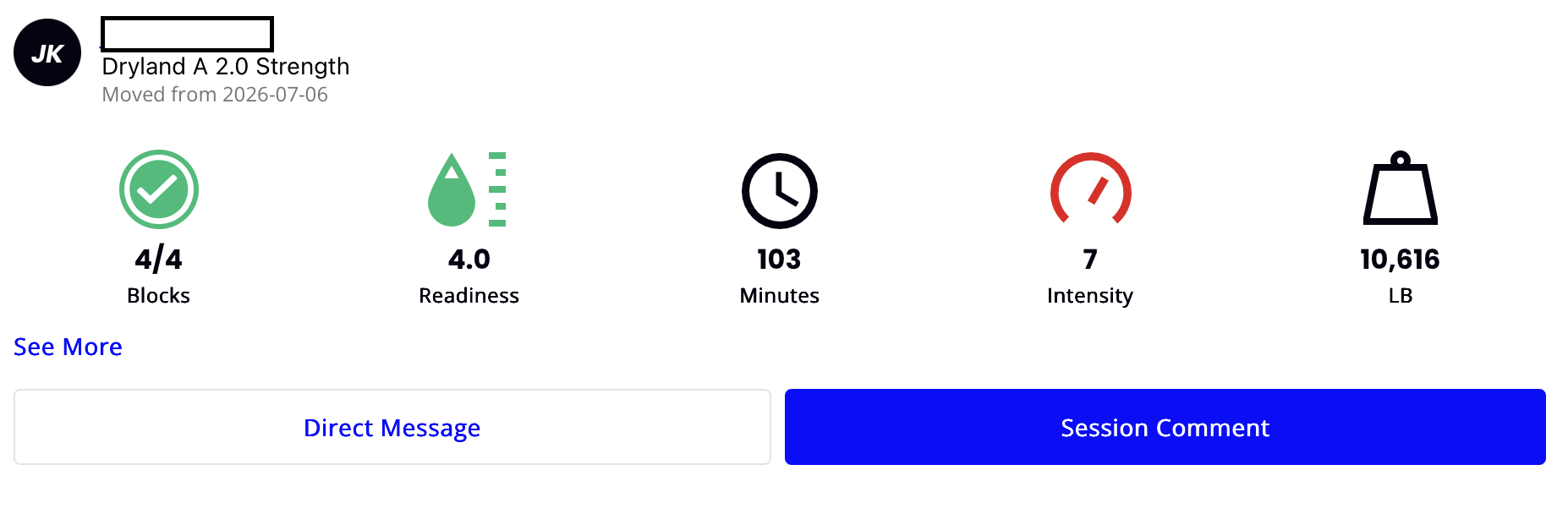
Strength performance, training volume, exercise history, and readiness provide another layer of information for adjusting training over time.
Again, more data isn’t automatically better.
But tracking the right things can help answer useful questions.
Are you actually getting stronger?
Are we progressing loads appropriately?
How much resistance training volume are you accumulating?
Has performance suddenly dropped?
Are you repeatedly reporting poor sleep, high stress, or excessive soreness?
The numbers provide context for the conversation between athlete and coach.
Garmin Just Acquired TrainingPeaks and TrainHeroic
This is what makes Garmin’s recent acquisition particularly interesting.
Garmin is already one of the most established companies in sports watches, GPS technology, and wearable fitness tracking.
Its devices are widely used across swimming, running, cycling, triathlon, strength training, and outdoor sports.
A modern Garmin can collect far more than basic workout distance and pace.
Depending on the device, athletes can track metrics related to heart rate, HRV, sleep, training load, recovery, stress, and overall activity.
Now Garmin also owns two major platforms used to actually prescribe and manage training:
TrainingPeaks for endurance training and coaching.
TrainHeroic for strength and resistance training.
Garmin hasn’t announced exactly how deeply these platforms will eventually integrate.
But bringing these pieces under the same company creates some interesting possibilities.
GARMIN / WEARABLE DATA
↓
TRAININGPEAKS
Swim + Endurance
TRAINHEROIC
Strength + Dryland
↓
COACHING + ANALYSIS
You could create this as a simple branded graphic rather than using another screenshot.
Garmin CIRQA: A New Competitor to WHOOP?
Garmin is also expanding beyond traditional sports watches.
The company recently announced CIRQA, a screenless health and fitness wearable that moves Garmin into a category currently associated with products such as WHOOP.
CIRQA is designed for continuous tracking without requiring the athlete to wear another watch with a screen.
Garmin says it can track metrics including heart rate, stress, skin temperature, Pulse Ox, activity, sleep, and its Body Battery metric, with up to 10 days of battery life.
One particularly noteworthy difference is that Garmin says CIRQA will be available without a required subscription.
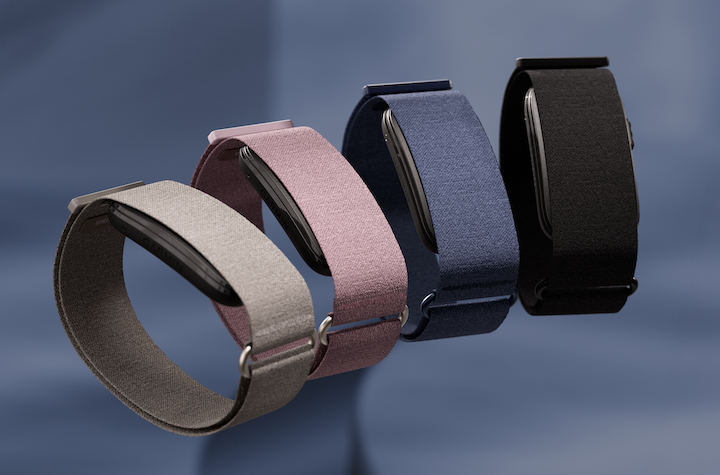
For someone who already trains with a sports watch but doesn’t necessarily want to sleep in it—or wants continuous health and recovery tracking without another screen—the concept is interesting.
The bigger question for coaches and athletes will be integration.
Garmin now has:
Sports watches + workout data + 24/7 health tracking + sleep and recovery data + TrainingPeaks + TrainHeroic.
Exactly how all of these pieces will eventually communicate remains to be seen.
But the potential is interesting.
Exactly how all of these pieces will eventually communicate remains to be seen.
But the potential is interesting.
The Future of Training Is a More Complete Picture
This is also where technology aligns with how I approach coaching.
A training program doesn’t exist in isolation.
An athlete might have a perfectly designed swim workout scheduled for Tuesday.
But what if they slept five hours Monday night?
What if their training volume increased dramatically over the previous two weeks?
What if they’re under-fueling?
What if work stress is unusually high?
What if their strength numbers are dropping and they’re reporting increasing soreness?
The workout may still be appropriate.
Or it may need to change.
That’s why my coaching conversations often extend beyond sets, reps, and intervals.
We may discuss:
Swim Training
Strength and Dryland
Training Load
Sleep
Recovery
Nutrition and Fueling
Stress
Schedule and Lifestyle
Performance Data
All of these factors interact.
I think of it as a 360-degree approach to training and recovery.
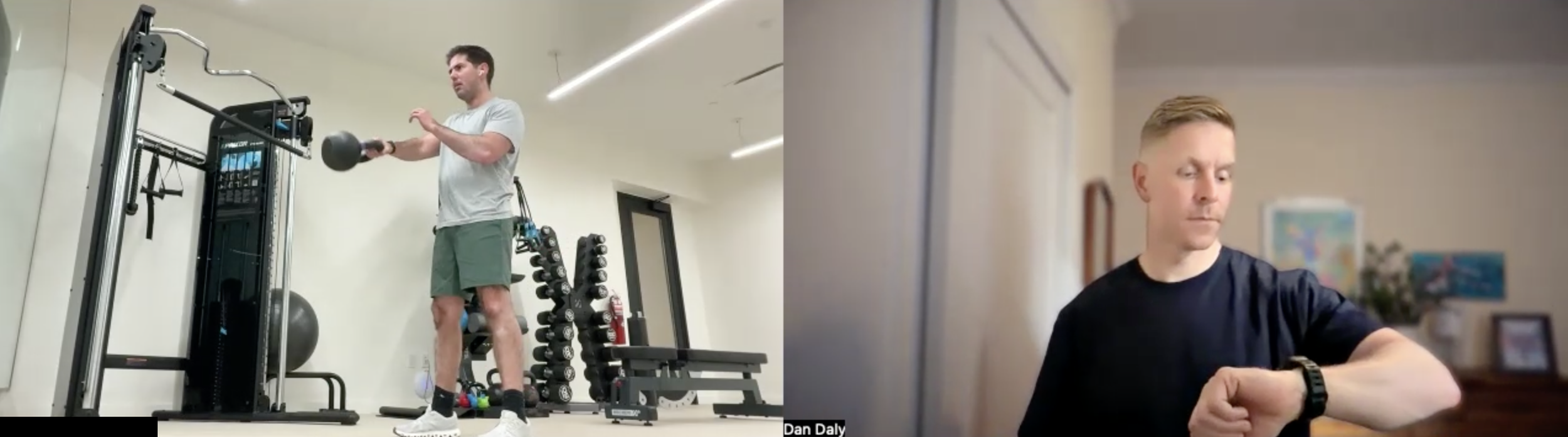
Kettlebell Swing Interval Training - Timed sets with heart rate tracking
Data Doesn’t Replace Coaching
With increasingly sophisticated watches, wearables, algorithms, AI, and training platforms, it’s easy to assume that more technology automatically produces better training.
It doesn’t.
A watch can tell you your heart rate.
A wearable can estimate your recovery.
TrainingPeaks can organize and analyze your endurance training.
TrainHeroic can track your strength work.
But none of those tools fully understand your goals, training history, technique, schedule, injuries, preferences, competitions, or what else is happening in your life.
That’s where coaching comes in.
Technology provides information. Coaching provides context.
I use these tools because they allow me to see more of the athlete’s training, communicate more effectively, and make better-informed decisions.
Not because I want athletes staring at more numbers.
How I Deliver Remote Swim and Dryland Coaching
Depending on what an athlete needs, there are several ways to work with me.
Custom Swim Training Plans
Individualized swim programming built around your goals, schedule, current ability, available training time, and upcoming events.
Programs are delivered through TrainingPeaks, allowing us to incorporate completed workouts and compatible wearable data into the coaching process.
Custom Dryland Training Plans
Individualized strength and dryland programming designed around your swimming, goals, equipment, experience, and training schedule.
Programs are delivered through TrainHeroic with workout tracking and access to my exercise demonstrations and tutorials.
Monthly Dryland Subscription
For swimmers who want structured, progressive strength and dryland programming without fully individualized coaching.
Workouts are delivered directly through the TrainHeroic app.
Prewritten Training Programs
Ready-to-follow programs for athletes who want a structured plan they can complete independently.
Coaching and Programming Calls
For athletes who want help looking at the bigger picture.
We can review training, wearable data, recovery, sleep, strength, nutrition, scheduling, race preparation, or other factors affecting performance and develop a practical plan moving forward.
Better Technology, Better Information, Better Decisions
I’ve always tried to use technology where it genuinely improves the coaching process.
TrainingPeaks gives me a powerful platform for programming and analyzing swimming and endurance training.
TrainHeroic gives me a better environment for delivering strength and dryland programs.
Wearables provide another window into training, activity, sleep, and recovery.
And specialized tools can help us go even deeper when necessary.
Garmin bringing TrainingPeaks and TrainHeroic into its growing wearable ecosystem could make those connections even stronger.
I’m interested to see where it goes.
But regardless of what technology comes next, the principle remains the same:
Collect the information that matters. Put it into context. Then use it to make better training decisions.