

Collagen for Swimmers and Endurance Athletes: What the Science Really Says
/Collagen is one of the most talked-about supplements in sports right now.
Swimmers ask about it for shoulder pain. Runners ask about it for Achilles issues. Triathletes want to know if it speeds recovery. Masters athletes wonder if it can help them feel (and look) “younger” in training.
The real question isn’t whether collagen is popular.
The real question is whether collagen for athletes is supported by credible research.
Let’s break it down carefully – using evidence from peer-reviewed studies and established sports science research.
What Is Collagen and Why It Matters for Athletes
Collagen is the most abundant protein in the human body. It forms the structural framework of connective tissue. That includes tendons, ligaments, cartilage, bone, and skin.
Muscle helps you produce force.
Collagen helps you transmit force.
Every time a swimmer pulls through the water, force moves through the shoulder complex. Every time a runner strikes the ground, the Achilles tendon stores and releases elastic energy. Those tissues are built primarily from collagen.
Unlike muscle, connective tissue has limited blood supply. That means healing and remodeling take longer. This slower turnover is why overuse injuries in endurance sports are common.
The interest in collagen supplements for athletes comes from this simple idea: if connective tissue is made of collagen, can consuming collagen support adaptation and repair?
Collagen and Tendon Health: What Research Shows
One of the most cited lines of research comes from Dr. Keith Baar at the University of California, Davis.
A 2017 study published in the American Journal of Clinical Nutrition found that consuming gelatin (a form of collagen) along with vitamin C approximately one hour before exercise significantly increased markers of collagen synthesis compared to placebo.
The key detail here is timing and loading.
Participants didn’t just take collagen and sit still. They consumed it before performing jump rope exercise, which loaded the tendons. The mechanical stress combined with available amino acids appeared to stimulate collagen production.
This is important for swimmers dealing with shoulder tendinopathy, runners managing patellar tendon pain, and endurance athletes recovering from repetitive strain.
Collagen for sports injuries is not a standalone treatment. It does not replace physical therapy or proper strength training. However, when paired with targeted loading, research suggests it may support connective tissue remodeling.
That nuance matters.
Collagen for Sports Recovery and Joint Pain
Another area of research focuses on joint discomfort.
A double-blind, placebo-controlled study published in Current Medical Research and Opinion examined athletes with activity-related joint pain. The group supplementing with collagen hydrolysate experienced a significant reduction in joint discomfort compared to placebo.
For endurance athletes, that reduction can be meaningful.
High training volume creates cumulative stress. Even mild joint pain can limit consistency. And consistency is the foundation of performance development.
It’s important to note that most of these studies focus on symptom reduction and collagen synthesis markers. They do not show dramatic structural changes in short time frames.
Collagen for sports recovery appears to offer support, not transformation.
Collagen Protein for Athletes vs. Traditional Protein
There is a common misunderstanding in the supplement world.
Collagen protein for athletes is not equivalent to whey protein.
Collagen is rich in glycine, proline, and hydroxyproline – amino acids important for connective tissue. However, it is low in essential amino acids like leucine, which is a primary driver of muscle protein synthesis.
If your goal is to build muscle, improve sprint power, or maximize hypertrophy, whey or other complete proteins are superior.
Collagen should not replace your primary protein source.
Instead, think of collagen peptides for athletes as a connective tissue support strategy layered on top of adequate total protein intake.
Endurance athletes typically need between 1.6 and 2.2 grams of protein per kilogram of bodyweight daily. That requirement should be met first before considering supplementation specifics.
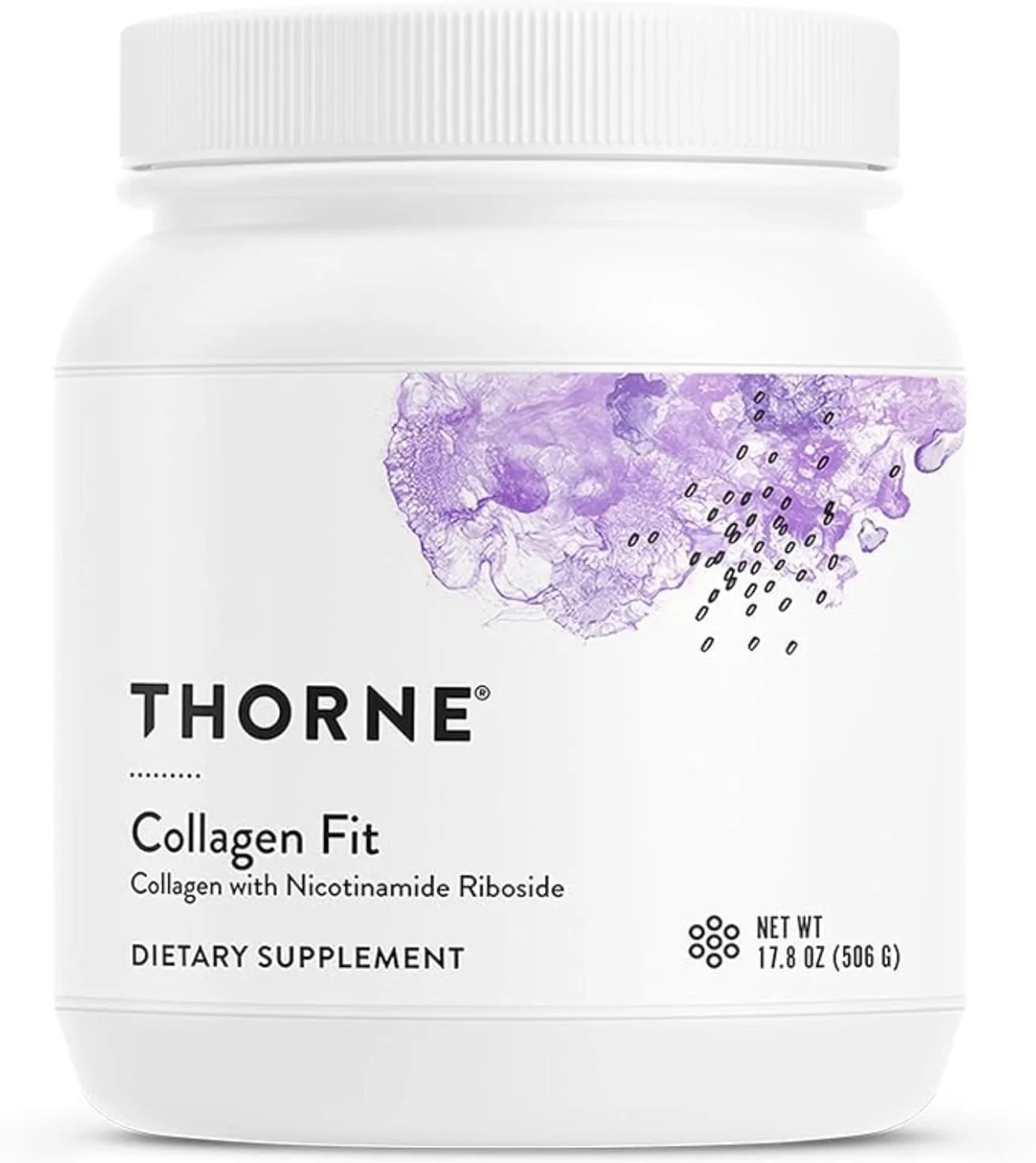
THORNE Collagen Fit – Unflavored Collagen Peptides Powder on Amazon
Collagen for Swimmers
Swimmers are not impact athletes, but they are high-repetition athletes.
A competitive swimmer can perform thousands of overhead arm cycles per session. The rotator cuff, long head of the biceps tendon, and surrounding structures endure continuous stress. Over time, minor tendon irritation can become chronic inflammation if not managed properly.
Collagen for swimmers becomes relevant in this context.
There is emerging evidence suggesting that collagen supplementation, when combined with strength training and proper loading, may help improve tendon stiffness and resilience. However, it is critical to understand that collagen will not correct flawed stroke mechanics. It will not compensate for excessive training volume or poor recovery habits.
Technique refinement, structured dryland training, and sleep remain foundational. Collagen may simply support the biological side of adaptation.
Best Collagen for Athletes – What Actually Matters?
If you’re going to use collagen supplements for athletes, here’s what research suggests:
1. Type of Collagen
Look for hydrolyzed collagen peptides (often labeled collagen hydrolysate). These are broken down for better absorption.
2. Dosage
Research typically uses:
10–15 grams of collagen
Combined with ~50 mg of vitamin C
Taken about 30–60 minutes before loading exercise
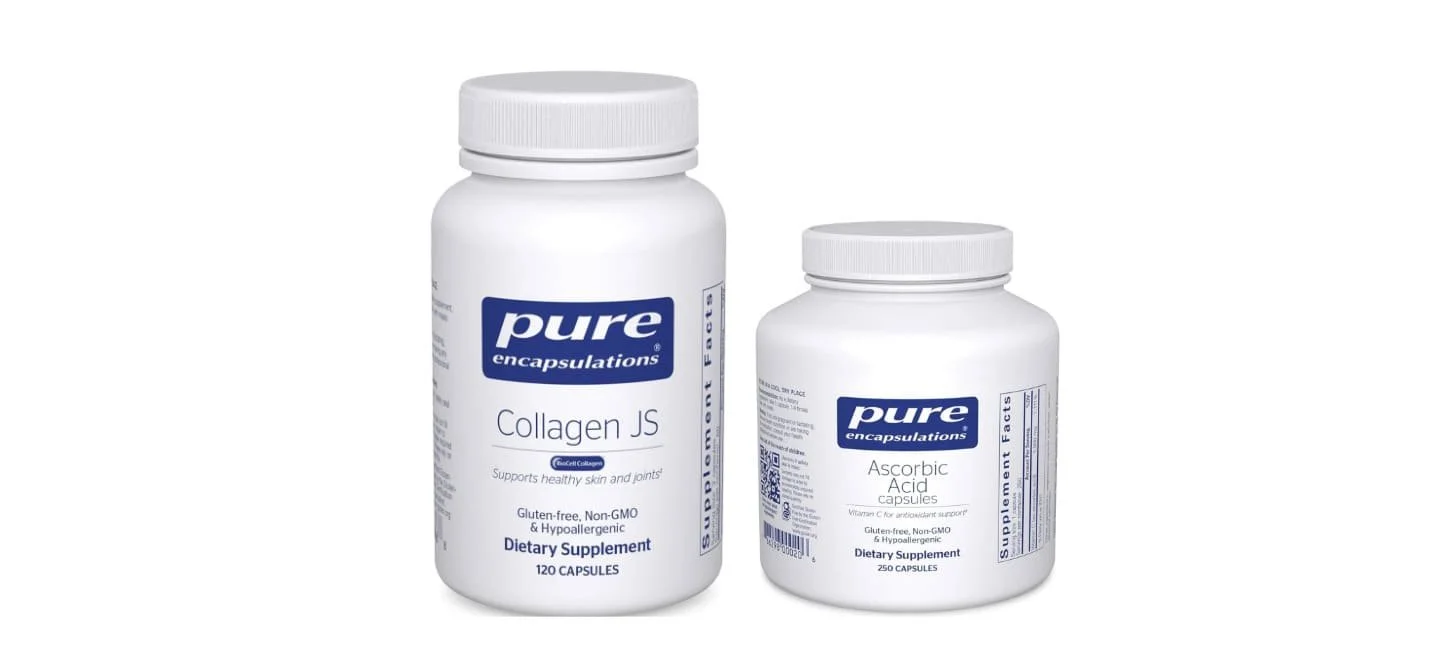
Pure Encapsulations Collagen JS on Amazon
3. Timing
Timing appears important when targeting tendon remodeling.
Taking collagen right before a targeted strength or rehab session may be more effective than random daily use.
Collagen for Sports Injuries: What It Can and Cannot Do
It is essential to maintain realistic expectations. Collagen supplementation does not repair torn ligaments. It does not reverse advanced cartilage degeneration. It does not eliminate the need for structured rehabilitation.
What research suggests is more modest.
Collagen may support collagen synthesis. It may improve tendon mechanical properties over time when combined with loading. It may reduce activity-related joint discomfort in some athletes. These are supportive effects. They are not miracle outcomes.
Athletes who combine intelligent strength programming, progressive loading, adequate sleep, and strategic supplementation are the ones most likely to benefit.
Performance Effects: What the Evidence Does Not Show
Although collagen has received considerable attention in sports nutrition, current evidence does not show that it directly improves VO₂ max, swim performance, cycling power, running pace, or maximal strength. Unlike supplements such as caffeine or creatine, collagen is not considered an ergogenic aid that enhances athletic performance.
Its value is likely indirect. By supporting tendon health and potentially reducing joint discomfort, collagen may help athletes train more consistently and tolerate higher workloads over time. Those long-term adaptations—not the supplement itself—are where any performance benefits are most likely to occur.
Practical Application for Endurance Athletes
If an endurance athlete chooses to use collagen, it should be integrated into a broader training system.
Adequate total protein intake remains the priority. Strength training must be consistent. Sleep and caloric intake must support adaptation.
Collagen may be taken in the 10–15 gram range, paired with vitamin C, roughly one hour before tendon-loading sessions.
It should not replace whole foods. It should not replace medical care. And it should not distract from the fundamentals.
Supplements amplify systems. They do not build them.
Final Perspective: Is Collagen Worth It?
From an evidence-based standpoint, collagen for athletes appears most useful for connective tissue support.
Swimmers with chronic shoulder stress, runners with tendon irritation, and masters endurance athletes experiencing slower recovery may see modest benefits when collagen is used strategically.
The research does not support exaggerated marketing claims. It does not position collagen as a muscle-building supplement or a direct performance booster.
What it does support is a potential role in tendon and joint health when combined with mechanical loading and adequate nutrition.
In high-volume endurance sports, small advantages in recovery and tissue resilience matter.
Collagen is not the foundation.
But for the right athlete, used the right way, it may be one useful piece of the performance puzzle.
Scientific References
-
Shaw, G., Lee-Barthel, A., Ross, M. L., Wang, B., & Baar, K. (2017).
Vitamin C–enriched gelatin supplementation before intermittent activity augments collagen synthesis. American Journal of Clinical Nutrition, 105(1), 136–143.https://www.sciencedirect.com/science/article/pii/S0002916522047372
Demonstrated increased collagen synthesis markers when gelatin and vitamin C were consumed prior to exercise. -
Clark, K. L., Sebastianelli, W., Flechsenhar, K. R., et al. (2008).
24-Week Study on the Use of Collagen Hydrolysate as a Dietary Supplement in Athletes with Activity-Related Joint Pain. Current Medical Research and Opinion, 24(5), 1485–1496.https://www.tandfonline.com/doi/abs/10.1185/030079908X291967
Reported reduced activity-related joint pain in athletes supplementing with collagen hydrolysate. -
Baar, K. (2019).
Nutrition and the Adaptation to Endurance Training. Sports Medicine, 49(Suppl 2), 37–43.https://doi.org/10.1007/s40279-019-01186-4
Reviews protein timing and connective tissue adaptation in response to exercise. -
Zdzieblik, D., Oesser, S., Baumstark, M. W., Gollhofer, A., & König, D. (2015).
Collagen Peptide Supplementation in Combination with Resistance Training Improves Body Composition and Increases Muscle Strength in Elderly Men. British Journal of Nutrition, 114(8), 1237–1245.Cambridge University Press
Demonstrated additional benefits when collagen supplementation was combined with structured resistance training. -
Kjaer, M., Langberg, H., Heinemeier, K., et al. (2009).
From Mechanical Loading to Collagen Synthesis, Structural Changes and Function in Human Tendon. Scandinavian Journal of Medicine & Science in Sports, 19(4), 500–510.https://onlinelibrary.wiley.com/doi/10.1111/j.1600-0838.2009.00986.x
Explains how mechanical loading stimulates tendon collagen synthesis and adaptation. -
Morton, R. W., Murphy, K. T., McKellar, S. R., et al. (2018).
A Systematic Review, Meta-analysis and Meta-regression of Protein Supplementation on Resistance Training-induced Gains. British Journal of Sports Medicine, 52(6), 376–384.https://bjsm.bmj.com/content/52/6/376
Concluded that complete proteins rich in leucine are more effective than collagen for stimulating muscle hypertrophy.