

How to Swim Butterfly with Speed and Power
/
Your Fastest Fly in 14 Days
Faster 100 Fly in 14 Days is a focused performance program designed by coaches Abbie Fish and Dan Daly to help you swim a stronger, more efficient butterfly
As a swim coach with over 20 years of experience, I've witnessed countless swimmers struggle with the butterfly swim stroke. That moment when a swimmer finally “gets it” – when their body finds that perfect rhythm and they glide through the water with dolphin-like power – is what makes teaching butterfly so rewarding.
Butterfly isn’t just challenging. It’s transformative when mastered.
But here’s the truth: learning how to swim butterfly stroke correctly requires patience, proper sequencing, and smart training. Rushing the process almost always leads to frustration and fatigue.
3 Things Butterfly and Strength Training Have in Common
Why Butterfly Swim Is Worth the Effort
The butterfly swim often intimidates swimmers at every level. I’ve coached athletes who would sigh the second butterfly appeared on the workout board.
One 14-year-old swimmer I worked with went from dreading butterfly to qualifying for state finals in the event within six weeks. The shift didn’t happen from brute strength. It came from breaking the stroke down step by step and rebuilding it correctly.
That’s the key to step by step butterfly stroke swimming.
Butterfly develops:
Exceptional upper body strength
A powerful, connected core
Elite rhythm and coordination
Higher caloric output than most strokes
But beyond the physical benefits, there’s something special about the feeling of swimming butterfly well. When the rhythm clicks, the stroke feels powerful instead of exhausting.
Understanding the Foundation: The Dolphin Motion
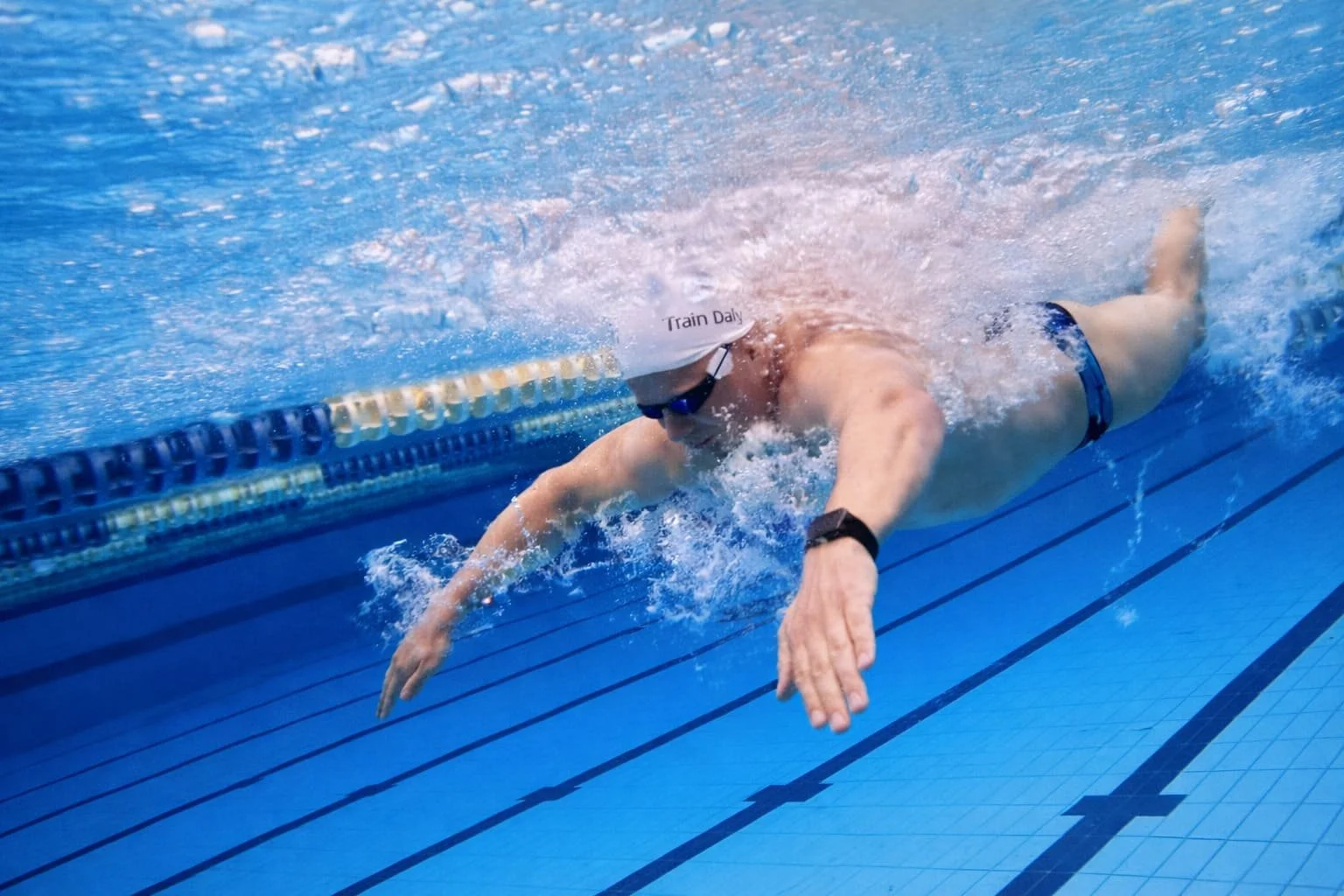
The heart of the butterfly swim stroke isn’t in the arms – it’s in the undulation. If you’re learning the butterfly swimming technique for beginners, this is where everything starts.
I want you to think of your body as a wave. The motion begins at your chest, flows through your hips, and finishes through your legs and toes. I sometimes tell swimmers it’s like doing the worm on a dance floor – but controlled, compact, and purposeful. The energy travels forward, not up and down.
Drills for Effortless Butterfly Undulation
When I teach how to butterfly, we focus on mastering this body motion before we ever add the arms. If the undulation is off, the stroke will always feel forced and exhausting.
The undulation should be moderate. Too much vertical movement creates drag and kills momentum, while too little limits propulsion. As your chest presses down into the water, your hips should naturally rise. Then as your hips drive downward, your chest returns upward. This exchange must feel continuous and rhythmic rather than segmented.
For beginners especially, mastering this wave-like movement is non-negotiable. Once the body learns to move as one connected unit, adding the arms becomes far easier – and the butterfly stroke starts to feel powerful instead of overwhelming.
Step-by-Step Butterfly Stroke: Breaking Down the Movement
When teaching how to swim butterfly, I always start with the building blocks before putting everything together. Here's my step-by-step approach that has helped hundreds of swimmers master this challenging stroke:
1. The Dolphin Kick
I begin every butterfly lesson with kick-only drills. With a kickboard held out in front, arms extended, practice the dolphin kick by:
Initiating the motion from your chest, not your legs
Keeping your legs together from hips to toes
Using a whipping motion that starts from your core
Maintaining relatively straight knees (a slight bend is natural)
I've found that many swimmers kick too deeply. Remember, effective dolphin kicks are compact and rhythmic, not massive up-and-down movements.
In this video, I demonstrate how the butterfly stroke depends on perfect timing between your arms and kick. The two-beat kick is the engine of an efficient butterfly, with each kick serving a specific purpose in the stroke cycle.
2. The Arm Movement and Catch
Once the kick feels comfortable, we add the arm movement:
Begin with arms extended forward, shoulder-width apart
Pull in a diamon pattern - wider at the beginning, narrowing as hands move toward your shoulders
Accelerate your hands as they move underneath you
Finish the pull by brushing past your hips
The most common mistake I see is dropping the elbows during the pull. I often tell swimmers to imagine their forearms as paddles, maintaining that strong catching position throughout the pull.
Timing Is Everything: Coordinating Arms and Kick
When teaching how to butterfly swim without getting tired, the secret is proper timing between your arms and legs. Many swimmers struggle because their movements fight against each other rather than working in harmony.
The butterfly stroke should have two kicks for every arm cycle:
First kick: As your hands enter the water
Second kick: As your hands pull the water
I often use the verbal cue "kick your hands in, kick them out" to help swimmers internalize this rhythm. When timed correctly, each element of the stroke powers the next, creating a self-sustaining momentum that conserves energy.
One drill I developed that works wonders: swim three cycles of butterfly focusing exclusively on timing, then three cycles of freestyle to rest, repeating this pattern for several lengths. This prevents fatigue while ingraining the correct timing pattern.
Breathing Technique: The Difference Maker
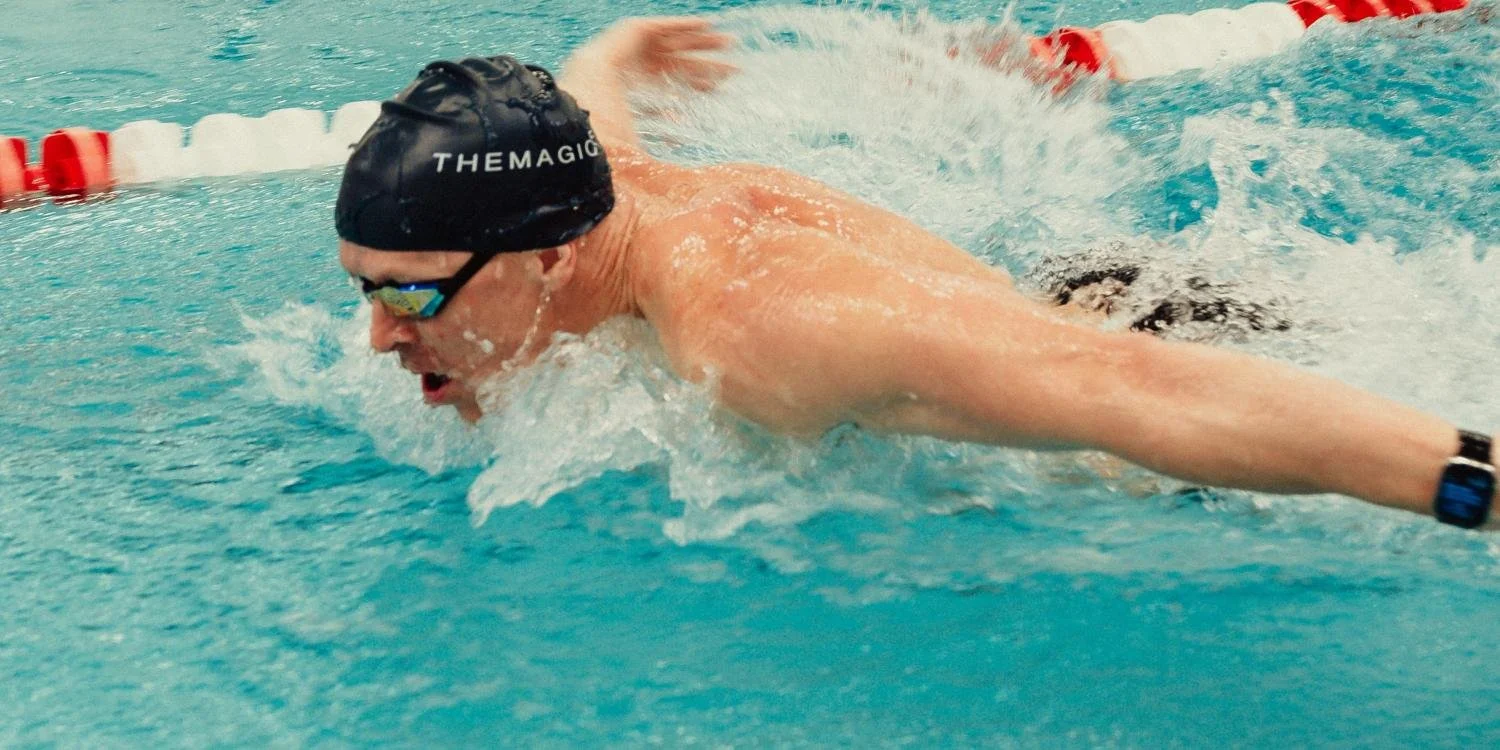
Breathing during butterfly can make or break your stroke. I've coached swimmers who had beautiful technique underwater but whose strokes fell apart the moment they tried to breathe. The key principles I teach for butterfly breathing:
Look forward and down, not up (excessive head lifting drops your hips)
Time your breath with your second kick as your arms recover
Keep it quick - your face should return to the water before your arms
For beginners, breathe every other stroke until endurance builds
A technique I've found particularly effective is practicing "peek-a-boo" breathing during drills, where you lift just enough to clear your mouth from the water. This minimal movement maintains your body position while still allowing you to breathe effectively.
Common Butterfly Swimming Mistakes and How to Fix Them
Over my coaching career, I've identified patterns in the struggles swimmers face with butterfly. Here are the most common mistakes and my go-to solutions:
The "Accordion" Effect
When swimmers alternate between being too flat and too deep in the water, I call this the "accordion effect." It creates massive drag and exhaustion.
Solution: Practice the butterfly swimming technique with fins initially. Fins provide extra propulsion that helps maintain proper body position while you develop the necessary strength and rhythm.
The Mistimed Kick
When the kick doesn't support the arm actions, you're essentially fighting against yourself.
Solution: I use single-arm butterfly drills extensively. With one arm extended forward, take butterfly strokes with the other arm while maintaining your rhythm. This simplifies the movement and helps you feel the correct timing.
The Weak Finish
Many swimmers pull strongly at the beginning but fail to complete the stroke, losing valuable propulsion.
Solution: Biondi drill - isolates the powerful pull and kick timing moment
Butterfly Swimming Sets for Building Endurance
One question I hear constantly is how to swim butterfly without getting tired. The answer isn't swimming more butterfly all at once - it's strategic training.
Here are butterfly swim sets I've developed that gradually build endurance without compromising technique:
25 Butterfly/75 Freestyle repeats: Swim the first 25 of each 100 as butterfly, then switch to freestyle. This maintains butterfly quality while building specific endurance.
Descending Butterfly: Swim 8x25 butterfly with increasing effort (but maintaining technique) on each repeat. Focus on efficiency, not speed.
Butterfly Sandwich Sets: 50 yards as: 12.5 butterfly/25 freestyle/12.5 butterfly. This places butterfly at the beginning and end when you're both fresh and fatigued.
I'm adamant about one thing: it's better to swim less butterfly with excellent technique than more with poor form. Quality always trumps quantity when learning how to swim the butterfly stroke.
3 Dryland Exercises to Strengthen Your Butterfly Swimming
The butterfly stroke demands not just technique but significant upper body strength. Over the years, I've found these three exercises particularly effective for my swimmers looking to improve their butterfly:
Deck Press Ups
Mimics butterfly pull pattern with resistance.
Vertical Pulling
Explosive overhead pull in deep water.
Pull Ups
Direct carryover to butterfly pulling power.
Once a swimmer can perform 5–8 strict pull ups, their butterfly almost always improves.
From Beginner to Confident Butterflier: A Progressive Approach
Teaching butterfly swimming technique for beginners requires patience and progression. I've developed this sequence that gradually builds confidence:
Start with body undulations with a snorkel and fins
Progress to Biondi Drill
Practice butterfly pull with freestyle kick to hold better streamline and tempo
Combine everything for short 25yd repeats with fins and lots of rest to start
I remember working with an adult swimmer who was terrified of butterfly. We spent three weeks just on steps 1-3, and when we finally added the full stroke, she managed a full 100 yards on her first attempt. The systematic approach builds both physical capability and mental confidence.
The Beauty of Mastering Butterfly
When you truly learn how to swim butterfly, something shifts.
The stroke that once exhausted you becomes powerful.
The movement that felt chaotic becomes rhythmic.
And the challenge becomes your edge.
Butterfly demands respect, but it rewards discipline.
Start with fundamentals. Build rhythm. Train with intention.
You might just discover that butterfly isn’t the hardest stroke – it’s the most satisfying one to master.