

How Many Calories Does Swimming Burn Per Hour? Find Out Now!
/Swimming isn’t just a skill—it’s a powerhouse workout. Over the years coaching swimmers of all levels, I’ve seen this sport torch calories faster than nearly any land-based alternative. But the exact number? That depends on your stroke, speed, and body weight. Whether you’re logging recovery laps or grinding out threshold sets, let’s break down how many calories swimming actually burns—and how to make every minute count.
Why Does Swimming Burn So Many Calories?
Here’s a question I hear often on deck: Why do I feel so wiped out after a swim - even if I only swam 30 minutes? It’s not just in your head.
Swimming burns a high number of calories because your body is constantly working against resistance—both from the water and your own buoyancy. You’re recruiting muscles from head to toe, regulating your core temperature in a cooler environment, and breathing rhythmically under pressure. All that effort adds up.
And unlike most other workouts, swimming uses your upper and lower body simultaneously, often at a high aerobic output. It’s a unique combo that makes swimming one of the most efficient calorie-burning exercises available.
What Affects Calories Burned While Swimming?
The number of calories you burn while swimming isn’t one-size-fits-all. These key factors matter:
Body weight: Heavier swimmers typically burn more calories due to greater energy demands.
Intensity: Easy lap swimming vs. race-pace intervals are worlds apart.
Stroke choice: Butterfly burns far more than backstroke.
Efficiency: Beginners often burn more calories simply because they move less efficiently through the water.
Water temperature: Swimming in cooler water increases calorie burn as your body works harder to stay warm.
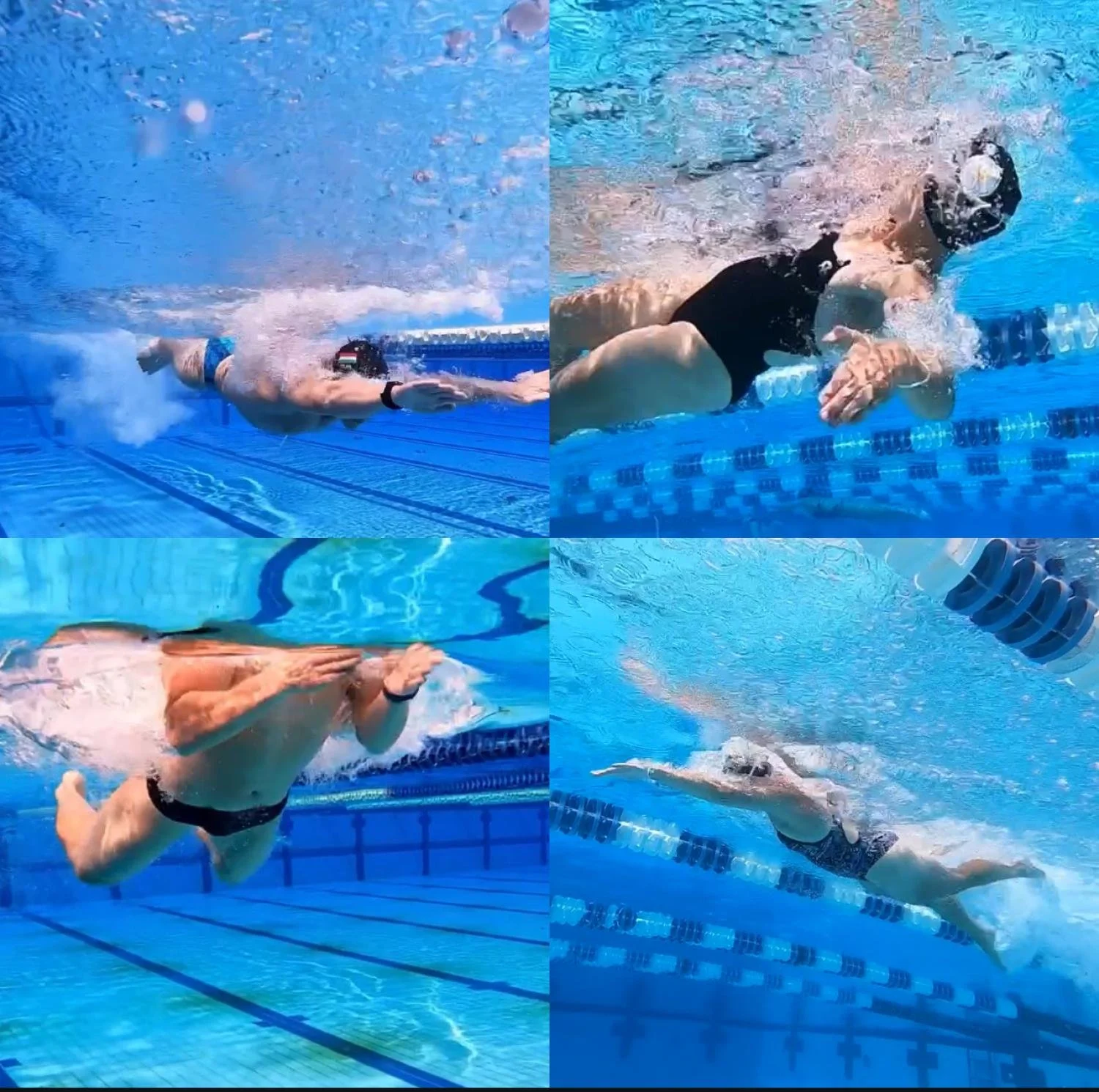
Functional,
FIT, Fast!
Stroke-specific workouts
Integrated dryland programming
Video cues, technique tips & training structure
Built for swimmers at any level chasing serious results
Calories Burned Swimming Per Hour (By Stroke and Weight)
Here's a general estimate based on data from Harvard Medical School. These numbers are approximate and can vary based on form and training level.
| Stroke | 125 lbs | 155 lbs | 185 lbs |
|---|---|---|---|
| Freestyle (slow) | ~400 | ~500 | ~600 |
| Freestyle (fast) | ~590 | ~700 | ~840 |
| Breaststroke | ~590 | ~700 | ~840 |
| Backstroke | ~400 | ~500 | ~600 |
| Butterfly | ~650 | ~800 | ~950 |
| Treading water | ~300 | ~400 | ~500 |
Swimming a mile isn’t just a physical challenge—it’s a calorie burner too. On average:
125 lb swimmer: ~300–350 calories
155 lb swimmer: ~400–450 calories
185 lb swimmer: ~450–500+ calories
This assumes moderate-effort freestyle. Push the pace or throw in some butterfly and that number climbs quickly. I’ve coached athletes who burned 600+ calories during a race-pace mile with mixed strokes.
What About 30 Minutes of Swimming?
Even short swims can have a big impact. For a 155 lb swimmer:
Leisurely pace: ~250–300 calories
Moderate effort: ~350–400 calories
High-intensity intervals: ~450+
I once coached a Masters swimmer who burned 420 calories in just 28 minutes doing mixed-stroke intervals at threshold pace. So yes, 30 minutes can be enough—if you bring intention to the workout.
Swimming vs. Other Cardio: Who Wins the Calorie Game?
| Activity (1 hr) | 155 lb person |
|---|---|
| Running (6 mph) | ~700 cal |
| Cycling (12–14 mph) | ~560 cal |
| Rowing (moderate) | ~520 cal |
| Swimming (vigorous) | ~700+ cal |
Compared to running, cycling, or rowing, swimming holds its own - and often comes out ahead.
The unique benefit of swimming? You’re not pounding your joints, and your body works overtime to stay afloat and warm - burning more calories with less wear and tear.
Swimming Calories Burned Calculator
To get a rough estimate, use this simple equation:
(MET value) × (weight in kg) × (duration in hours) = total calories burned
| Stroke | MET Value |
|---|---|
| Freestyle (slow) | 6.0 |
| Freestyle (vig.) | 9.8 |
| Breaststroke | 10.3 |
| Butterfly | 11.0 |
| Backstroke | 4.8 |
| Treading water | 3.5–6.0 |
Example: A 155 lb swimmer (70 kg) doing fast freestyle for 1 hour
→ 9.8 × 70 × 1 = 686 calories burned
Read also: "Doing Work" with Coach Dos - Metabolic Conditioning
How to Burn More Calories Swimming
Want to make the most of your time in the pool? Here’s how I coach swimmers to increase energy output:
Swim intervals – Alternate hard and easy efforts to raise your heart rate.
Include butterfly or breaststroke – They naturally burn more.
Use resistance tools – Add paddles, fins, or drag suits (once technique is solid).
Shorten rest intervals – Less rest = more work done in the same time.
Train in cooler water – Within reason, it boosts calorie burn safely.
Improve technique – Move more efficiently and sustainably, so you can push harder
Swimming is more than a calorie - burning machine - it’s a sustainable, joint-friendly, and performance-driven way to get fit. The exact number of calories you’ll burn depends on multiple factors, but with the right structure, every lap can move you closer to your fitness or racing goals.
Whether you're tracking for weight management or optimizing your training plan, swimming offers a unique edge in the calorie burn game - if you’re willing to work the water.
Got a training goal in mind?
Check out our custom swim and dryland programming—built for your body, your schedule, and your performance goals.


Swimming is often praised as one of the best full-body workouts—but how many calories does swimming actually burn? The answer depends on your stroke, intensity, body weight, and even water temperature. As a coach, I’ve seen swimmers torch 400–700+ calories per hour, especially during high-effort training sets. In this article, we’ll break down how many calories you burn swimming by stroke, duration, and distance—and help you make the most of every lap. Whether you're aiming for fitness or performance, here's what you need to know.