

How to Swim Butterfly Faster and Stop Burning Out After 25 Yards
/I hear this every season, from high school swimmers to experienced masters:
“Coach, I can make the first 25 look good… then everything falls apart.”
Butterfly has a reputation for feeling like punishment. And for a lot of swimmers, it is. Not because they’re weak. Not because they’re lazy. But because they’re trying to swim fast butterfly by working harder instead of moving better.
If you want to swim butterfly faster – especially in a fast 100-200 butterfly – you don’t need more suffering. You need better sequencing, cleaner rhythm, and strength that actually transfers to the water.
Faster 100 Fly in 14 Days
Build speed without burning out. Fourteen short, focused workouts combining swim drills and dryland work that actually transfers to the pool. Plug it into your training and start swimming faster now.
Why Trying Harder Makes Butterfly Slower
Most swimmers think butterfly speed comes from effort. More kick. Bigger pull. More aggression.
That mindset is exactly what causes the burnout at 25 yards.
Butterfly is a full-body stroke, but it’s not a “muscle through it” stroke. It’s a linked system. When one piece is late or disconnected, the entire stroke gets expensive.
Here’s what actually drives fast butterfly swimming:
Hips lead the motion, let your legs do the work
Arms connect to the body, not fight it
Strength transfers cleanly through the core
Rhythm controls effort, not the other way around
When timing is right, butterfly stops feeling like survival and starts feeling controlled – even at speed.
That’s the difference between swimmers who look powerful and swimmers who are actually fast.
Most swimmers think butterfly speed comes from trying harder - This video lays out why quiet power beats forced effort every time.
Butterfly Speed Is Built on Rhythm, Not Force
If butterfly still feels like swimming uphill with a parachute, something in the chain is off.
I see this constantly in training:
Kick is strong but mistimed
Pull is powerful but disconnected
Breath lifts instead of flowing
Core collapses between strokes
Butterfly only works when rhythm leads the stroke.
Here’s what changes when rhythm improves:
The water feels lighter
The glide becomes usable instead of wasted
Energy lasts past 25 yards
Speed feels repeatable, not desperate
Fast butterfly swimmers don’t rush. They sequence.
Why does butterfly still feel like punishment—even when you’re training hard? This is where rhythm, core control, and sequencing come together.
How to Swim Butterfly Stroke Faster Without Burning Out
If you want to swim butterfly faster consistently, especially in short races, focus on these three priorities.
1. Let the Hips Start Everything
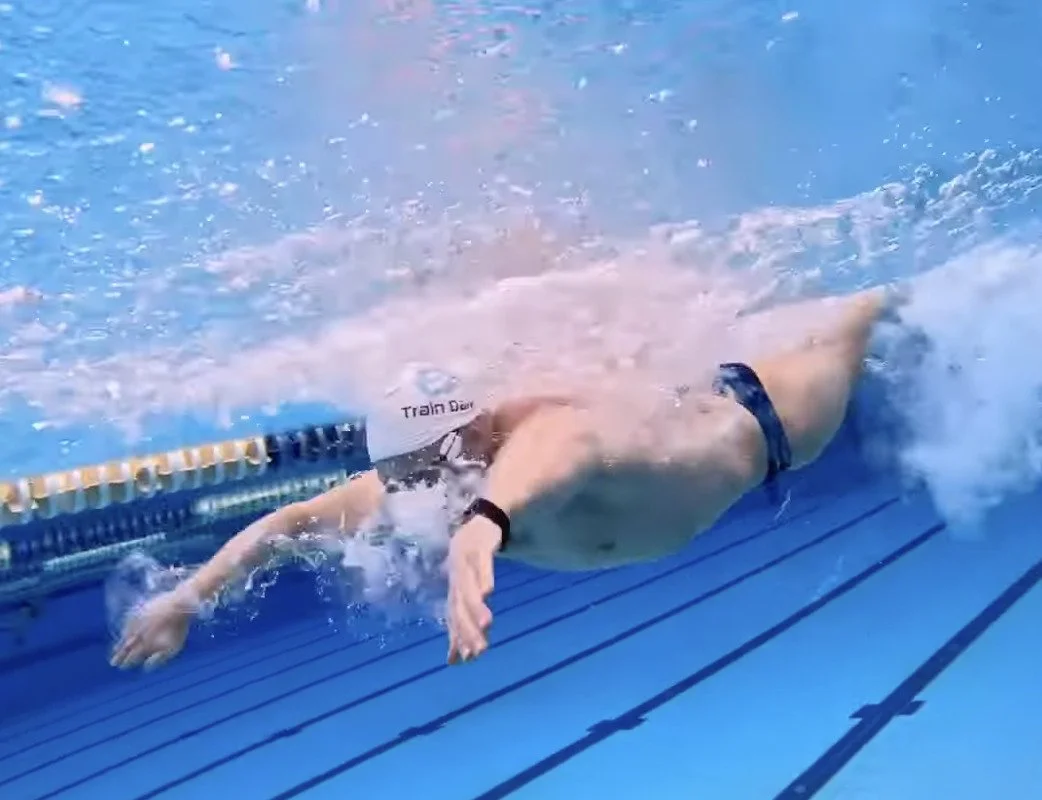
The hips initiate the motion. When the arms lead, the stroke gets heavy. When the hips lead, the arms ride the wave.
This is why strong swimmers still struggle – they’re pulling before the body is ready. Use your hips to kick your arms back, then kick them forward, in a one, two, rhythm.
2. Connect the Arms to the Core
Arms don’t create speed on their own. They transfer it.
When the core is timed correctly:
The catch feels anchored
The pull feels shorter but stronger
The exit happens naturally
And streamline maintains momentum and rhythm
When it’s off, the arms feel like they can barely exit the water.
3. Use Strength That Transfers
Butterfly strength isn’t about how much you lift. It’s about how well you express power overhead, through rotation, and into timing.
Random lifting doesn’t fix butterfly. Specific movement does.
How to swim stronger faster butterfly? Overhead throwing movements like medicine ball tosses teach power transfer that actually shows up in the pool.
How to Swim a Fast 50 Butterfly Without Falling Apart
The 100 fly exposes flaws instantly.
There’s no room for panic. No room for muscling through mistakes.
To swim a fast 100 butterfly:
The first stroke must feel controlled, not explosive
Breathing must stay low, not high
Tempo must be fast but repeatable, around 50-55 strokes per minute (25% Off Tempo Trainers with code DALY25!)
Count your strokes and stay within range
Finish speed comes from consistency, not spiraling out and spinning your wheels
The swimmers who close well aren’t tougher. They’re better synced.
That’s why we pair in-water timing work with dryland that reinforces the same patterns. Not endless laps. Not random lifting. Purposeful training that keeps the chain intact.
Quiet Power Always Wins
Butterfly doesn’t reward force. It rewards connection.
When your timing is right:
Speed feels easier
Fatigue shows up later
Technique holds under pressure
Confidence replaces survival mode
That’s when swimmers stop dreading butterfly and start racing it.
Quiet power beats forced effort. Every time.
If you want an evergreen system that builds speed without burning you out, focus on how the body works together – not how hard you can push it.
That’s how you swim faster butterfly. And that’s how you keep it past 25 yards.
Want to See Exactly What’s Slowing Your Butterfly Down?
If a butterfly still feels heavy or falls apart at race speed, guessing usually makes things worse, not better.
With personalized video technique analysis, I break down where your timing disconnects, how your hips, core, and arms are (or aren’t) working together, and why your speed fades after 1-2 lengths of the pool. You’ll get clear, specific feedback and corrections you can apply immediately in the pool, not generic advice or drills that don’t fit your stroke.
Stop guessing. Start swimming butterfly with control, confidence, and repeatable speed.
About Coach
Dan Daly is a competitive swimming coach with over two decades of experience helping swimmers improve speed and efficiency in the pool. He works with athletes both online and in person, combining technical analysis, structured training, and practical feedback that translates directly to racing. His approach focuses on strong fundamentals, clean technique, and sustainable progress — building speed and confidence without unnecessary fatigue.