

Bodyweight Training for Swimmers: Dryland That Works
/In swimming, maximal strength is rarely the limiting factor. Strength to bodyweight ratio,and how you move and propel your bodyweight through the water matters more.. That’s why I’ve relied on bodyweight training for swimmers throughout my coaching career. When dryland work teaches the body how to organize itself, the payoff shows up in cleaner strokes, stronger kicks, and more resilient shoulders – not just in the weight room, but in the pool.
Bodyweight Training
A 4-week bodyweight dryland program for swimmers. Two sessions per week with a progressive build and deload.
Applying the Bodyweight Training Model
For swimmers who want a structured application of this approach, the Bodyweight Training for Swimmers program from Train Daly applies these principles across a progressive four-week cycle. The program uses bodyweight only and is designed for entry-level dryland, recovery phases, or home-based training between swim cycles.
It builds volume over three weeks, followed by a deload in week four, allowing adaptation without accumulating unnecessary fatigue.
Why Bodyweight Dryland Works for Swimmers
Traditional strength training often focuses on how much load an athlete can move. Swimming doesn’t reward that. Swimming rewards how well force is transferred through unstable, ever-changing positions.
Bodyweight dryland for swimmers works because it exposes compensation patterns early and forces the body to solve movement problems without relying on external load. Instead of isolating muscles, it trains joint-by-joint control, building stiffness where swimmers need it most — particularly through the core and shoulder girdle — while preserving mobility in areas that tend to degrade over long seasons, such as the hips, thoracic spine, and shoulders.
This is also why calisthenics for swimming can outperform poorly planned weight training. When the body can’t rely on resistance to mask inefficiencies, movement quality becomes non-negotiable.
Best Bodyweight Exercises for Swimmers: Functional Categories
Rather than listing random exercises, it’s more effective to organize bodyweight training around movement roles that directly support swimming mechanics.
Shoulder Function and Overhead Control
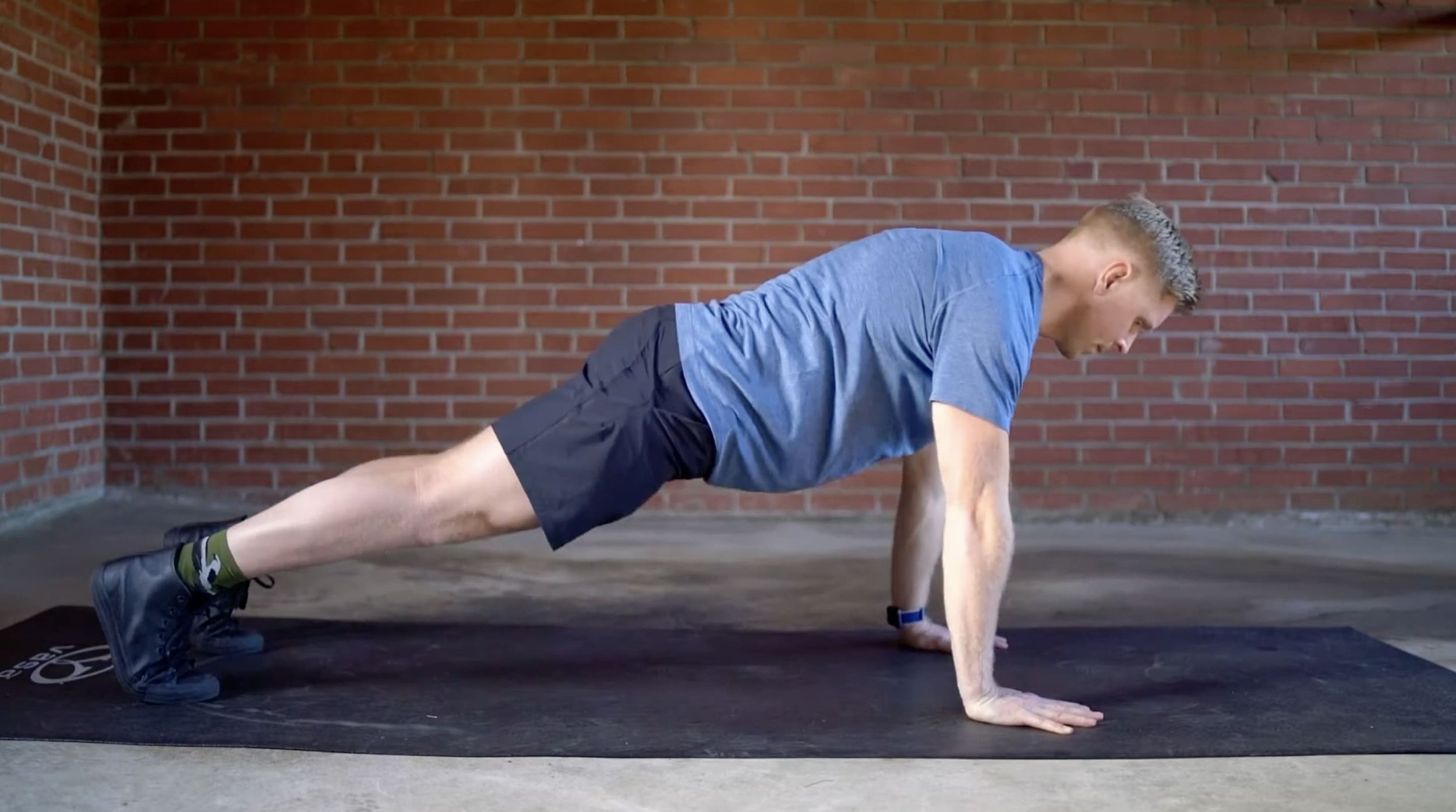
Swimming lives overhead. If the shoulder blades don’t rotate and stabilize correctly, the shoulder joint absorbs stress it isn’t designed to handle. Push-ups plus, overhead reach patterns, and controlled plank variations teach upward rotation and serratus engagement without compressive loading.
This same shoulder logic is reinforced through rhythmic, elastic movements such as skipping, which is often layered into warm-ups to restore timing and elastic readiness before dryland sessions. These principles are discussed further in the breakdown of skipping exercises for swimmers, where rhythm and joint preparation take priority over fatigue.
Core Stability Without Rigidity
Swimmers don’t need to brace harder. They need to maintain shape while moving. Planks, side planks, and rotational holds should train anti-extension and anti-rotation without locking the torso into stiffness.
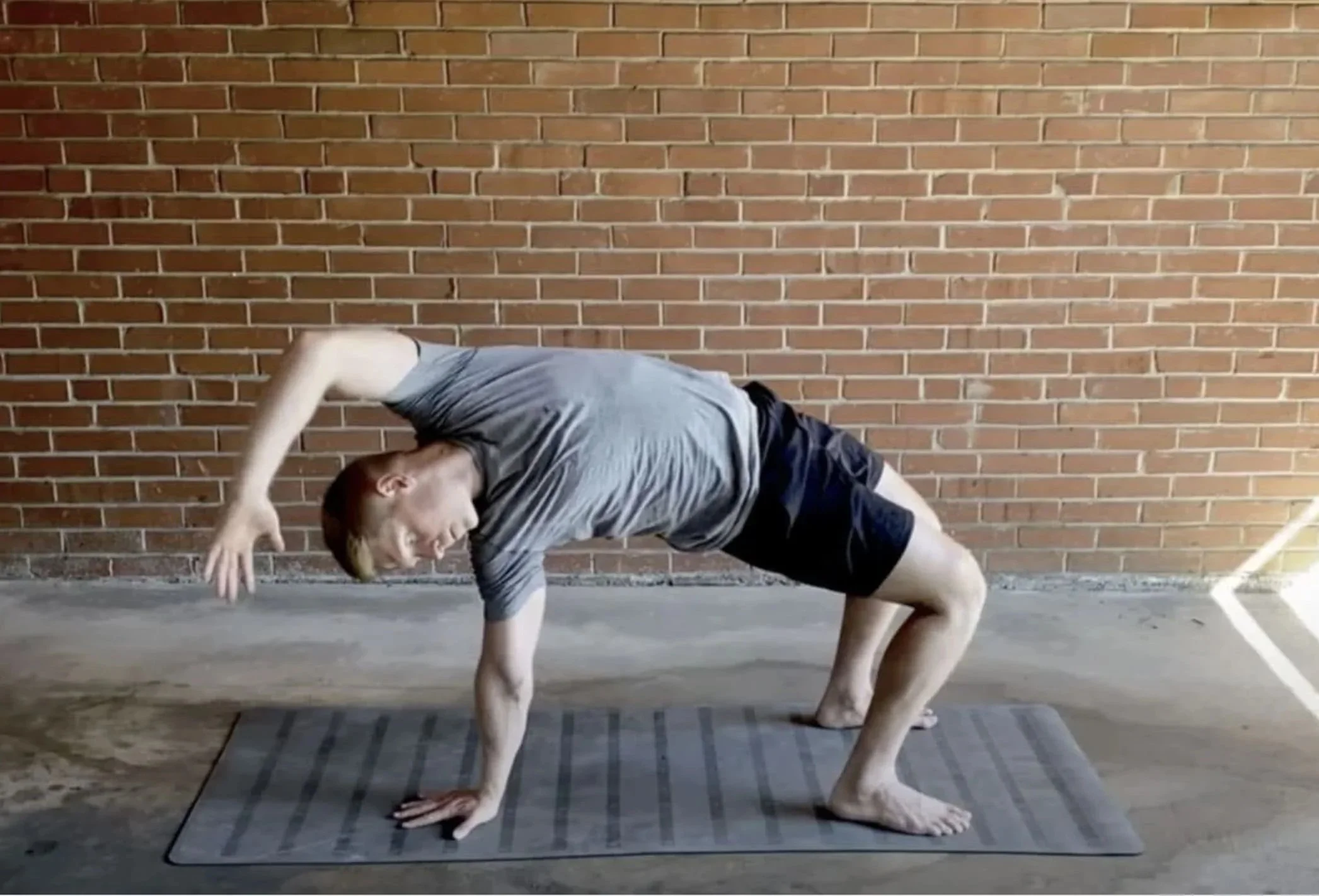
Dynamic crawling and flow-based patterns extend this concept by challenging stability while the limbs move freely. Crawling exercises closely mirror what happens during freestyle and backstroke, which is why more integrated approaches such as animal flow bodyweight conditioning fit so naturally into swim-specific dryland work
Lower Bodyweight Exercises for Swimmers
Lower bodyweight exercises are often overlooked because swimming appears upper-body dominant. In reality, starts, turns, and kick propulsion depend heavily on how well swimmers manage asymmetrical lower-body force.
Split squats, lunges, and controlled jumping patterns improve unilateral force production, reinforce hip-to-core connection, and reduce stress on the knees and lower back. When these movements are mastered, swimmers often notice better stability off the wall and improved timing through the kick.
Applied Movement Patterns
Effective bodyweight training for swimmers is built around movement patterns, not isolated exercises or fatigue-driven circuits. The purpose of dryland work is to reinforce positions and force pathways that repeatedly appear in swimming, especially under fatigue.
Asymmetrical lower-body power
Split-stance jumping patterns teach swimmers how to produce force without symmetrical support. This directly supports starts, turns, and kick timing, and rotation where propulsion is rarely evenly distributed. A short visual reference of this concept can be seen here:
Pull-to-overhead integration
Rowing patterns that transition into overhead reach reinforce how pulling strength must connect to shoulder stability. In swimming, propulsion is only effective if the shoulder blade can stabilize and rotate smoothly as the arm moves overhead. This principle is illustrated within the same movement sequence above.
Scapular control under load
Push-up variations that emphasize scapular motion address one of the most common breakdowns in swimmers: loss of upward rotation and control as training volume increases. A complementary short visual example showing how push, pull, and jump patterns can be combined without equipment is available here:
These short clips are visual references, not workouts. They exist to clarify movement intent, not to prescribe volume or intensity. Together, these patterns reinforce how swimmers generate, control, and redirect force without relying on external load.
Bodyweight Exercises for Swimmers at Home
One of the biggest advantages of bodyweight training is accessibility. Bodyweight exercises for swimmers at home or on the pool deck remove barriers to consistency. No equipment, no setup, no excuses — just structured movement.
For many athletes, this becomes the most sustainable form of resistsance training for swimmers at home or the pool, particularly during travel, heavy competition phases, or recovery blocks where maintaining movement quality matters more than increasing load.
Programming Principles
Most swimmers respond best to two bodyweight sessions per week. More than that rarely adds benefit unless volume is tightly controlled.
I typically use bodyweight dryland as an entry point for younger or returning swimmers, between high-intensity swim blocks to maintain strength without adding fatigue, and on recovery days where movement quality takes priority over load.
This exact structure is built into the Bodyweight Training for Swimmers program, with three progressive weeks followed by a deload to support adaptation while protecting long-term durability.
Continue Your Dryland Training
Bodyweight work is often the starting point, not the endpoint. As swimmers build better control, coordination, and resilience, dryland training can be layered progressively to match their event demands, season, and training age.
At Train Daly, all dryland programs follow the same principle: movements must transfer directly to the water, not just look good on land.
Explore the full collection of dryland programs designed to support swimmers at every stage of development.