

How to Practice Swimming Without a Pool
/Every swimmer eventually faces the same moment — the pool is closed, your schedule won’t cooperate, or life simply gets in the way. And suddenly you’re left wondering: How do I keep progressing when I can’t get in the water?
I’ve watched swimmers panic during these stretches. They assume their fitness will fade, technique will slip, and all the progress they’ve built will disappear. But the truth is much more encouraging: you can become a better swimmer even when you’re nowhere near a pool.
Some of the biggest breakthroughs I’ve seen in my career have come outside the water. When you remove the buoyancy and noise of the pool, you’re left with the fundamentals — posture, breath control, mobility, stability, and the strength that holds a stroke together. These are skills you can train exceptionally well at home.
Today, I want to show you what at-home swimming practice should actually look like — not “trying to swim on land,” but developing the physical qualities that make swimming faster and more efficient once you’re back in the water.
Before We Begin — You Don’t Need to Guess
If you want more structure and accountability while training outside the pool, virtual swim coaching can make a huge difference.
I work with swimmers around the world through both the Train Daly Monthly Dryland Subscription and personalized virtual swim coaching. That means you’re not just following random workouts off the internet — you’re training with a system designed specifically for swimmers.
Through virtual coaching, I analyze stroke technique, help identify movement limitations, build individualized swim and dryland plans, and guide swimmers through the same performance principles I use with competitive athletes. Even when pool access is limited, we can continue improving mobility, strength, posture, body position, breathing mechanics, and race-specific movement patterns that directly transfer back into the water.
For swimmers who want a more independent option, the Train Daly Monthly Dryland Subscription on the TrainHeroic app includes weekly swim-specific strength routines, mobility circuits, core work, and video-guided sessions built to keep you progressing year-round.
Read More About Virtual Swim Coaching
Explore the Dryland Training Subscription
You do not need perfect circumstances to keep improving as a swimmer. With the right structure, consistency, and feedback, some of your biggest breakthroughs can happen long before you ever dive back into the pool.
Why At-Home Swimming Practice Works
When swimmers hear “we’re training on land today,” they often picture doing freestyle or butterfly motions in the air. But that’s not what dryland is — not in my program and not in high-performance swimming.
Dryland practice works because it builds the qualities the water hides:
the posture that keeps your bodyline long
the breathing rhythm that keeps your stroke relaxed
the hip and core control that keeps your kick connected
the mobility that allows your shoulders to move freely
the strength that lets you hold speed when fatigue hits
You’re not rehearsing swimming motions — you’re preparing your body to execute them more effectively once you’re back in the pool. When these pieces are strong, technique becomes easier. When they’re weak, technique falls apart no matter how much you swim.
Building Better Stroke Mechanics at Home
Dryland is where you learn how your body should feel when the stroke is working. On land, movement slows down, and awareness improves. You can finally focus on sequencing — how your torso rotates, how your ribs stay down, how your shoulder sits in the socket, how your core stabilizes.
This is where I use “reach and pull” prep work. Not as pretend freestyle, but as a way to train shoulder mechanics, lat engagement, and long-line posture.
Working through these positions on land helps you enter the pool with cleaner mechanics, not confused ones.
Build better reach, rotation, and pull strength right at home. Limited mobility and weak rotation shorten your stroke and strain your shoulders
Training Your Kick Without Water
A strong kick is built from hip stability and core connection.. On land, you can isolate the pieces that make kicking efficient:
Core stability
Hip strength
Streamline
When swimmers strip away the water and feel the movement directly, long-standing kicking issues often clear up fast. The goal isn’t to “flutter kick on the floor” — the goal is to teach your hips and core how to stabilize the movement so your kick becomes a propulsive engine, not extra drag.
Dryland Flutter Kick Training for Swimmers. Build core tension and a cleaner streamline with this simple dryland drill—perfect for swimmers training at home or on deck.
Breathing Practice You Can Do Anywhere
Breathing is often the limiting factor in swimming, not fitness. Poor breathing mechanics create neck tension, break posture, and disrupt rhythm.
Dryland lets you rebuild breathing patterns without the panic of oxygen demand.
I use:
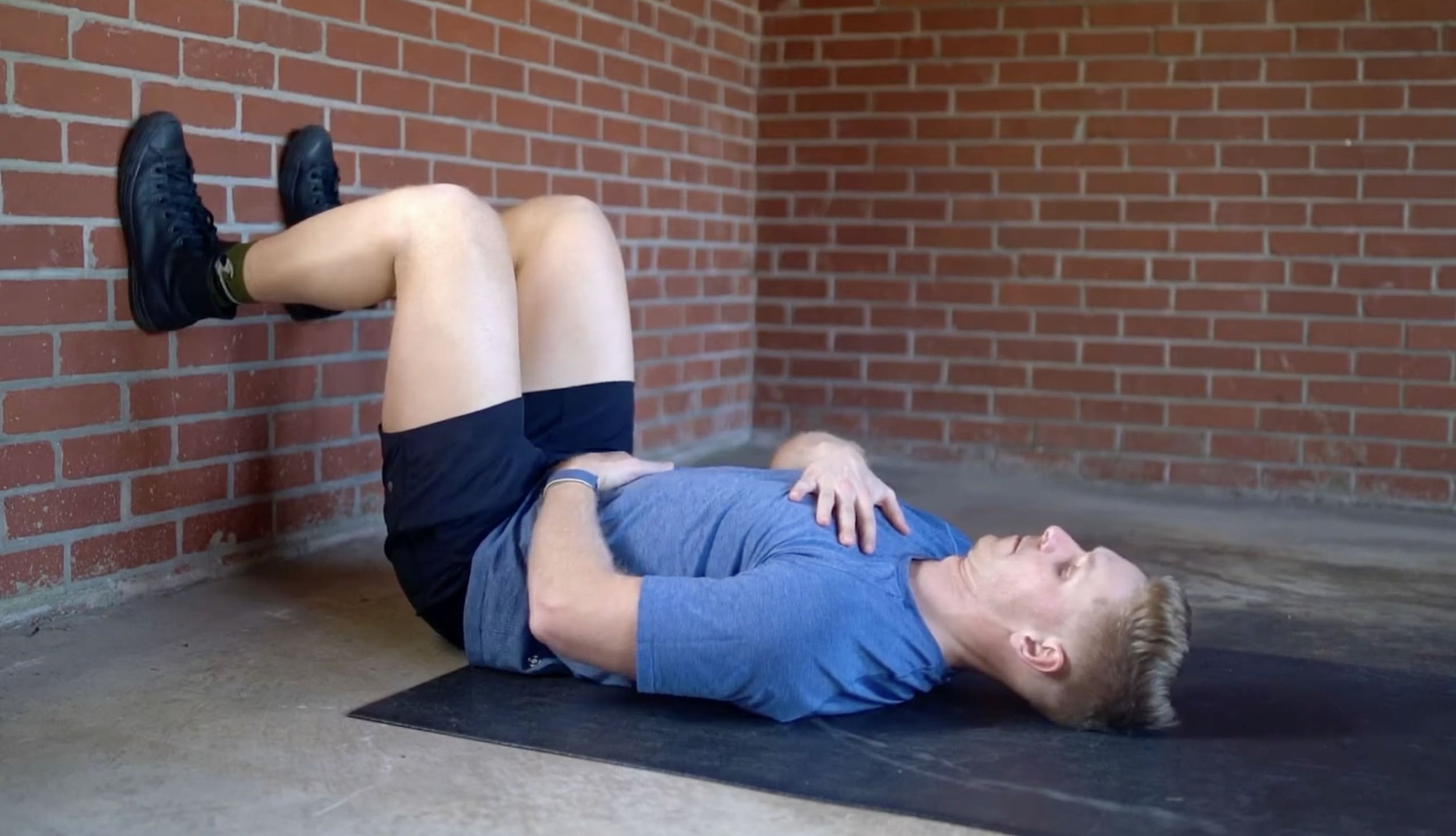
crocodile breathing to set diaphragm engagement
side-lying breathing to train rib movement and rotation
CO₂ tolerance work for calmness during long sets
slow exhales to reduce muscular tension
When swimmers improve their breathing on land, they move more confidently in the water. They stop lifting their head, stop rushing the inhale, and stop tightening the shoulders.
Crocodile Breathing. A simple belly-breathing drill to build core control and calm, efficient movement.
Developing Strength and Power at Home
Dryland strength training isn’t a replacement for swimming — it’s the base that supports long-term performance. The water simply doesn’t allow the kind of loading or resistance you need to build stronger joints, a more stable core, or the power that carries you through a race. Training on land gives you the chance to develop the mobility, stability, and total-body strength that make fast, efficient swimming possible.
This is why I lean on kettlebell work so often. It turns swimmers into well-rounded athletes, not just technicians in the water. The benefits show up quickly — cleaner starts, sharper underwaters, more controlled breakouts, and the ability to hold speed deep into a race. And the best part? Just ten focused minutes of smart strength work can noticeably change how your stroke feels the next time you touch the water.
Kettlebell Training to Improve Strength and VO₂max
Short Video Caption. Build strength, power, and VO₂max with kettlebell snatches. This full-body movement boosts hip drive, overhead stability, and conditioning — perfect cross-training for swimmers.
Practicing All Four Strokes (Without Pretending to Swim)
Each stroke needs different mobility, strength, and movement control.
Dryland helps you train those requirements directly:
Backstroke needs strong rotation and shoulder stability
Breaststroke needs hip mobility and adductor strength
Butterfly needs coordinated trunk movement
Freestyle needs long-line posture and scapular control
Dryland Exercises for Each Swim Stroke. Dryland isn’t “swimming without water.” It’s preparing your body to swim better with water.
Here’s a session that breaks this down without imitating strokes in the air:
Sample Week Inside the Dryland Subscription
One advantage of the TrainHeroic program is that you’re never guessing.
I write fresh programming weekly: strength, conditioning, mobility, and swimmer-specific movement prep.
Here’s what a typical week looks like:
Day 1 – Resistance Training Session
Breathing → mobility → power → strength.
This builds the posture and control for clean mechanics at any speed.
Day 2 – Conditioning
Mobility warm-up → 30-60 minutes of dynamic mobility and low aerobic work.
Supports range of motion and recovery between harder sesisons.
Day 3 – Resistance Training Session
Complimentary movements: multi-muscle, multi-joint movements - horizontal and vertical pushing and pulling, squats, and dead lifts to build total body strength and power top to bottom, left and right, front and back.
Day 4 – Conditioning
Another aerobic mobility day on land or drills and technique in the water to improve recovery, feel for the water, and efficiency.
Day 5 – Resistance Training Session
Similar structure to Day 1 and 2, with variations in movement patterns and exercises intensity supporting and undulating approach to programming higher peaks.
Every session begins with breathing and mobility — because great swimming starts with great movement. Everything else builds from there.
If you want the full version of these workouts, you’ll find them delivered directly to your app each week.
You Can Improve Anywhere
One of the biggest lessons I’ve learned is that great swimmers aren’t defined by how much pool time they get. They’re defined by how intentionally they train — regardless of the environment.
You can build technique, strength, and confidence from home. You can sharpen your breathing, improve mobility, and strengthen the positions your stroke relies on.
And when you’re back in the water, that work shows up immediately.
Ready to Train With Structure?
If you want guided dryland workouts designed specifically for swimmers, I built a system you can try for free.
About the Author
Dan Daly is a CSCS-certified strength coach with more than 20 years of experience working with swimmers from high school through the Olympic Trials level. A former collegiate swimmer, Dan built the Train Daly coaching system to blend technique-focused swim training with evidence-based strength, mobility, and conditioning work.