

Breaststroke Dryland Exercises for Power, Knee Health, and Technique
/Breaststroke is unique.
It asks more from the hips, knees, and ankles than any other competitive stroke — and when dryland training doesn’t respect that, swimmers feel it fast.
Over the years, I’ve worked with plenty of breaststrokers who trained hard, swam consistently, and still struggled with knee pain, inconsistent kick timing, or a stroke that fell apart under fatigue. In almost every case, the missing piece wasn’t more swimming — it was better dryland preparation.
Breaststroke dryland exercises should do three things:
Improve mobility where breaststroke demands it
Build strength through breaststroke-specific ranges of motion
Teach coordination that transfers directly to the water
When those boxes are checked, breaststroke becomes safer, smoother, and faster.
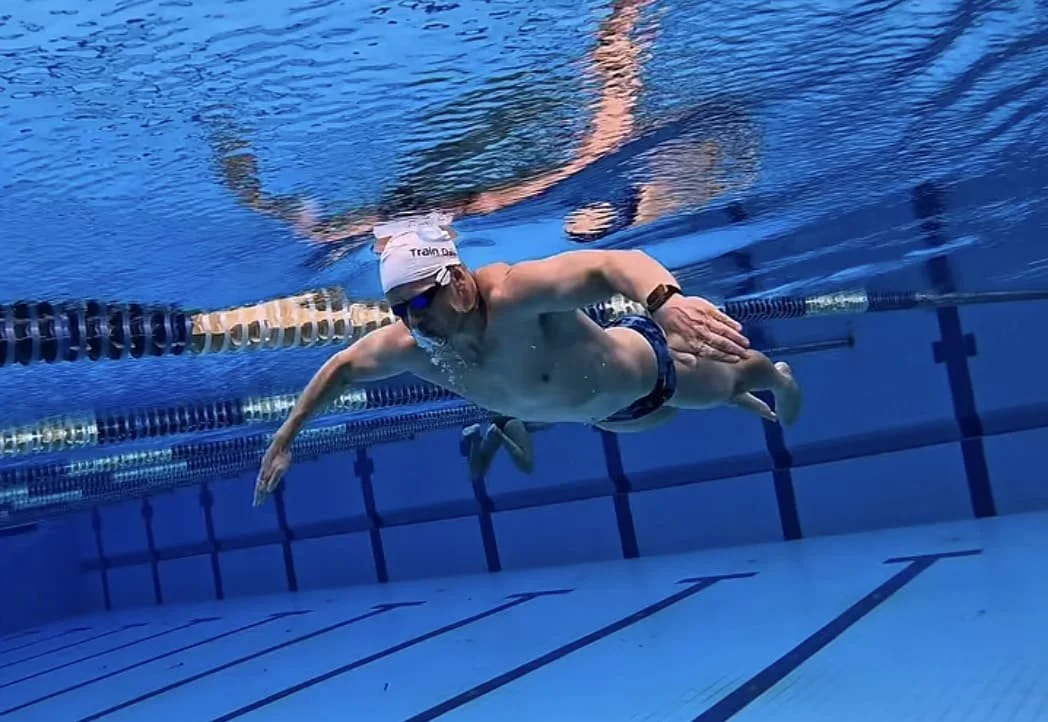
14 Days to Better Breaststroke
A focused 14-day program combining targeted breaststroke swim drills and stroke-specific dryland exercises to improve efficiency, power, and timing.
Why Generic Dryland Fails Breaststrokers
Most dryland programs are built around linear movement: squats, lunges, presses, pulls. Breaststroke isn’t linear.
The kick requires:
Hip external rotation
Controlled knee flexion under load
Ankle mobility that allows the feet to accelerate water backward, not outward
Without targeted dryland exercises, swimmers compensate. Knees absorb torque, kicks go wide, and timing breaks down late in races.
That’s why dryland exercises for breaststroke must be intentionally different from freestyle-dominant training.
Breaststroke also places very different demands on the body compared to other strokes, which is why dryland training needs to be stroke-specific. If you want a quick overview of how breaststroke compares to freestyle, backstroke, and butterfly, this guide on the different types of swimming strokes and their benefits provides useful context.
1. Hip Mobility: The Starting Point for Every Breaststroker
If you only prioritize one thing in breaststroke dryland, make it hip mobility.
Limited hip rotation forces the knee to rotate instead — and the knee is not designed for that role. Improving hip mobility allows the kick to stay narrower, more powerful, and far less stressful.
Effective breaststroke hip mobility work focuses on:
Internal and external rotation control
Active range of motion, not passive stretching
Positions that resemble the breaststroke kick setup
When hips move freely, everything downstream improves: knee comfort, kick timing, and stroke rhythm.
Breaststroke and Hip Mobility – Injury Prevention
2. Knee Stability Without Overloading the Joint
Breaststrokers don’t need “bulletproof” knees — they need supported knees.
Dryland exercises to improve breaststroke should strengthen:
Inner thigh (adductors) for kick control
Quadriceps through safe, sport-specific ranges
Supporting muscles around the hip and ankle
Wide kicks and poor foot positioning place excessive torque on the medial knee. Dryland should teach the body how to produce force without unnecessary stress.
Well-chosen knee-focused exercises improve:
Kick consistency
Confidence under fatigue
Long-term durability across a season
Knee & Ankle Exercises for Breaststrokers
Knee & Ankle Exercises for Breaststrokers
3. Ankle Mobility and Foot Positioning
Ankles are often overlooked in breaststroke dryland workouts — and that’s a mistake.
Without adequate ankle mobility:
The feet slip instead of accelerating water
Swimmers push outward instead of backward
Knee stress increases as compensation occurs
Dryland exercises should include:
Controlled ankle mobility work
Strength through end ranges
Integration with hip and knee movement
Better ankle function allows the kick to finish faster and cleaner, especially at race tempo.
4. Dryland Exercises for Breaststroke Power and Timing
Power in breaststroke isn’t about max strength — it’s about quick force application followed by relaxation.
Dryland should reinforce:
Fast hands into the catch
Explosive but controlled leg drive
Smooth transitions between upper and lower body
Medicine ball throws, suspension training, and integrated movement patterns work well here because they teach swimmers how to connect the stroke, not just muscle through it.
Fast Hands, Strong Legs, Integrated Dryland
5. Coordination: Where Dryland Finally Transfers to the Pool
The biggest mistake I see with breaststroke dryland workouts is treating mobility, strength, and power as separate qualities rather than parts of the same movement system. Breaststroke success depends on how efficiently the body connects one phase of the stroke to the next. The hands initiate movement, the hips help transfer force, and the kick finishes the propulsion cycle before returning to a streamlined glide.
This is where integrated dryland exercises become valuable. Instead of training individual muscles in isolation, they teach swimmers to move as a coordinated unit. That coordination helps maintain timing under fatigue, reduces unnecessary movement, and preserves stroke rhythm when races become demanding. If your dryland training isn't improving how your breaststroke feels in the water, it's probably not addressing the qualities that matter most.
Five Breaststroke Dryland Exercises I Recommend
If you're not sure where to start, focus on a few exercises that directly address the mobility, stability, and power demands of breaststroke.
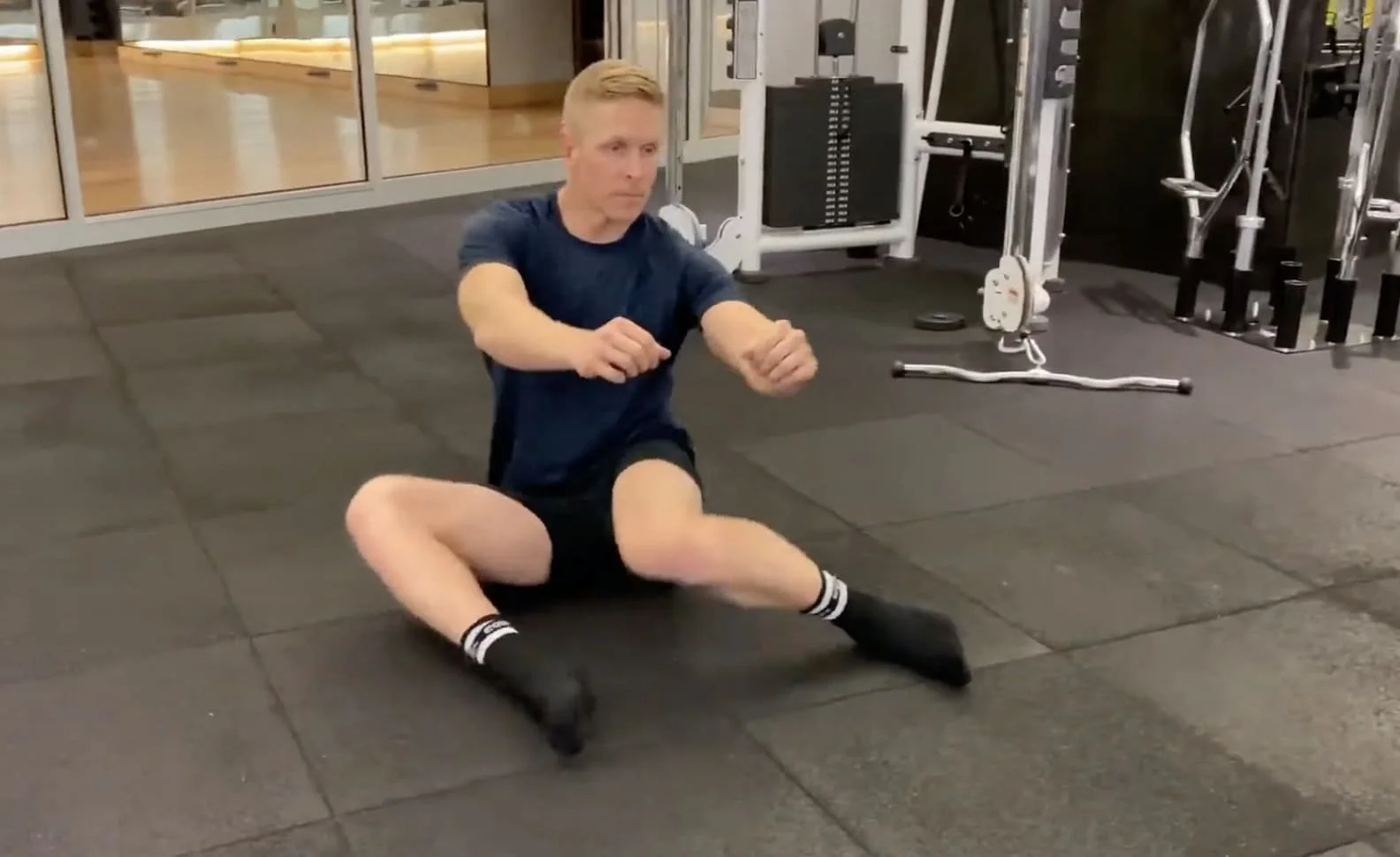
1. 90/90 Hip Rotations
This mobility exercise improves internal and external hip rotation, helping swimmers achieve a more efficient kick position while reducing stress on the knees.
2. Deep Squat Ankle Mobility Rocks
Breaststroke requires the ankles to move freely so the feet can effectively "grab" and accelerate water. Deep Squat Ankle Mobility Rocks improve ankle range of motion while reinforcing the squat position that supports healthy knee and hip mechanics.
3. Copenhagen Plank
One of my favorite exercises for strengthening the inner thighs. Strong adductors help support the knees and improve control during the recovery phase of the breaststroke kick.
4. Medicine Ball Split Stance Chest Throw
Power in breaststroke isn't just about having strong arms or legs—it's about transferring force efficiently through the entire body. The Medicine Ball Split Stance Chest Throw develops explosive upper-body power while challenging core stability and coordination between the hips and shoulders. This helps swimmers produce force more effectively during the pull phase and maintain better rhythm throughout the stroke.
5. TRX Supported Crossunder Lunge
This exercise develops hip mobility, single-leg stability, and inner-thigh strength, all of which contribute to a more controlled and efficient breaststroke kick. The TRX support allows swimmers to move through a larger range of motion while maintaining proper alignment and reducing unnecessary stress on the knees.
You don't need dozens of exercises. Consistently performing a handful of high-quality movements that address breaststroke's unique demands will produce better results than constantly changing workouts.
How Often Should Breaststrokers Do Dryland?
For most swimmers:
2–3 dryland sessions per week
20–35 minutes per session
Focus on quality, not exhaustion
Dryland should support swimming, not compete with it. If technique degrades on land, it won’t improve in the water.
If you’re serious about improving breaststroke, the dryland work you choose matters. That’s why I built the Dryland Accelerator System. It is a monthly dryland training program for swimmers. It helps you gain power, improve mobility, and build stronger stroke mechanics. You can do it without stiffness or extra joint stress. The system focuses on the five movement patterns swimmers actually need — hinging, squatting, pushing, pulling, and core control — so every dryland session carries over directly to faster, more efficient swimming. You can start with a 7-day free trial, get full access to structured weekly plans, exercise video guidance, and direct support from certified swim coaches, then continue for $29/month if it’s the right fit.
Final Coaching Perspective
Breaststroke rewards athletes who respect fundamentals.
When dryland exercises improve mobility, protect the knees, and reinforce stroke timing, breaststroke becomes more repeatable — and repeatability is what creates speed. Train the right movements on land, and the water takes care of the rest.
All Dryland Programs for swimmers
About Coach
Dan Daly is a professional swim coach with over 20 years of experience coaching competitive swimmers, triathletes, and open-water athletes. A former collegiate swimmer and CSCS, he specializes in stroke-specific training and sustainable performance through the fundamentals.